
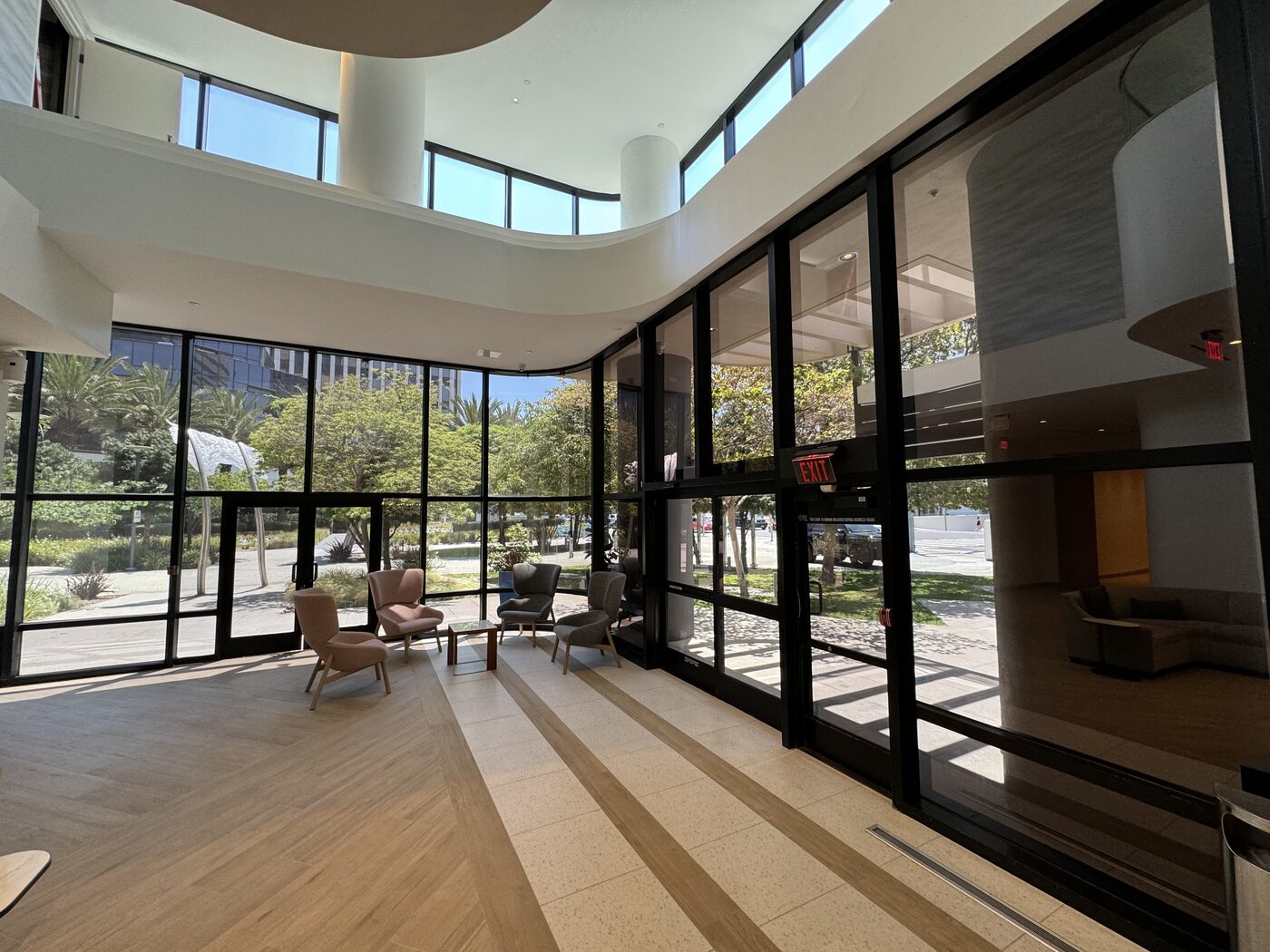
The short answer: start with the problem, not the product. Commercial window film falls into a few families: solar control for heat, glare and UV; decorative and privacy film; safety and security film; and anti-graffiti film. Choose the family that matches the problem, confirm the film is approved for your glass, compare published numbers on the same glass, and get the warranty terms in writing before you sign.
Most commercial window film projects start with a complaint: a west-facing conference room nobody books in the afternoon, merchandise fading in a display window, tenants asking for privacy, or a storefront that keeps getting tagged. The right film for one of those problems is often the wrong film for another, and a building usually has more than one.
This guide walks through how to match film to the problem, what to look for on a spec sheet and a warranty, what installation involves, and how to choose an installer. It’s written for property managers, facility managers and business owners in California, where Comfort Pro works most often in Orange County and Los Angeles.
Match the film family to the problem
| Problem | Film family | Comfort Pro example | Watch for |
|---|---|---|---|
| Heat, glare, hot spots near glass | Solar control (interior or exterior) | Madico Optivision 5 at KTI Hydraulics, Irvine, 4,100 sq ft | Darker films reduce daylight; check glass compatibility |
| Fading merchandise or finishes | Solar control with UV protection | Solar Gard Sentinel SX80 (exterior) at Boot Barn, Los Alamitos, 300 sq ft | No film eliminates fading (IWFA) |
| Privacy on office or interior glass | Frosted, gradient or decorative | 3M Dusted Crystal custom-cut band at Symple Lending, Irvine, 700 sq ft | Fixed privacy; no acoustic benefit |
| Broken-glass hazard, smash-and-grab risk | Safety and security film, ideally with an attachment system | 3M Ultra S800 with wet-glaze attachment at Dick’s Sporting Goods, Santa Clarita, 200 sq ft | Slows entry; doesn’t stop it |
| Scratched or tagged storefront glass | Anti-graffiti (sacrificial) film | 3M Anti-Graffiti AG6 at Nike, Santa Monica, 600 sq ft | Designed to be replaced when damaged |
Many buildings combine families. LA City College used SafetyShield 800 Optivision 15, a security film with heat rejection, on about 1,850 square feet. Raising Cane’s in Hollywood combined Solyx Middle Grey Sandblast on the upper glass with Madico Graffiti Free 600 at street level.
Solar control: reading the numbers
Solar control films are the most common commercial project. When comparing them, these are the figures that matter:
- VLT (visible light transmission): how much daylight comes through. Lower means darker.
- TSER (total solar energy rejected): the best single number for heat.
- SHGC (solar heat gain coefficient): the share of solar heat that still gets in. Lower is better.
- Glare reduction: how much the film cuts visible light compared with untreated glass.
- UV blocked: most architectural films list more than 99%.
Two cautions. Manufacturers usually publish lab values on a single pane of 1/4-inch clear glass, so results on dual-pane, tinted or Low-E (low-emissivity coated) glass will differ. And a high infrared rejection figure is not the same as total heat rejection; 3M, for example, notes that its Prestige infrared figure is measured from 900 to 1,000 nanometers. None of these numbers is a promise about energy bills. For a closer look, see how dark window film should be and our guide to reducing lobby and office glare.
Interior or exterior film
Most commercial film is applied to the inside of the glass, where it is protected from weather and carries longer warranties. Exterior film is worth considering for skylights, glass that can’t be reached well from inside, glass types that aren’t a good match for interior solar film, or when the goal is the most heat rejection possible. The trade-off is lifespan. Madico states that its exterior films are warranted for five years on vertical glass and two years on sloped glass, while most commercial installations receive a 10- or 15-year warranty.
Glass compatibility comes first
Film absorbs some solar energy, which heats the glass. On some glass types, sizes and exposures, that added thermal stress can raise the risk of breakage. The International Window Film Association notes that manufacturers publish film-to-glass tables for trained installers, and that building owners can ask for them. A good installer will check whether the glass is single or dual pane, annealed, tempered or heat-strengthened, tinted or coated, and how large the panes are, before recommending a film. If the answer is that a particular film shouldn’t go on a particular unit, that’s useful information, not a sales obstacle.
Warranties: four different promises
“Warranty” on a film proposal can mean several separate things. Ask which of these apply, for how long, and who backs each one:
- Film performance: the manufacturer’s coverage against the film peeling, cracking, bubbling or losing its properties. In 3M’s flat glass warranty bulletin, commercial performance coverage runs 15 years for the Prestige Series and 10 to 12 years for several other interior lines, with shorter terms for exterior films.
- Glass breakage: coverage if the glass fails from thermal stress caused by the film. 3M’s bulletin covers qualifying breakage for up to five years, with a per-window cap on commercial installations and paperwork that must be completed at registration.
- Seal failure: coverage for dual-pane units if film affects the window maker’s seal warranty. 3M’s commercial term is three years, subject to conditions.
- Workmanship: the installer’s own coverage for the installation itself. This is separate from anything the manufacturer provides.
Specialty films have their own terms. The same 3M bulletin lists a one-year performance warranty for its AG-4 and AG-6 anti-graffiti films, which makes sense for a film designed to be scratched and replaced. Madico says its decorative films usually carry seven-year coverage.
Safety and security film: set realistic expectations
Security film holds broken glass together and can slow down a smash-and-grab or forced entry. How much depends on the film thickness, the glass, the frame and whether the film is anchored to the frame with an attachment system. The 3M Ultra S800 technical data sheet says plainly that the product is not designed to stop intruders, and that break-and-entry applications require 3M’s Impact Protection Attachment. Treat security film as one layer of a security plan, alongside locks, lighting, alarms and cameras. More detail is on our commercial security film and attachment systems pages.
Replacing old film
Many commercial buildings already have film that is failing: purple, bubbling, peeling or mismatched after partial repairs. Replacement involves removing the old film and adhesive before new film goes on, which takes longer than a fresh install.
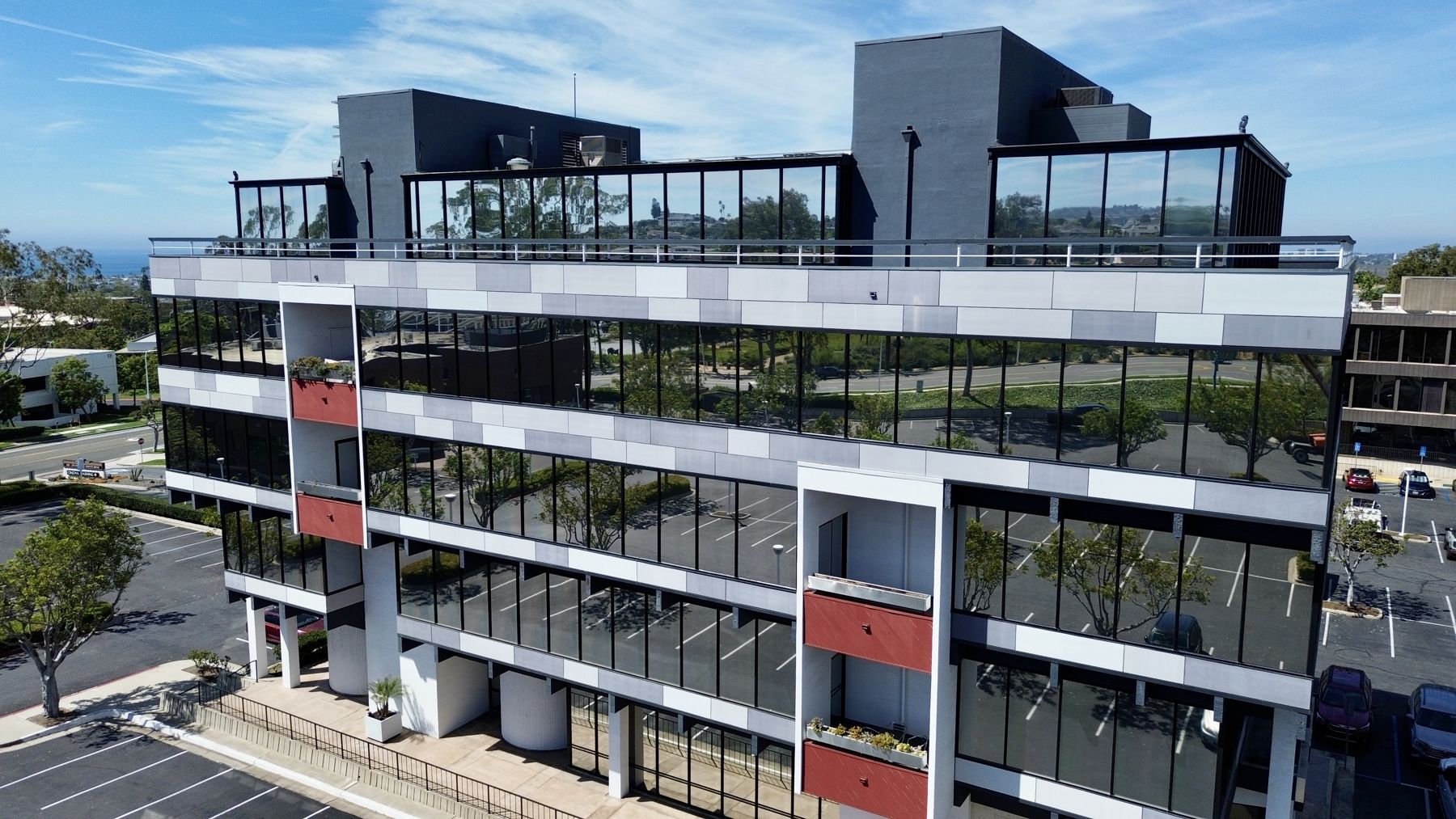
At Newport Executive Center in Newport Beach, the exterior film on two sides of the building was starting to fail after more than seven years. Comfort Pro removed it and installed the same film, Avery Dennison DR Grey 10X, across about 5,000 square feet, so the new sides match the rest of the building. Because the work was done from outside on boom lifts, tenants weren’t disturbed. At Marriott Long Beach Downtown, old film was removed and replaced with Sunscape Duralite 10 across about 2,500 square feet in four days.
When only part of a building is being replaced, matching the existing film matters. Ask the installer to identify the current film and confirm the replacement will look the same from the street.
What installation involves
- Site visit. The installer measures, identifies the glass, reviews access and looks at the problem areas.
- Samples on your glass. View them at the time of day the problem happens, from inside and outside.
- Written proposal. It should name the exact film and shade for each elevation, the square footage, interior or exterior application, the warranty terms and how the job will be scheduled.
- Scheduling. Commercial work can often be planned around business hours or phased by floor. Tall glass may need ladders or lifts.
- Installation and curing. Most architectural film is applied wet, with a mounting solution. Some haze or small water pockets during curing are normal and clear as the film dries; drying time depends on the film and the weather.
- Warranty registration. Make sure the manufacturer warranty is registered and you receive copies.
How to choose an installer
- A current California contractor’s license. The state’s D-52 window coverings classification covers plastic film window treatments applied for temperature control or screening. You can look up any license on the Contractors State License Board site. Comfort Pro holds CA C-61/D52 License #1160794.
- Manufacturer authorization for the film being proposed. Warranties typically depend on an authorized dealer doing the installation. Comfort Pro is a 3M Premier Elite dealer and also installs films from Solar Gard, Panorama, Madico, Sunscape, SafetyShield, Avery Dennison and Solyx.
- Commercial references with similar glass. A storefront job and a five-story curtain wall are different projects.
- Insurance documentation your property manager or landlord will accept.
- A written film-to-glass check and clear warranty terms, rather than verbal assurances.
- Honest trade-offs. An installer who tells you a darker film will make the space dimmer, or that a film won’t help a particular window, is giving you useful information.
When film isn’t the right investment
- The glass has failed. Fogged dual-pane units, cracked glass or leaking frames should be repaired first.
- The windows are scheduled for replacement soon. Film may not be worth installing on glass that will be removed.
- The problem is inside. Some heat and glare complaints come from HVAC (heating, ventilation and air conditioning) balance, interior lighting or reflective finishes, not the windows.
- You need code-rated glazing. Film isn’t a substitute for glass that is required to meet a specific code rating. Check with the building’s architect or code consultant.
Start with a site visit
Comfort Pro has completed commercial projects from San Francisco to San Clemente, with most work in Orange County and Los Angeles. If you’re planning film for an office, store, school or multi-tenant building, we can visit, check your glass and bring samples. See our commercial window film services and commercial projects, or contact us to set up a visit.