
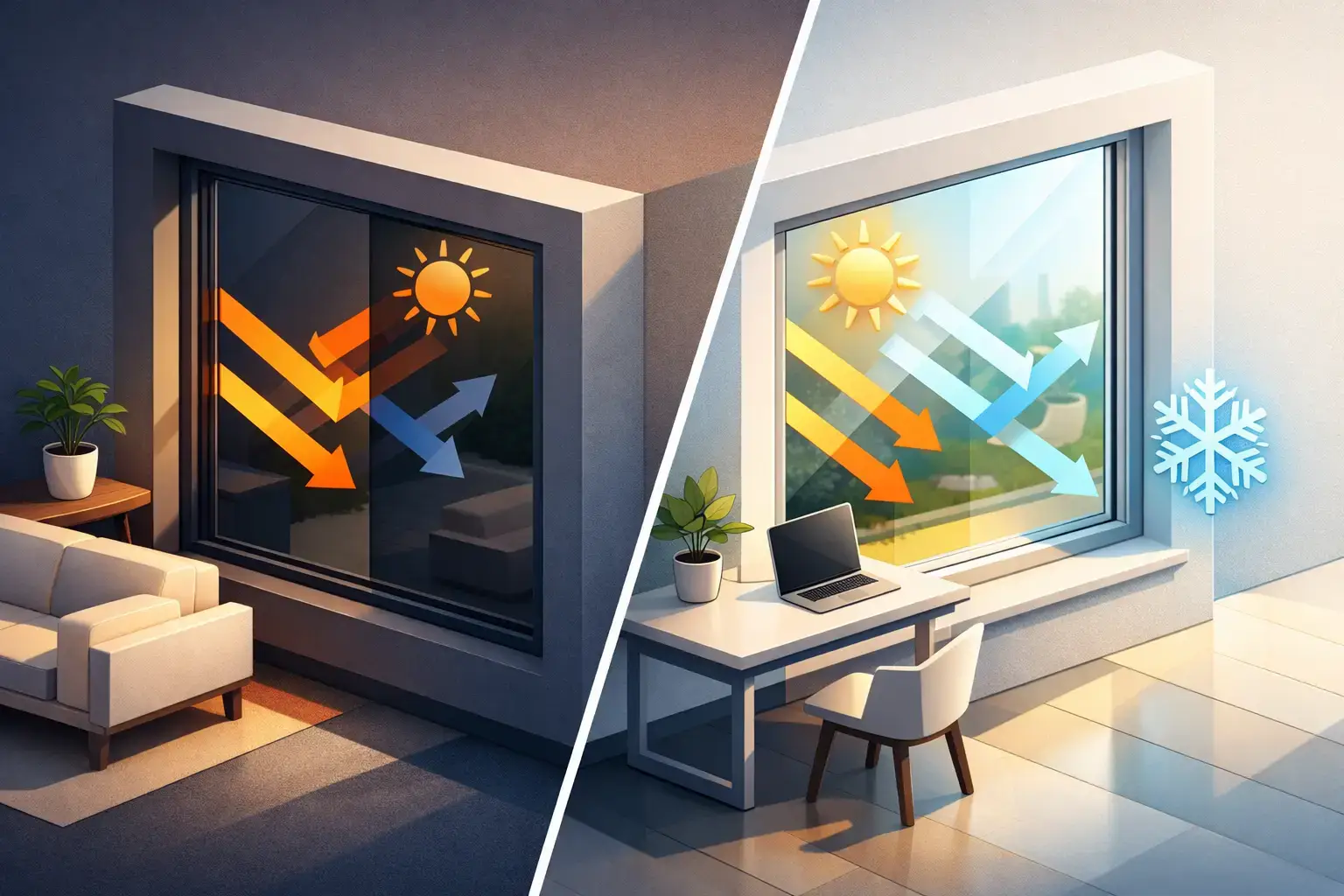
A west-facing living room that overheats every afternoon, a bright office with computer-screen glare, or merchandise fading near a storefront window all raise the same question: window tint vs low e. Both can improve comfort and energy performance, but they solve the problem in very different ways. The right choice depends on whether you are upgrading existing glass, planning a window replacement, and how much control you need over heat, glare, privacy, and appearance.
Window Tint vs Low E: The Core Difference
Low-E, short for low emissivity, is a microscopically thin coating applied to glass during the manufacturing process. It is designed to manage radiant heat transfer while allowing visible light to pass through. In insulated glass units, the coating is typically placed on an interior-facing surface within the assembly, where it can help reduce heat gain, heat loss, or both depending on the product.
Window tint, more accurately called window film in many architectural applications, is installed on the surface of existing glass. Solar control films can reject a significant portion of solar energy, reduce glare, block up to 99% of UV rays, and often change the window’s appearance only slightly. Other films can add privacy, decorative effects, safety retention, or security benefits.
The practical distinction is simple. Low-E is built into a new window or glass unit. Window film is a retrofit upgrade for the windows already in place. That difference has a major effect on project cost, installation time, and the range of benefits available.
When Low-E Glass Makes Sense
Low-E glass is often the right long-term choice when windows are already scheduled for replacement. If frames are failing, seals have broken, condensation is recurring between panes, or the glass is visibly damaged, replacing the window can address more than solar performance alone.
Modern low-E window systems can be highly effective at reducing unwanted heat transfer. In a cooling-dominated climate such as much of California, selecting the correct solar-control low-E coating can lower solar heat gain while preserving a bright, natural view. In climates with meaningful heating seasons, other low-E configurations can help retain indoor heat as well.
Because low-E coatings are part of a purpose-built glass unit, they can be paired with features such as double or triple panes, inert gas fills, improved spacers, and upgraded frames. The result may deliver a stronger whole-window performance rating than a film applied to older single-pane glass.
That does not mean low-E is automatically the better answer. Window replacement is disruptive and expensive, particularly across a large office, retail space, multifamily property, or home with otherwise sound windows. It also may not solve glare, daytime privacy, or the need to hold broken glass together after an impact. Those are areas where film can offer more targeted value.
Where Window Film Has the Advantage
Window film is designed for existing glass, which makes it a practical choice when the windows themselves are in good condition. A professional installation can often be completed with far less disruption than window replacement, while directly addressing the issues occupants notice every day.
For sun-exposed rooms, solar control film can reduce heat and glare without requiring a construction project. This can make a meaningful difference in rooms with large expanses of glass, especially on west- and south-facing elevations. In commercial settings, less glare can improve screen visibility and customer comfort. At home, it can make a formerly avoided room usable throughout the day.
Film also offers more choices beyond energy control. Frosted and decorative films provide privacy for bathrooms, entry sidelights, conference rooms, healthcare settings, and interior glass partitions. Safety and security films help hold shattered glass in place, adding a layer of protection against accidental breakage and certain forced-entry events. These are separate performance goals that low-E glass does not inherently provide.
Appearance is another consideration. Clear, low-reflective films are available when preserving the look of the glass is a priority. Neutral, tinted, and reflective options can provide stronger solar control or daytime privacy. The best selection balances performance with the building’s exterior design, interior lighting needs, and any property management requirements.
Heat Rejection, Glare, and UV Protection
Low-E glass and solar film can both reduce solar heat, but their actual performance varies by product and installation. The label alone does not tell the whole story. A specific film’s solar heat gain reduction, visible light transmission, glare reduction, and reflectivity should be reviewed alongside the existing glass type. The same is true for low-E glass, where coating type, pane configuration, and orientation all matter.
For glare, window film is often the more direct solution. A lighter low-E window may improve energy efficiency while still allowing enough visible light to create uncomfortable screen glare. Film allows a more deliberate adjustment to visible light transmission, so the solution can be tuned to a home office, lobby, conference room, retail display area, or media room.
Both options can help protect interiors from UV exposure, but solar control film is especially useful when fading is the immediate concern and replacement is not planned. UV is only one contributor to fading. Visible light and heat also play a role, which is why a film selected for both UV blocking and solar control can help protect flooring, artwork, fabrics, displays, and furnishings more effectively than UV protection alone.
Cost and Installation: Retrofit vs Replacement
Cost is usually where the decision becomes clear. Replacing windows with low-E units can be a worthwhile capital improvement, particularly when old windows have functional problems. However, the project includes far more than the glass itself: measuring, ordering, removal, frame work when needed, finishing, disposal, and potential disruption to occupants.
Window film generally costs considerably less than full window replacement and can be installed on a room, elevation, or building-wide basis. That flexibility is valuable when only certain areas experience glare or intense afternoon heat. A property manager may film sun-facing office suites first, for example, rather than replace every window across the property.
Professional evaluation matters because not every film is appropriate for every glass type. Glass composition, pane count, existing coatings, edge condition, shading, and thermal stress all affect product selection. Applying the wrong film to the wrong glass can increase the risk of thermal breakage or create an appearance that does not meet expectations. A careful installer evaluates these details before recommending a solution.
Can You Combine Low-E Glass and Window Film?
Yes, in some cases. A building with low-E windows may still need film for glare reduction, privacy, decorative branding, safety retention, or stronger solar control on particularly exposed elevations. The combination should be evaluated carefully because the existing coating and insulated glass construction affect thermal performance and film compatibility.
This is common in commercial spaces where the existing window system is relatively new but the interior use has changed. A conference room may need privacy. A reception area may need reduced glare. A retail storefront may need UV and heat control to protect merchandise. Film can address those specific needs without replacing an otherwise functional glazing system.
How to Choose the Right Option
Choose low-E glass when you are replacing aging or damaged windows and want to improve the entire window assembly. It is also a strong choice for new construction, major renovations, and projects where frame performance, air leakage, and insulating value need attention alongside solar control.
Choose window film when the glass and frames are sound but comfort, glare, UV exposure, privacy, or safety need improvement now. It is especially practical when a targeted upgrade is more sensible than a full replacement. For many homeowners and facility managers, that means faster results with a lower upfront investment.
The most useful starting point is not a generic product comparison. It is an assessment of the problem window by window. Note the time of day discomfort occurs, which direction the glass faces, how the room is used, whether privacy is needed, and whether exterior appearance restrictions apply. A qualified film specialist can then match a proven product to the glass and the performance goal.
Comfort Pro approaches each project with that level of care, because the best result is not simply darker glass. It is a space that stays more comfortable, protects what is inside, and still looks right for the way you live or work.