The short answer: frosted film gives existing clear glass the look of etched glass without replacing it, can be custom-cut into bands, gradients and logos, and can be removed later. Etched glass is permanent and is the better choice when you’re ordering new glass anyway or the surface will see heavy abuse. For most privacy updates to glass that’s already installed, film is the more practical option.
Both give you light without a clear view through the glass, and from across a room they can look very similar. The differences show up in how they’re made, how they’re changed, how they’re cleaned and what happens if you want something different in a few years.
What each one is
Etched glass has a permanently roughened surface. It’s made at the factory by acid-etching, or by sandblasting, which blasts fine abrasive at the glass. Acid-etched glass usually has a smooth, uniform satin finish; sandblasted glass is rougher. Either way, the change is part of the glass itself.
Frosted film is a thin polyester film with a frosted or etched-look finish that’s applied to the surface of existing glass, usually on the inside. 3M describes its Crystal Glass Finishes Dusted and Frosted films as giving the look of sandblasted or etched glass, and Madico says its Frost Matte mimics etched glass.
Side-by-side comparison
| Factor | Frosted film | Etched glass |
|---|---|---|
| Look | Very close to etched glass; finishes range from light dusted to dense white | Satin (acid-etched) or rougher (sandblasted), with a slightly different depth up close |
| Light | Published by product, for example 85% visible light for 3M Dusted and 67% for Madico Frost Matte | Varies by glass and finish |
| Privacy | Day and night | Day and night |
| Installation | Applied on site to existing glass; windows and doors stay in place | New glass ordered and installed, or panels removed and replaced |
| Custom designs | Bands, gradients, logos and patterns cut to fit each pane | Possible, but set at the factory and permanent |
| Changing it later | Can be removed and replaced with a new design or clear glass | Permanent; changing it means replacing the glass |
| UV | Many films block most UV; Madico lists Frost Matte at 99% or more | No added UV blocking from the etching itself |
| Durability | Can be scratched or cut; usually applied inside where it’s protected | The finish lasts the life of the glass |
| Cleaning | Soft cloth and non-abrasive cleaner | Needs care; fingerprints and oils can show and some marks are hard to remove |
| Safety | Frosted safety films are available that help hold broken glass together | Depends on whether the glass is tempered or laminated |
Where frosted film makes more sense
- Existing glass. Office glass walls, bathroom windows, entry sidelights and conference rooms can be updated without removing doors or panels.
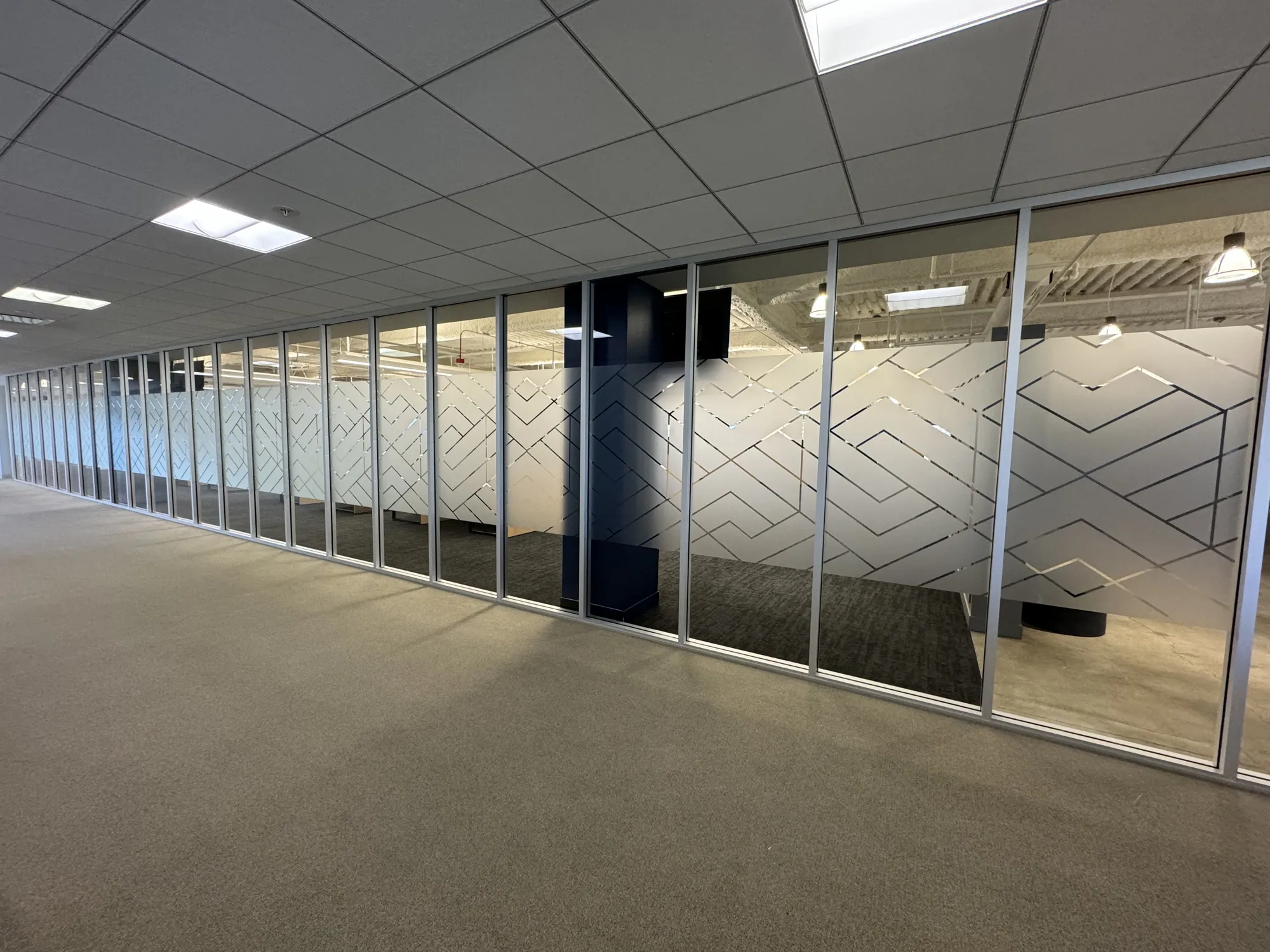
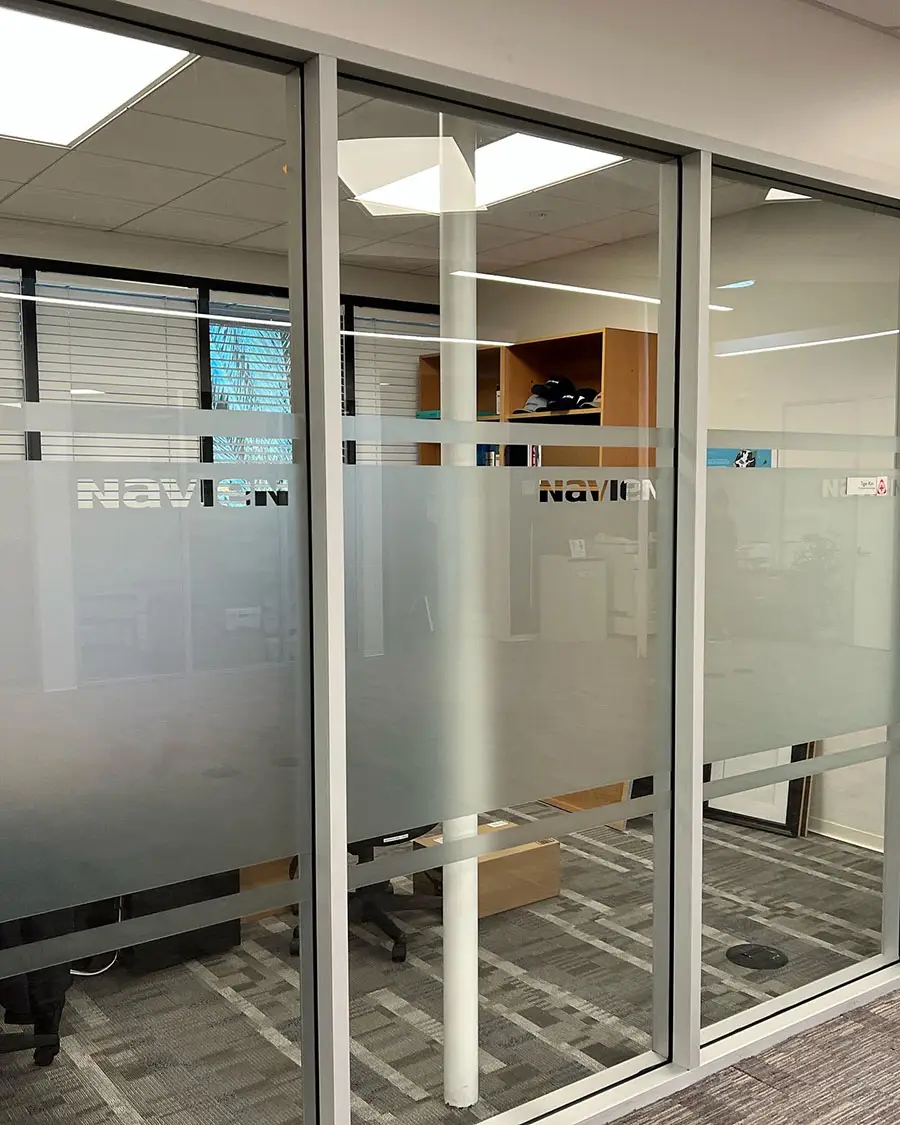
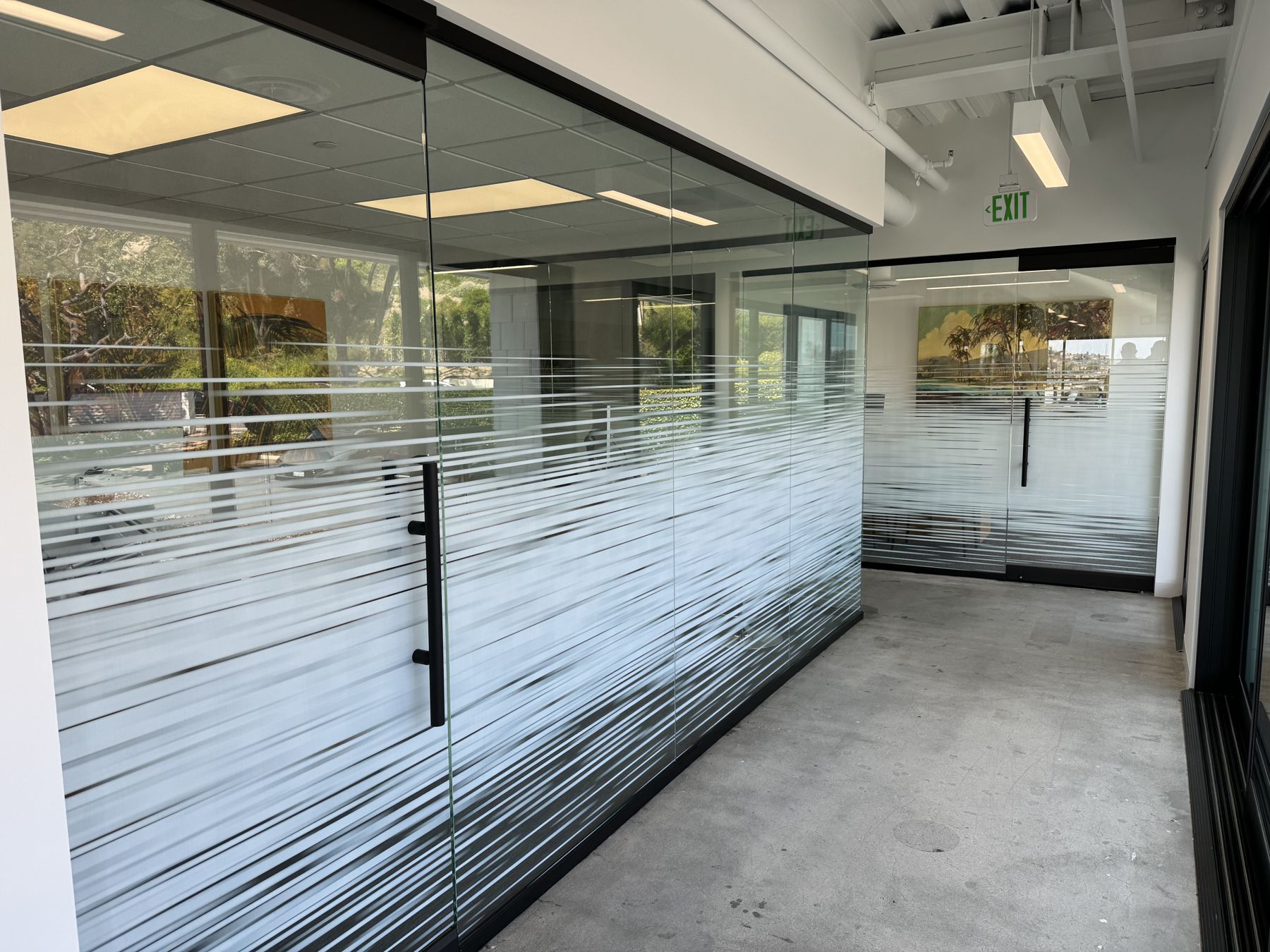
- Designs and branding. Film can be cut into bands at a set height, gradients that fade to clear, patterns and logos. Matching lines across many panes is straightforward.
- Spaces that change. Offices that reconfigure, tenants who move, and homes where a room’s use may change can remove film later. That’s harder to do with glass you’ve paid to etch.
- Less disruption. Installation is done on site, with the glass in place.
- Combining functions. Thicker frosted safety films, such as Madico’s 12 Mil Frost Matte, combine the frosted look with a safety film that helps hold broken glass together.
Where etched glass makes more sense
- New construction or new glass. If you’re ordering new shower doors, partitions or windows anyway, specifying etched glass from the start avoids a second step.
- High-contact or high-abuse surfaces. Glass that gets bumped, scraped, leaned on or cleaned aggressively every day, such as a busy public restroom partition, may hold up better with a finish that can’t peel or scratch off.
- A permanent look you won’t change. If the design is right for the life of the glass, etching is a set-and-forget finish.
- Glass that can’t take film. Some textured and patterned glass isn’t a good surface for film, and manufacturers exclude it from their warranties. Madico’s warranty schedule lists textured and patterned glass among its exclusions.
Cleaning and care
Etched glass is beautiful but particular. AGC’s cleaning guide for acid-etched glass says to clean the entire surface rather than spot-cleaning, which can leave halos, and to avoid abrasives and certain harsh chemicals. National Glass notes that acid-etched glass resists fingerprints better than sandblasted glass, but that silicone marks can’t be removed once dry.
Frosted film is cleaned like any filmed glass: wait about 30 days after installation, then use a soft cloth or sponge with a non-abrasive cleaner. Avoid scrapers, razor blades and gritty pads. If a section is damaged, it can usually be replaced without replacing the glass.
How long frosted film lasts
Interior frosted film is protected from weather, but decorative films usually carry shorter warranties than neutral solar films. Madico’s schedule, for example, lists Frost Matte 200 at 5 years for both residential and commercial use. Many films keep their appearance longer than their warranty term, but it’s wise to plan around the warranty term rather than count on a longer life. Our guide on how long window film lasts covers this in more detail.
A note on cost and disruption
We don’t publish prices because every project is different. In general, film avoids the cost and downtime of removing and replacing glass, which is why it’s usually the more practical choice for existing windows and partitions. Etched glass can be a sensible part of a project that’s already replacing glass. Our article on window film installation cost explains what goes into a quote.
See frosted film samples on your glass
If you’re weighing film against new etched glass, we can bring frosted and decorative samples, hold them up on your actual glass and lay out a design for each pane. Learn more about frosted window film and commercial decorative film, or contact us to schedule a visit.