
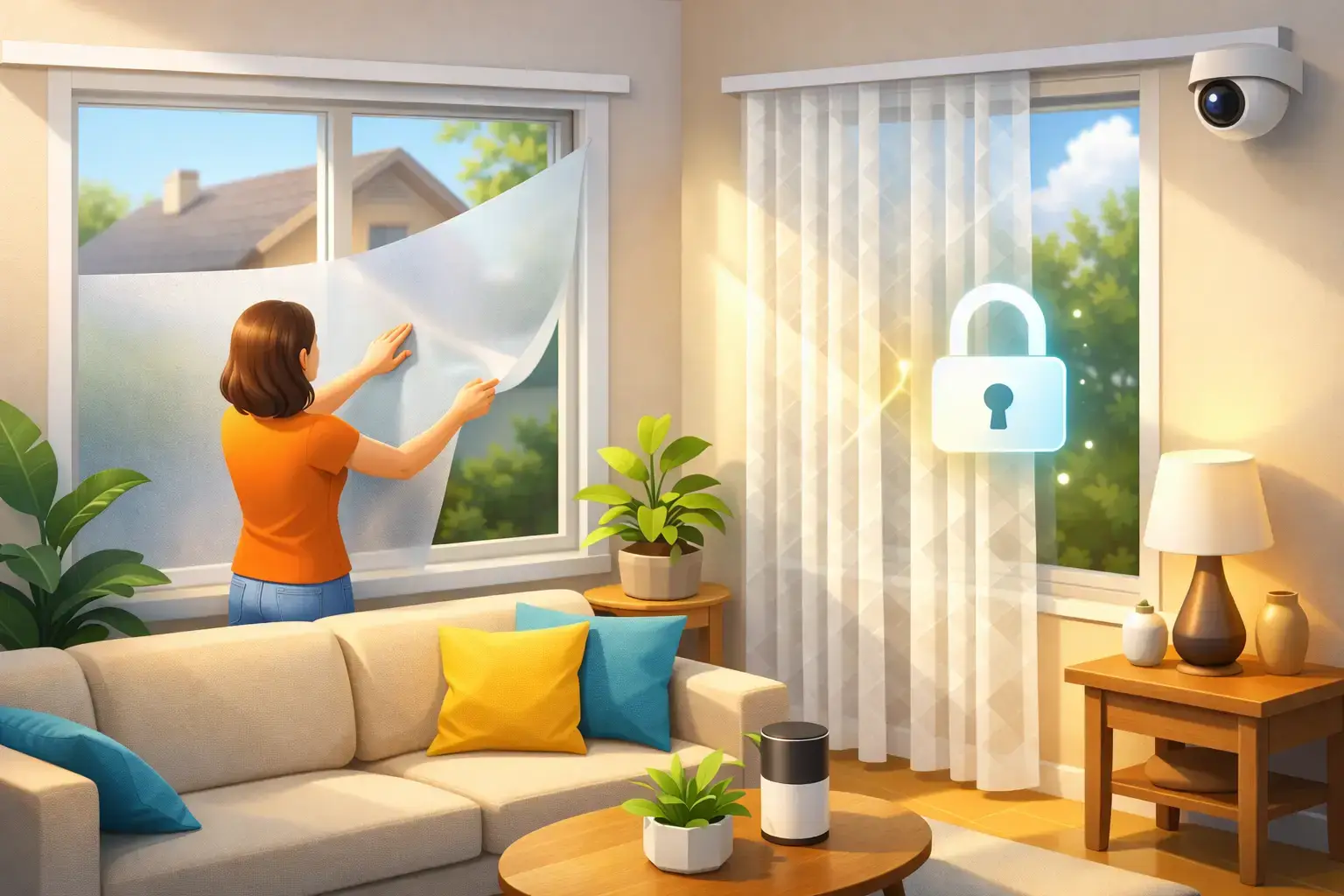
A lot of homeowners do not start thinking about privacy until they notice how visible everything becomes at night. During the day, natural light can make a room feel open and comfortable. After sunset, that same window can turn into a clear view from the outside in. If you are wondering how to improve home privacy without making your space feel closed off, the answer usually starts with your windows.
The challenge is not just blocking sightlines. It is keeping the parts you like – daylight, views, and a clean look – while reducing the feeling that your home is on display. The right approach depends on where the privacy issue starts, how much visibility you want to limit, and whether you are solving for appearance, comfort, security, or all three.
How to improve home privacy by identifying the real problem
Not every privacy issue is the same, and treating them all the same usually leads to poor results. A street-facing living room has different needs than a bathroom window, a first-floor bedroom, or a home office used for video calls. Some homes have excellent daytime privacy but very little privacy at night. Others are exposed all day because of neighboring properties, elevated sightlines, or oversized glass.
Start by asking a few practical questions. Which rooms feel most exposed? Is the problem visibility from pedestrians, neighbors, or nearby buildings? Do you want total concealment, partial obscurity, or privacy only at certain times of day? These details matter because the best privacy solution for one room can feel like a compromise in another.
For example, heavy curtains may solve nighttime visibility, but they also block light and can make a bright room feel smaller. Landscaping can soften sightlines from the street, but it takes time to fill in and may not help with second-story visibility. This is why homeowners often get the best result by layering solutions instead of relying on one fix.
Window film is often the cleanest privacy upgrade
For many homes, privacy window film is the most balanced option because it changes how glass performs without changing how the room functions. It can help obscure views, reduce glare, cut UV exposure, and preserve natural light in ways that blinds and curtains alone cannot.
That balance is what makes film appealing. You are not adding bulky treatments or permanently darkening a room. You are improving the glass itself.
Daytime privacy film
Reflective and solar control films are popular in rooms where homeowners want privacy during daylight hours. From outside, these films can make glass harder to see through while allowing interior occupants to maintain outward visibility. They can also reduce heat and glare, which is especially valuable in sun-heavy areas where large windows create both comfort and privacy concerns.
There is a trade-off, though. Daytime privacy film does not create the same effect after dark if interior lights are on and the outside is darker. That is one of the most misunderstood parts of privacy film. It works extremely well in the right conditions, but expectations need to match real-world lighting.
Frosted and decorative privacy film
If you need more consistent privacy, frosted or decorative film is often a better fit. These films diffuse or block visibility more directly and work well on bathroom windows, front door sidelights, entry glass, home offices, and street-facing rooms where exposure is constant.
The advantage here is reliability. You get privacy without having to close a shade every time someone walks by. Frosted film also keeps a clean, modern look and still allows light to pass through, which is a major reason homeowners choose it over opaque coverings.
Decorative options add another layer of flexibility. Some people want privacy, but they also want the glass to look intentional and finished. Patterned or textured films can deliver both.
Shades and curtains still matter, but they are not always enough
Soft window treatments are familiar for a reason. They are easy to understand, widely available, and effective when you need full privacy on demand. In bedrooms and media rooms, they may be the right answer, especially when blackout performance matters.
But there are limitations. Closed shades reduce openness. Curtains can collect dust, crowd the window, and make a room feel heavier than intended. If your goal is a brighter, cleaner interior, relying only on fabric treatments can feel like overcorrection.
A better approach is often combining window film with simple treatments. Film handles daytime exposure and supports light control, while shades or drapery provide nighttime privacy when needed. That kind of layered setup gives homeowners more flexibility without forcing the room into one mode all day.
Layout changes can improve privacy more than people expect
Sometimes the issue is not the window itself. It is what the window reveals.
If your dining area, desk, or seating arrangement sits directly in view of the street, even modest adjustments can make a difference. Repositioning furniture, changing the angle of a sofa, or moving a workstation away from a direct sightline can reduce exposure immediately. These changes are inexpensive and often worth trying before investing in larger upgrades.
This is especially helpful in open-concept homes where large panes of glass make interiors feel connected to the outdoors. That openness is attractive, but it can also put the most lived-in parts of the home on display. Strategic placement of shelving, indoor plants, or room dividers can create visual buffering without closing off the room.
Outdoor screening helps, but timing matters
Landscaping can be an excellent privacy tool when you want the exterior of the home to work harder. Hedges, layered plantings, trellises, and privacy screens can interrupt direct lines of sight from sidewalks or neighboring yards while improving curb appeal.
The challenge is that outdoor solutions are slower and less precise. Plants take time to mature. Some lose coverage seasonally. Others require more maintenance than expected. If you need immediate privacy, landscaping alone is rarely the best short-term answer.
That said, exterior screening works very well when paired with interior solutions. A frosted sidelight, a well-placed hedge, and a subtle shade treatment often create a more complete result than any one element on its own.
Privacy should also support comfort and protection
Homeowners often begin with privacy but quickly realize the problem overlaps with glare, UV damage, and heat. That is one reason professionally selected film solutions make sense. Instead of solving one issue at a time, you can improve several performance problems through one installation.
A room with harsh afternoon sun may need more than obscurity. It may need solar control to reduce glare on screens, help protect flooring and furnishings from fading, and make the space more comfortable throughout the day. In those cases, privacy is part of a bigger upgrade rather than a standalone fix.
There is also a security angle. Some window films can strengthen glass and help hold shattered pieces together after impact. That does not replace other security measures, but it can add another practical layer of protection for homes that feel exposed.
When professional guidance makes the biggest difference
Privacy products are easy to buy. The harder part is choosing the right one for the glass, the room, and the result you want.
This is where many homeowners waste money. A film that looks good online may be too reflective, too dark, or not private enough for the actual conditions. A shade style that works in one room may look bulky in another. The details matter – window orientation, lighting, neighboring sightlines, and glass type all affect performance.
Professional recommendations help narrow those variables quickly. An experienced installer can explain what will work during the day, what changes at night, how a film will look from inside and outside, and which products are better for high-visibility rooms versus decorative use. That level of clarity reduces guesswork and usually leads to a result that feels more natural once installed.
For homeowners who want privacy without sacrificing appearance, this is often the difference between a temporary patch and a lasting upgrade. Companies like Comfort Pro focus on that balance, using precise installation and product guidance to improve privacy while also addressing comfort, UV exposure, and overall finish quality.
The best privacy plan is usually layered, not extreme
If you are deciding how to improve home privacy, it helps to avoid all-or-nothing thinking. You do not need to cover every window with heavy drapes or turn your home into a closed box. In most cases, the best result comes from targeted improvements in the rooms that need them most.
Use film where you want privacy and daylight. Add shades where nighttime control matters. Adjust layout where sightlines are the real issue. Use landscaping where it improves both privacy and appearance. The goal is not to block the world out. It is to feel comfortable in your home at any hour, without giving up the light and openness that made you love the space in the first place.
A good privacy upgrade should feel almost invisible once it is done. You notice the comfort, the calm, and the confidence that your space finally works the way it should.