
The short answer: you can’t make ordinary window glass impossible to break, but you can control what happens when it does. Clear safety film holds broken glass together so it doesn’t fall into the room in sharp pieces. Security film anchored to the frame with an attachment system goes further: it helps keep the whole pane in the opening and can slow a break-in. Neither stops a determined intruder, and results depend on the film, the glass, the frame and how the system is installed.
Most people asking how to stop glass from shattering are worried about one of three things: someone getting hurt by broken glass, a break-in through a door or window, or an earthquake. The right answer is different for each, so it helps to understand how glass actually breaks first.
How different glass breaks
- Annealed glass is ordinary, untreated glass, common in older homes and buildings. It breaks into large, sharp shards.
- Tempered glass is heat-treated. According to the National Glass Association, it is roughly four times as strong as annealed glass of the same thickness and breaks into small pieces that reduce the risk of cuts. When it does break, though, the whole pane tends to crumble and can leave the opening empty.
- Laminated glass has a plastic interlayer between two sheets of glass. The interlayer holds the fragments in place after breakage, so the pane usually stays in the opening.
Window film works on the glass you already have. It’s a way to add some of the fragment-holding behavior of laminated glass without replacing the window.
Where broken glass is most likely to hurt someone
- Sliding glass doors and large panes that reach close to the floor
- Glass near pools, play areas and stairs
- Older windows that may be annealed rather than tempered
- Storefronts, lobbies and office glass walls with heavy foot traffic
- Ground-floor doors, sidelites and windows that could be targeted in a break-in
- Large glass in rooms where people sit or sleep near the window, a real consideration in an earthquake-prone state like California
Some of the most effective changes aren’t film at all: keeping heavy furniture and planters from tipping into glass, adding visible markings on large clear doors people might walk into, and fixing doors that slam or don’t track properly.
Option 1: Clear safety film
Safety film is a clear polyester film bonded to the inside of the glass. When the glass cracks, the pieces stay stuck to the film instead of falling. Most installs are done the “daylight” way, with the film covering the visible glass right up to the frame edge. The International Window Film Association’s safety and security guide describes this method as generally sufficient to hold broken annealed glass in the frame under human impact and small-missile impact, while noting that tempered glass needs a more robust method to keep the broken pane from falling out.
The standard most often quoted for safety film is ANSI Z97.1, a human-impact test in which a weighted bag is swung into the glass. A Class A rating means the filmed glass passed at the highest of the test’s three drop heights. 3M’s Ultra S800 technical data sheet, for example, lists Class A and Class B results on 1/8-inch and 1/4-inch annealed glass. Two cautions: the rating applies to the glass it was tested on, and passing a test doesn’t automatically mean a filmed window meets a building code requirement for safety glazing.
Safety film is the right fit for accident and earthquake safety on most home and office windows. It’s not, by itself, a break-in solution. See shatter-resistant window film for options.
Option 2: Security film with an attachment system
A broken pane covered in film can still be pushed out of the frame in one sheet. An attachment system bonds the edge of the filmed glass to the frame, on two or four sides, so the pane stays in the opening after it breaks. The IWFA guide describes two broad types: wet-glazed systems, where a structural sealant bridges the film and frame, and mechanical systems, where a bar or batten clamps the film to the frame.
This combination is what gives film its break-in value, and manufacturers say so directly. 3M requires its Impact Protection Attachment (IPA) sealant whenever Ultra S800 is used for break-and-entry, windstorm or explosion mitigation, and for spontaneous breakage on single-pane tempered glass. The same data sheet states that the film is not designed to stop intruders and does not prevent property damage or injury. What a well-installed system can do is make getting through the glass slower and noisier.
Attachments need a frame with enough depth to bond to. Thin or hollow frames, worn gaskets and loose glass stops can limit what’s possible, which is why frames should be checked before a system is quoted.
Does security film deter theft?
Mostly, it delays rather than deters. Clear security film is hard to see, so a thief usually doesn’t know it’s there until the first strike fails to clear the opening. Its value is time: the glass cracks but stays in place, the noise continues, and an alarm has a chance to do its job.
That makes film one layer in a plan, not the whole plan:
- Locks and hardware. If someone can reach through a small hole to a thumb-turn lock or a door handle, the glass isn’t the weak point anymore.
- Alarms and cameras. Delay only helps if someone is alerted.
- Lighting and visibility. Well-lit entries and clear sightlines matter.
- What’s on display. For businesses, high-value items left in the window overnight raise the stakes.
3M Ultra S800 at a glance
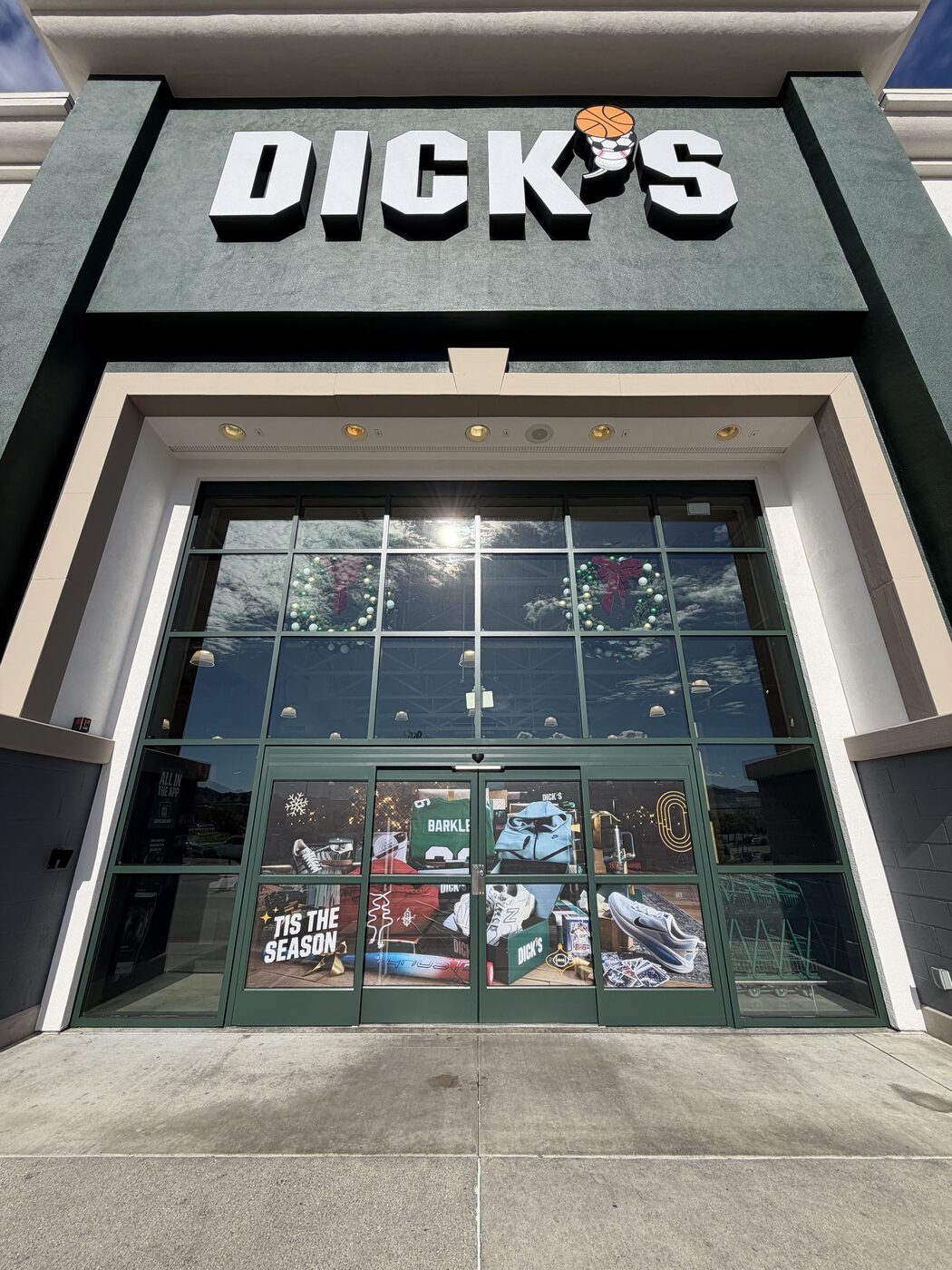
Ultra S800 is a clear, micro-layered security film and the film Comfort Pro installed at Dick’s Sporting Goods in Santa Clarita. These values come from 3M’s published technical data sheet (Revision G, January 2025). They are typical values, and 3M notes they should not be used as a specification on their own.
| Property | 3M published value | What it means |
|---|---|---|
| Film thickness | 8 mils nominal (9 mils with adhesive) | A mil is a thousandth of an inch |
| Construction | Micro-layered polyester | Built for tear resistance |
| Break strength (ASTM D882) | 253 lbs/in | Force needed to break a 1-inch strip of film |
| Visible light transmitted | 88% on 1/4″ clear glass | Optically clear; the view barely changes |
| UV rejected | 99% | Helps slow fading; doesn’t stop it |
| Safety glazing (ANSI Z97.1) | Class A and Class B on 1/8″ and 1/4″ annealed glass | Human-impact safety, not forced-entry resistance |
| Attachment for break-and-entry use | 3M IPA sealant required | Film alone isn’t 3M’s break-in system |
Madico’s SafetyShield line, which Comfort Pro also installs, is another option. Madico lists independent testing for SafetyShield, including ANSI Z97.1. Whichever brand you consider, ask for the test report that matches your glass type and thickness and the attachment you’re buying.
A home example: sliding doors by a pool
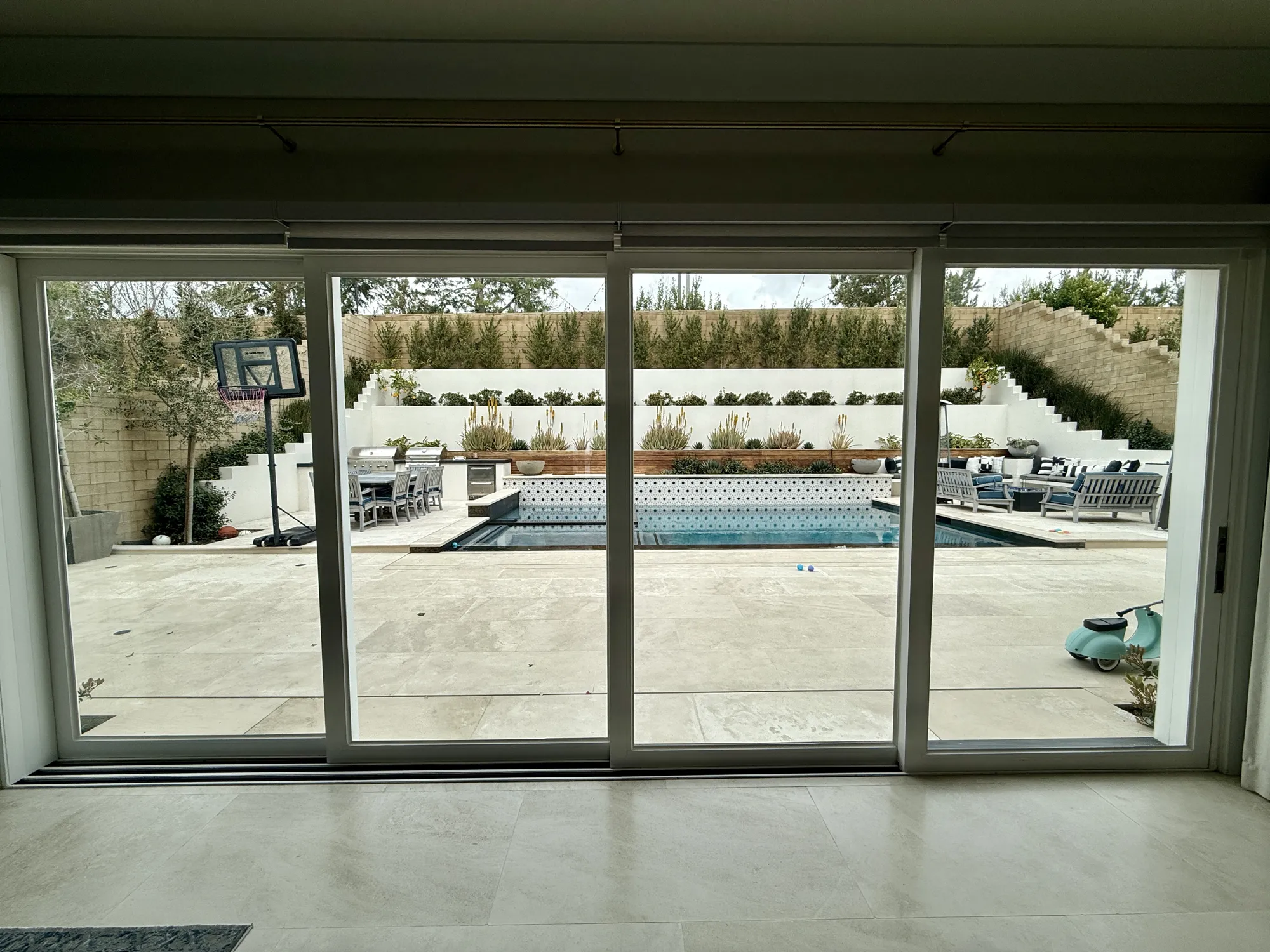
On this Irvine home, large sliders opened onto the pool area. Comfort Pro installed SafetyShield 800 with a wet-glaze attachment. The film holds broken glass in the frame, and the attachment anchors it so the glass is harder to push through. The view is unchanged because the film is clear.
When film is worth it, and when it isn’t
Film tends to be a good investment when:
- You have large annealed panes, or glass close to where people walk, sit or play.
- Ground-floor sliders, doors and sidelites are realistic entry points.
- A business has had smash-and-grab attempts and replacing the storefront isn’t practical.
- You want earthquake safety without changing the look of the windows.
- You’d also like UV protection, or heat and glare control with a combination film.
Look at something else, or add to film, when:
- The concern is firearms. Film on ordinary glass won’t stop bullets. The IWFA makes no bullet-resistance claims for any film and existing glass combination.
- The frame is the weak point. If the frame, glazing stops or door hardware give way easily, the glass isn’t what needs upgrading first.
- The glass is already cracked, or a dual-pane unit has failed. Replace it first.
- You’re replacing windows anyway. Laminated glass may be the better long-term choice. Our comparison of security film, tempered glass and laminated glass walks through the trade-offs.
Check the glass before choosing film
Film can add thermal stress to some glass, especially tinted, dual-pane or very large panes in direct sun. Manufacturers publish film-to-glass application guidelines by glass type, size and construction, and some combinations need a different film or no film. Thick security films and combination solar-security films should be checked the same way.
Questions to ask before you buy
- What glass was the product tested on, and how does it compare with mine?
- Is an attachment system included, which type, and on how many sides?
- Have my frames been checked for enough depth to bond to?
- Can I see close-up photos of your attachment work on past jobs?
- What do the film warranty, any glass or seal-failure coverage, and workmanship warranty each cover, in writing?
Talk through your glass with Comfort Pro
If you’re weighing safety or security film for a home or business, Comfort Pro can check your glass and frames, explain what each option will and won’t do, and recommend a film and attachment where they make sense. Learn more about residential security film and commercial security film, or contact us to schedule a visit.