
The short answer: if your windows are in good shape and the problem is sun, heat and glare, window film is usually the faster, less disruptive fix. If your windows are single-pane, drafty, fogged between the panes or failing, new windows with Low-E glass are the better long-term answer, because film can’t fix frames, seals or air leaks. Film can also go on many existing Low-E windows, but only after a glass compatibility check.
“Low-E” gets used for two different things: a factory coating built into new insulated glass, and a type of window film that adds some of the same benefit to glass you already have. This article compares film with Low-E replacement windows, explains what each does to heat in summer and winter, and covers what to realistically expect on energy costs.
What Low-E means
Low-E stands for low emissivity. A Low-E coating is a very thin layer on the glass that reflects heat radiation. According to the Department of Energy’s Federal Energy Management Program, Low-E coatings can reduce both a window’s U-factor (how much heat it conducts, lower is better) and its SHGC (solar heat gain coefficient, the share of the sun’s heat that gets through, lower is better). For hot climates, the DOE points to windows with a low solar heat gain coefficient, below 0.4, and notes that spectrally selective Low-E coatings reduce summer heat gain.
Two kinds of film, two different jobs
Most window film sold for homes is solar control film. Its job is cutting the sun’s heat, glare and UV, which mostly lowers SHGC. It does little for insulation. 3M’s data for Prestige 70, a nearly clear solar film, shows the U-factor of single clear glass moving only from 1.03 to 0.99 with the film.
Low-E window films add a coating that reflects indoor heat back into the room, which lowers U-factor as well. 3M’s Low E series, for example, lists U-factors of 0.79 and 0.85 on single clear glass for its two shades, which are fairly dark at 20% and 30% visible light transmission. They’re applied to the interior side of the glass. The DOE Energy Saver guide describes this kind of film as a way to keep heat from radiating out of a room.
In Southern California, solar heat is usually the bigger complaint, so most homeowners choose solar control film. Low-E film makes more sense on single-pane glass in rooms that feel cold in winter as well as hot in summer.
Film vs. Low-E replacement windows
| Factor | Window film | Low-E replacement windows |
|---|---|---|
| Solar heat and glare | Wide range, from nearly clear to dark and reflective | Set by the glass package you choose |
| Insulation (U-factor) | Small change with solar film; more with Low-E film | Large improvement, especially over single-pane |
| Air leaks, drafts, failed frames | No effect | Fixed with proper installation |
| Disruption | Applied to existing glass, no frame work | Frame removal and trim work |
| Architecture | Keeps original frames, such as steel or custom glazing | Changes frames unless you replace glass only |
| Lifespan | A replaceable layer; exterior films wear faster | Coating built into the glass unit |
Costs vary too much by home to compare fairly in a table. Get quotes for both if you’re seriously weighing replacement.
Will film lower energy costs?
It can, but the honest answer is “it depends,” and anyone promising a specific percentage on your bill is guessing. A DOE study of window attachments found that results depend on the type of attachment, climate, season and how it’s used. It also found that exterior films offered little or no benefit, or even higher energy use, in heating-dominated climates, because they block welcome winter sun.
The strongest results show up on older glass. A 2017 U.S. General Services Administration evaluation of Low-E window film in federal buildings modeled an average 29% HVAC energy savings in the perimeter zone near the windows, compared with single-pane clear glass, with a range of 22% to 38%. The same report found the biggest gains on single glazing or buildings with old, low-performing film, and noted that some occupants disliked the film’s color or the loss of daylight. Those are modeled results for office buildings, not a forecast for a house.
For homes, the more dependable benefit is comfort: less heat near west- and south-facing glass in the afternoon and less glare. The DOE Energy Saver guide recommends sun-control films on east- and west-facing windows for exactly that reason.
Can you put film on Low-E windows?
Often, yes, but not always. The International Window Film Association says the answer depends on the type and location of the Low-E coating and the benefit you’re after, and recommends asking your dealer whether your Low-E windows can have film installed.
Manufacturers publish film-to-glass rules for this. Solar Gard’s Film-to-Glass Guide flags certain films as “Low-E Caution” and says using them on Low-E insulated units can raise the risk of glass breakage or seal failure and may make the window ineligible for warranty coverage. It also excludes glass that’s already broken or has failed seals. That’s why we identify your glass, check the film manufacturer’s guidelines and confirm warranty terms before recommending a product.
When replacement is the better choice
Film is the wrong tool when the window itself is the problem. Consider replacement if:
- The windows are single-pane and rooms are uncomfortable in winter as well as summer. The DOE Energy Saver guide notes that replacing single-pane windows with double-pane may be cost-effective, and suggests storm windows as another option.
- You see fogging or condensation between the panes, a sign of a failed seal.
- Frames are rotted, warped, corroded or hard to operate.
- You feel drafts. Film doesn’t seal anything.
- You’re already renovating and the windows are coming out anyway.
If you replace, look at the glass specs, not just the frame. Choosing a low SHGC for sun-facing elevations does much of what film would have done.
When film is the better choice
- The windows are sound and the complaints are heat, glare, fading or daytime privacy.
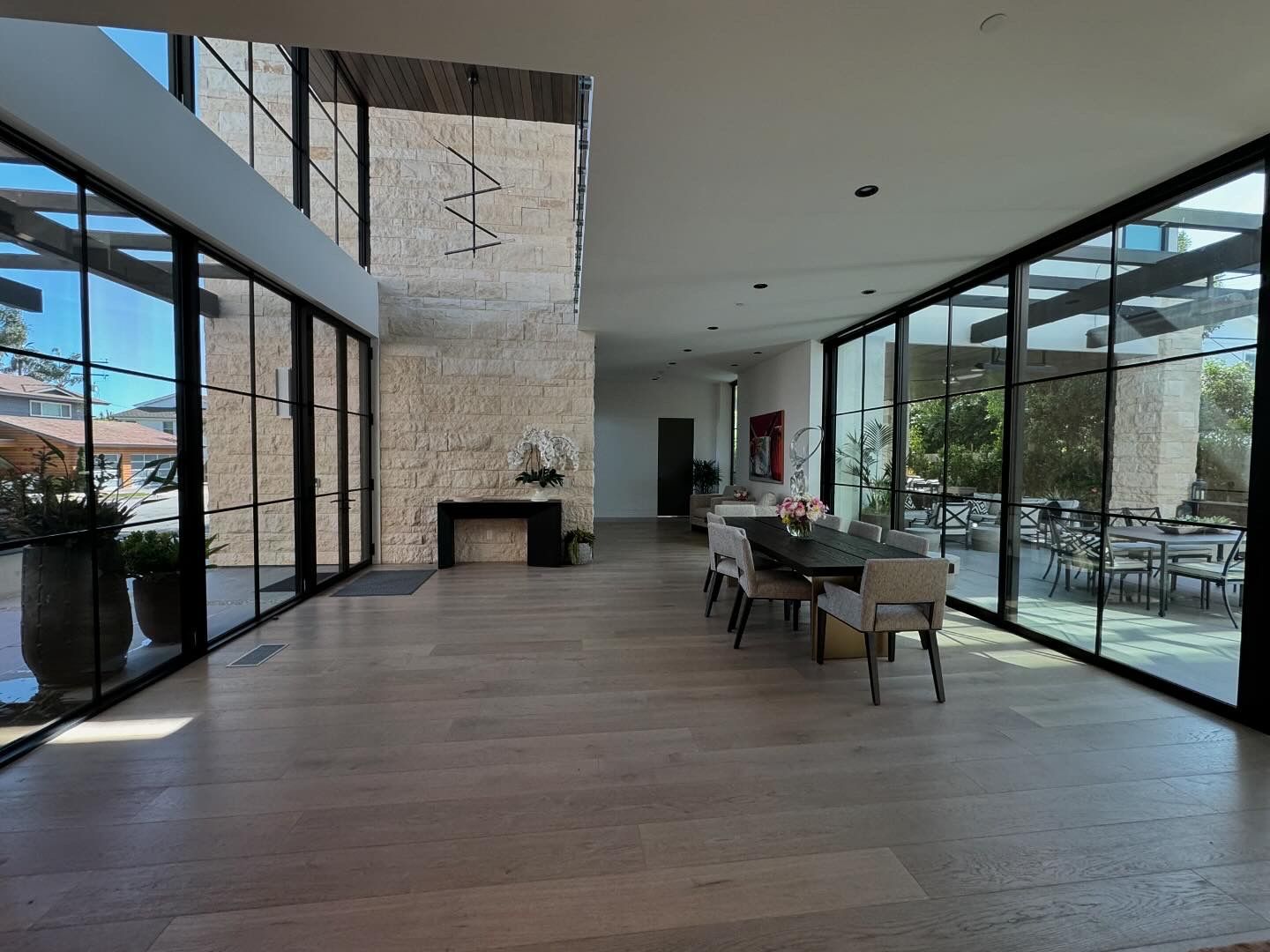
- You want to keep original or custom frames. In a Newport Heights home with floor-to-ceiling steel-frame glass on two sides of the great room, the owners wanted daytime privacy and heat reduction without going too dark, and chose Madico Optivision 25.
- You need a result with little disruption. Film is applied to existing glass.
- Only a few rooms or one elevation are the problem.
- Your new windows are fine for insulation but certain rooms still overheat or glare.
One trade-off to plan for: film is a layer that eventually gets replaced, especially exterior film. On one Newport Beach office building, the exterior film on two sides was starting to fail after more than 7 years. We removed it and installed the same film so the new sides match the rest of the building, working from the outside so tenants weren’t disturbed. Newport Executive Center, below, is another building where old exterior film was removed and replaced.

A simple way to decide
- Check the windows. Seals, frames and drafts first. If they’re failing, price replacement.
- Identify the glass: single or dual pane, clear or Low-E, tempered or not.
- Name the problem: summer heat and glare point toward film; winter cold and drafts point toward replacement or Low-E film on single-pane glass.
- Look at samples on your own windows before choosing a shade. Our guide on how dark home window film should be helps.
For film types by room, see the best solar films for homes, and for a closer look at how solar film performs, read our solar control film review.
Get an honest recommendation
We’ll look at your windows in person, identify the glass, and tell you whether film is the right fix or whether replacement makes more sense. Learn more about residential window film and heat reduction film, or contact us to schedule a free consultation.