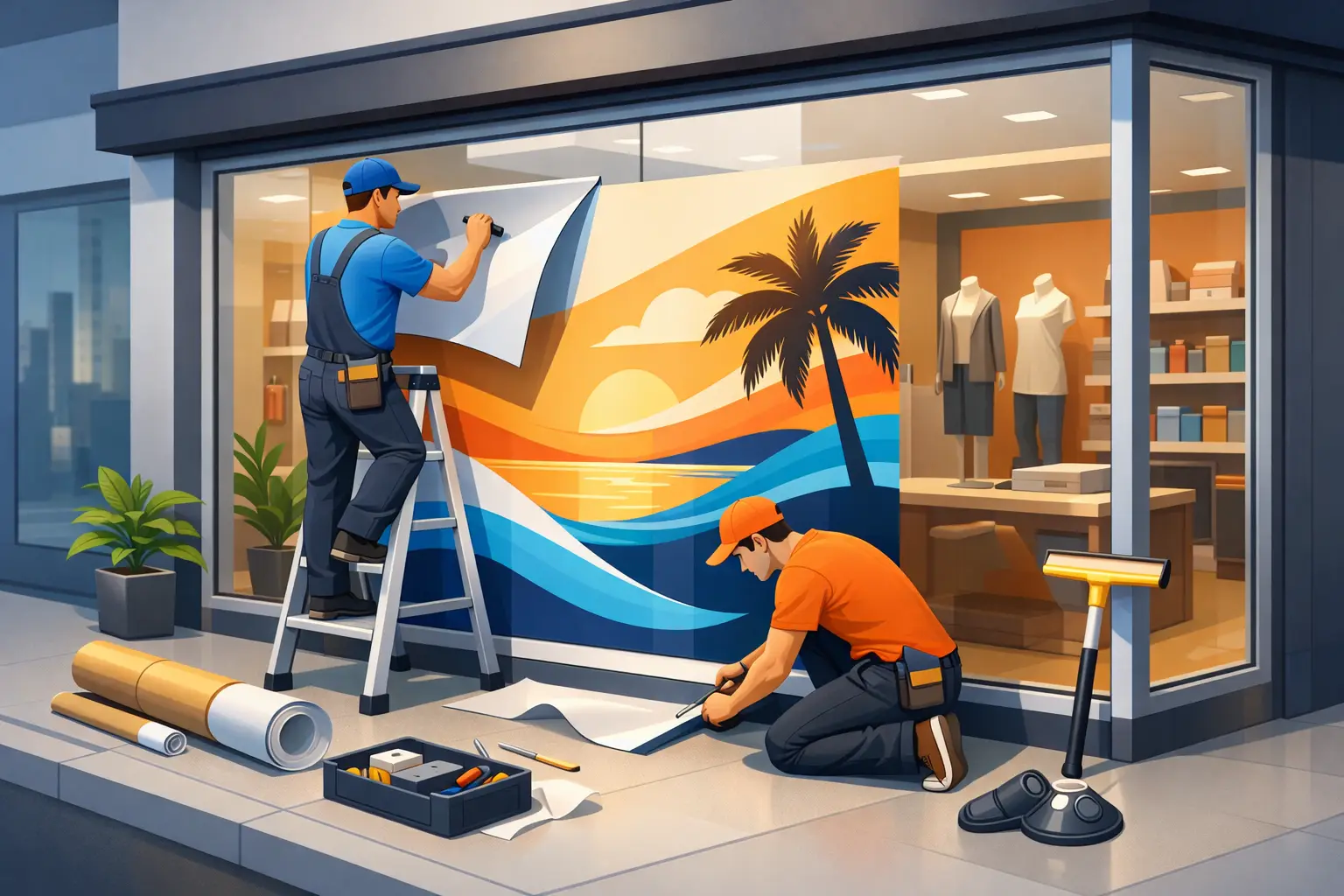
A storefront gets judged fast. Before a customer reads your hours, checks a review, or walks through the door, they are already making a decision based on what your windows communicate. That is why storefront window graphics installation is not just a design task. It is a visibility, branding, and durability decision that affects how your business presents itself every day.
For retail operators, property managers, and business owners, the challenge is rarely choosing between having graphics or not. The real question is whether the graphics will look clean, last as expected, and support the purpose of the space. A sharp installation can reinforce professionalism and foot traffic. A poor one can bubble, peel, fade unevenly, block important sightlines, or create a temporary look that undermines the brand.
What storefront window graphics installation really involves
From a distance, window graphics can seem straightforward. A design is printed, applied to glass, and the job is done. In practice, quality installation depends on several details working together – glass condition, film selection, print quality, measurement accuracy, environmental conditions, and installer technique.
A storefront window often has more variables than people expect. Glass may have old adhesive residue, silicone contamination near edges, surface damage, existing tint, or temperature-related expansion issues. Frames may not be perfectly square. Large panes can reveal minor alignment mistakes immediately. Even a strong graphic design can fall short if the material is not matched to the glass or the installer does not account for how the storefront is viewed from both inside and outside.
This is why the installation process matters as much as the artwork itself. A professional approach protects the final appearance and helps the graphic perform as intended for the full life of the material.
Choosing the right material before storefront window graphics installation
Not every graphic film is built for the same use. Some are designed for short-term promotions. Others are made for long-term branding, privacy, decorative effects, or perforated visibility from the interior. The right choice depends on what the storefront needs to do.
If the goal is bold branding with full coverage, opaque or printed vinyl may make sense. If natural light still matters and you want some visibility from inside, perforated window film can be a better fit. If the design is more about elegance than advertising, frosted or decorative films may offer the right balance of privacy and presentation.
There is always a trade-off. Full coverage creates strong visual impact, but it can reduce daylight and outward visibility. Perforated film can preserve views from inside during the day, but the visual effect changes at night when interior lighting is stronger. Short-term films cost less upfront, but they may not hold up well under prolonged sun exposure, especially in bright California conditions. Long-term materials usually perform better, though they require a higher initial investment.
The smartest projects start with the use case, not the material catalog. When graphics are selected based on business goals, the installation has a much better chance of delivering a clean and lasting result.
Glass condition can make or break the result
One of the most overlooked parts of storefront window graphics installation is surface preparation. Clean glass is not always ready glass. Dust, oils, cleaning chemical residue, hard water spotting, and old adhesive can all interfere with adhesion.
This matters because film does not hide every flaw. In fact, large graphics often make imperfections more visible. Small debris trapped under the film can create raised points or bubbles. Residue near the edges can cause lifting. Surface scratches or glass staining may still show through, especially with lighter or translucent graphics.
For older storefronts, inspection is worth the time. If the glass has damage, restoration or scratch removal may need to happen before any film is applied. If there is existing film on the glass, that material should be evaluated carefully. Applying graphics over unsuitable surfaces can shorten the life of the install and make future removal more difficult.
Why measurements and layout matter so much
Storefront graphics are highly visible, which means even minor layout issues stand out. A logo placed slightly off center, uneven spacing between panels, or text that lands too close to a frame can make the entire storefront feel unpolished.
Accurate field measurement is essential, especially on multi-pane storefront systems. What looks symmetrical on a digital proof may not translate perfectly to real-world glass dimensions. Door clearances, handles, mullions, and safety markings all need to be considered before production and installation begin.
This is also where experience helps. A good installer does not just apply what was printed. They evaluate viewing angles, traffic flow, and how customers approach the entrance. In some cases, adjusting the design slightly during planning can improve readability and make the storefront feel more balanced.
Installation conditions affect durability
A quality install is partly about technique and partly about timing. Temperature, moisture, and direct sun can all influence how film behaves during application. Glass that is too hot can make positioning more difficult. Cold conditions can reduce proper adhesion. High humidity or contamination in the environment can affect the finish.
This is especially relevant for larger commercial storefronts with broad sun exposure. In places like Orange County, Los Angeles, or Sacramento, glass temperatures can rise quickly depending on orientation and time of day. Professional installers plan around those conditions rather than forcing an application when the environment is working against the material.
The difference shows up later. Graphics that go on under poor conditions are more likely to develop edge issues, trapped moisture, or visual inconsistencies. A careful install schedule protects both appearance and service life.
Common problems after storefront window graphics installation
When storefront graphics fail early, the cause is usually not random. Most issues can be traced back to wrong material selection, inadequate preparation, rushed installation, or unrealistic expectations about lifespan.
Bubbles are one of the most common concerns, but not all bubbles mean the same thing. Some are air pockets caused by contamination or technique issues. Others may be temporary moisture pockets that settle during curing. Edge lifting typically points to preparation problems, poor adhesion at the border, or excessive stress on the film. Fading often relates to print quality, ink type, laminate choice, and sun exposure.
There is also the issue of removability. A promotion that is meant to stay up for three months should not leave behind hours of adhesive cleanup. On the other hand, a permanent brand graphic should not start failing after one summer. Matching the product to the intended timeline is a practical step that saves money later.
Professional installation vs. doing it in-house
Some businesses consider installing storefront graphics with in-house staff, especially for simple decals or short-term campaigns. For very small applications, that can work. But large-format storefront graphics are less forgiving than they appear.
A professional installation reduces the risk of misalignment, trapped debris, visible seams, silvering, and wasted material. It also improves consistency across multiple windows or locations. For property managers and multi-site businesses, that consistency matters. One location with crooked graphics can make the whole brand feel uneven.
There is also a cost question. DIY installation may seem cheaper at first, but a failed application can mean reprints, labor loss, disrupted business hours, and a storefront that does not look ready for customers. In many cases, professional installation is the more efficient path because it avoids preventable mistakes.
How to plan a storefront graphic that works long term
The best storefront graphics are designed with maintenance and real-world use in mind. That means thinking beyond the opening week. Will the graphic still look right after months of sun exposure? Will staff need to clean the glass often? Does the design leave enough transparency for safety and visibility? Will seasonal campaigns need easy removal and replacement?
For many businesses, a layered approach works well. Permanent brand elements can stay consistent while smaller promotional sections are swapped out as needed. This keeps the storefront fresh without forcing a complete redesign every time an offer changes.
It also helps to think about the storefront as part of the customer experience. Graphics should attract attention without making the entrance feel closed off. Privacy films should create discretion without making the business feel unwelcoming. The right balance depends on the business type, the street environment, and how much visibility matters from both directions.
A well-planned installation should support comfort, branding, privacy, and appearance at the same time. That is where experienced guidance becomes valuable. The right recommendation is not always the most expensive one. It is the one that fits the glass, the goal, and the expected lifespan.
Storefront windows do a lot of work for a business. When graphics are chosen carefully and installed with precision, they stop being a temporary add-on and start functioning like part of the space itself. If you want the finished result to look sharp six months from now, not just on day one, the quality of the installation is where that outcome begins.