
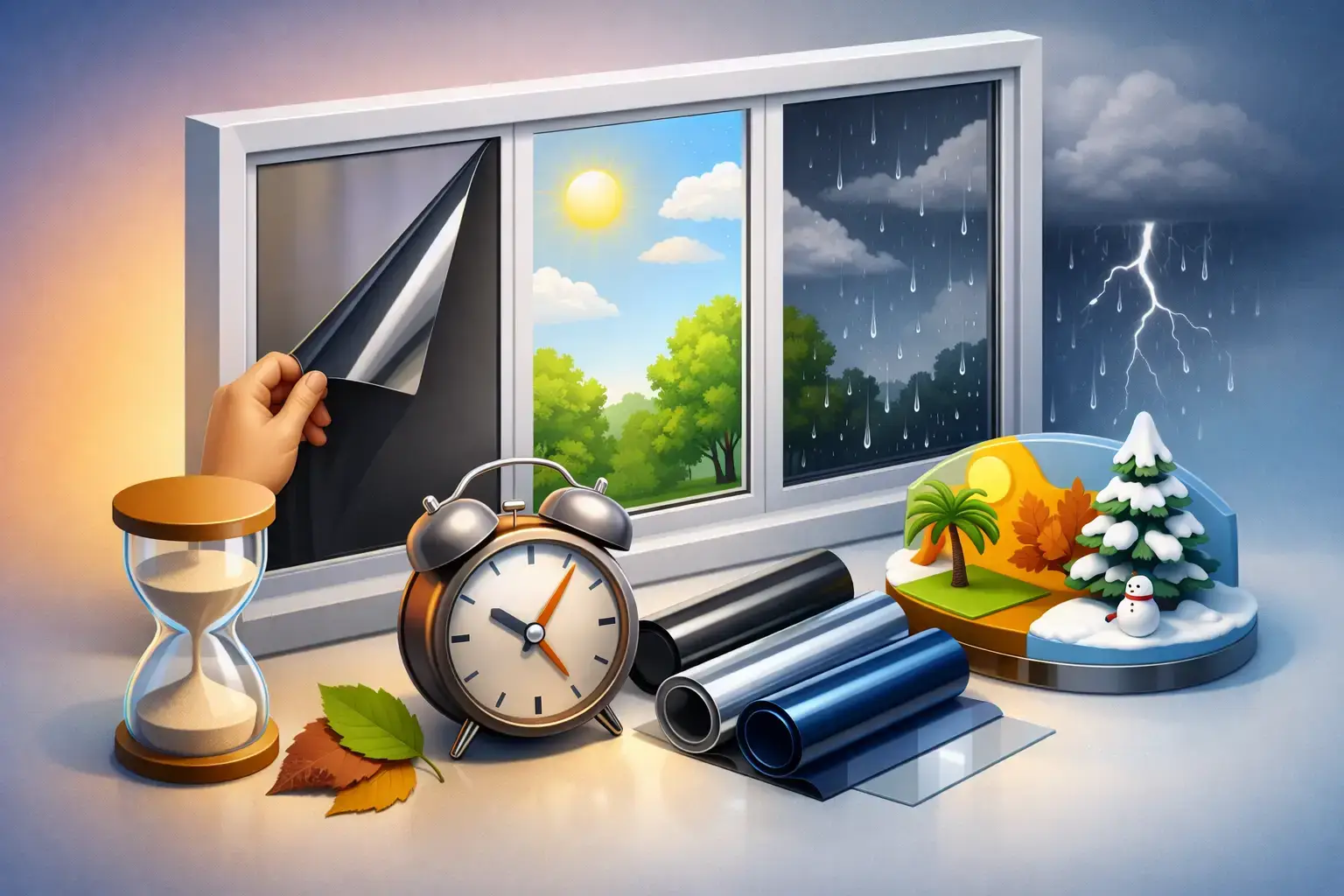
A window film that starts peeling after a few summers is not just disappointing – it is usually a sign that something went wrong with the product choice, the installation, or both. When customers ask how long does window film last, the honest answer is that quality film can last for many years, but the exact lifespan depends on the type of film, the glass it is applied to, sun exposure, and how well it was installed in the first place.
For most residential and commercial applications, professionally installed window film often lasts anywhere from 10 to 20 years. Some products perform well beyond that range, especially when they are installed on the right glass in lower-stress conditions. Others may wear out sooner if they face intense sun, heat buildup, moisture, cleaning damage, or poor installation. That range may sound broad, but it reflects the real-world difference between a bargain film job and a properly specified, professionally installed solution.
How long does window film last on homes and businesses?
The biggest factor is film type. Solar control films, decorative films, safety and security films, and anti-graffiti films are built for different jobs, so they do not all age the same way.
High-quality solar window film on a home or commercial building commonly lasts 15 years or more when it is matched correctly to the glass and exposure. These films are designed to reduce heat, glare, and UV damage, so they spend their life facing direct sunlight. Better products are engineered for that stress. Lower-grade films, especially dyed options, tend to fade, discolor, or break down faster.
Decorative and privacy films often last a long time indoors because they are not always under the same thermal load as sun-facing exterior glass. In offices, conference rooms, healthcare spaces, and retail settings, these films can maintain their appearance for many years if the glass is cleaned correctly and the edges stay protected.
Safety and security films can also be long-lasting, but their performance depends heavily on installation quality and attachment system details. A thicker film may still age well, but if the installation is rushed or the wrong product is used for the glazing condition, the expected lifespan can drop.
Anti-graffiti film works a little differently. It is often treated as a sacrificial layer, which means durability is measured not only by age but by how much abuse it takes before replacement makes sense. In a storefront or public-facing environment, replacing a damaged protective layer is often far more practical than replacing the underlying glass.
What affects how long window film lasts?
If two buildings use similar-looking film, one may get 18 years of strong performance while the other starts showing issues much sooner. That usually comes down to conditions, not appearances.
Sun exposure and heat
South- and west-facing glass usually takes the most punishment. In California, that can mean intense UV exposure, long periods of heat, and substantial thermal stress. Films on these elevations work harder every day, so product quality matters more. Premium films are built to handle that environment. Lower-end film may dry out, discolor, or fail at the edges much earlier.
The type of glass underneath
Not every film belongs on every piece of glass. Dual-pane units, tempered glass, low-E glass, and oversized commercial panes all need the right film recommendation. A mismatch can lead to performance issues and, in some cases, added stress on the glass itself. Long life starts with correct film-to-glass compatibility, which is one reason professional consultation matters.
Interior vs. exterior application
Most architectural window film is installed on the interior surface of the glass, where it is protected from weather and physical wear. Exterior films are available for certain applications and can be very useful, but they generally face more environmental stress from rain, washing, temperature swings, and surface contamination. That can shorten lifespan compared with a protected interior installation.
Installation quality
This is one of the most overlooked factors. Even excellent film can underperform if the glass was not properly cleaned, the edges were contaminated, or the installer left tension, debris, or poor alignment. Precision matters. Clean cuts, proper shrinking or handling, and attention to edge finish all contribute to longevity.
Maintenance and cleaning
Window film is durable, but it is not indestructible. Harsh chemicals, abrasive pads, razor scraping, and aggressive cleaning around the film edges can shorten its life. In homes and commercial spaces alike, simple maintenance habits can preserve both appearance and performance.
Signs your window film is reaching the end of its life
Most film does not fail all at once. It usually gives visible warning signs first.
Bubbling is one of the most obvious indicators. This can happen when adhesives begin to break down or when older film loses its bond to the glass. Peeling at corners or edges is another common sign, especially on older installations or low-quality jobs.
Discoloration is also worth watching. Some aging films turn purple, yellow, or hazy over time. That is more common with outdated or lower-grade products. If the film looks cloudy or distorts your view, it is often a sign that replacement should be considered.
A drop in comfort can matter just as much as appearance. If a room feels noticeably hotter, glare increases, or furnishings begin fading more than expected, the film may no longer be performing at the level it once did.
Why professional installation makes a big difference
When customers compare lifespan expectations, they often focus only on the manufacturer. The better question is whether the product was chosen and installed correctly for that specific building.
Professional installation improves longevity in a few ways. First, it helps ensure the film is compatible with the glass, exposure, and building use. Second, the preparation and installation process is controlled, which reduces contamination and premature edge failure. Third, quality installers can explain curing time, cleaning methods, and realistic performance expectations from the start.
That matters on both residential and commercial projects. A homeowner may want relief from heat and glare in a sun-facing living room. A property manager may be trying to improve comfort across multiple units or reduce fading in a retail environment. In both cases, long-term value comes from treating film as a building upgrade, not a quick cosmetic add-on.
Can window film last 20 years?
Yes, it can. Many high-performance architectural films are designed for long service life, and 20 years is a realistic outcome in the right conditions. That said, not every installation will reach that mark, and not every film should be expected to.
A decorative privacy film in a stable interior office setting may look excellent for a very long time because it is exposed to relatively little stress. A solar film on a heavily sunlit glass wall in Southern California may still last well over a decade, but it is doing much harder work every day. Both can be successful installations, even if their lifespans differ.
This is where expectations should be practical rather than generic. The goal is not just maximum years on paper. It is strong, consistent performance over the life of the film.
How to get the longest life from window film
Start with the right product, not the cheapest option. Better materials typically offer more stable color, stronger adhesives, and better long-term performance. That is especially important for heat rejection and UV protection applications where the film will be under constant stress.
Choose an experienced installer who can evaluate the glass, discuss your goals, and recommend the right solution for the space. Precision at installation has a direct effect on durability, appearance, and warranty protection.
After installation, respect the curing period and use film-safe cleaning methods. A soft cloth or non-abrasive cleaning approach is usually all that is needed. If the film ever shows changes at the edges, haze, or visible damage, have it evaluated early instead of waiting for the problem to spread.
Is replacing old window film worth it?
In many cases, yes. Older film may still be attached to the glass while delivering far less comfort, clarity, and UV protection than current products. Replacement can improve the look of the glass, restore performance, and solve issues like bubbling or discoloration without replacing the window itself.
For commercial properties, updated film can also support a cleaner, more consistent appearance across tenant spaces, storefronts, or office interiors. For homeowners, it can mean better comfort in rooms that have become hard to use during peak sun hours.
If you are asking how long does window film last, the better question may be whether your current film is still doing its job. Good window film should deliver comfort, privacy, efficiency, and clean appearance for years. When it is selected carefully and installed with precision, it becomes one of the more reliable upgrades you can make to glass.