
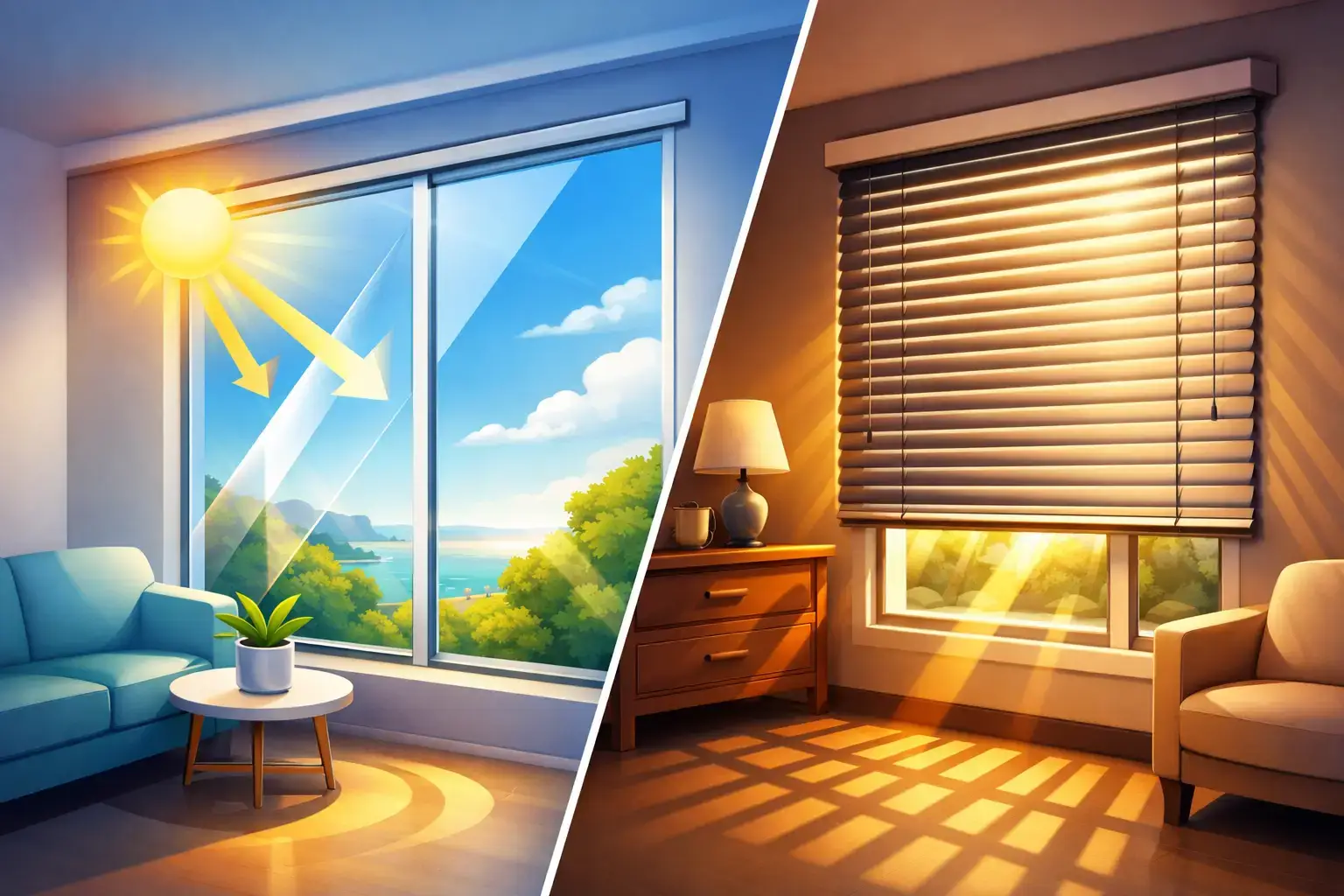
You usually notice the problem at the worst time – afternoon glare on a screen, a room that heats up fast, or windows that feel too exposed once the sun goes down. When people start comparing window film vs blinds, they are rarely shopping for a decoration alone. They want a fix for comfort, privacy, glare, UV exposure, or energy loss, and they want something that works every day without becoming another thing to adjust, clean, or replace.
The right choice depends on what you need the window to do. In many cases, window film and blinds are not direct substitutes. They solve some of the same problems, but they do it in very different ways.
Window film vs blinds: the real difference
Blinds are a covering. They sit inside the room and block or filter light by opening, closing, or tilting the slats. That gives you flexible light control, but it also means performance changes constantly based on how they are positioned.
Window film is applied directly to the glass. Instead of covering the window with a movable treatment, it changes how the glass performs. Depending on the product, film can reduce heat, cut glare, reject UV rays, improve daytime privacy, strengthen glass, or create a decorative finish.
That difference matters. If your main frustration is harsh sunlight, fading floors, or rooms that stay bright but too hot, blinds may only block the symptom. A properly selected film can address the source by reducing solar heat and glare at the glass itself.
If your priority is complete nighttime privacy in a bedroom or the ability to darken a room on demand, blinds may still be the better fit. Film is performance-driven. Blinds are control-driven.
When window film is the better choice
Window film tends to outperform blinds when the goal is comfort without losing the window. That is especially true in homes, offices, retail spaces, and commercial buildings with large glass areas.
Heat and glare control
Blinds can block sunlight, but they do not stop the sun from hitting the glass first. Once heat builds at the window, some of it still transfers into the room. Film is designed to reduce that solar load before it becomes an indoor comfort problem.
This is one reason film is such a practical option in sunny climates. In California, west-facing rooms, storefront windows, conference rooms, and living areas often need daylight without the heat penalty. Solar control film can help balance those spaces while keeping the view open.
Glare is another major difference. Closing blinds may reduce glare, but it also darkens the room and can make a space feel shut off. Film can soften glare while preserving natural light, which is often a better result for offices, kitchens, lobbies, and common areas.
UV protection and fading reduction
Blinds help when they are closed. Film works all the time. High-quality window film can reject the vast majority of UV rays, which helps protect flooring, furniture, merchandise, artwork, and interior finishes from premature fading.
For property owners trying to protect interiors without keeping rooms dark, this is one of film’s clearest advantages.
Low-maintenance privacy
Some privacy films provide daytime privacy while still allowing visible light into the space. That can be useful for front-facing offices, street-level windows, bathrooms, sidelights, and certain residential areas where people want coverage without heavy window treatments.
There is a trade-off here. Most reflective or privacy films do not provide the same effect at night when interior lights are on. If 24-hour privacy is essential, blinds, shades, or a combined solution may make more sense.
Cleaner aesthetics
For many modern homes and commercial spaces, film offers a cleaner look than bulky window coverings. Frosted and decorative films can add privacy and design without cords, slats, or fabric. Solar films can remain visually subtle while improving performance.
That matters in spaces where appearance and consistency count, such as offices, medical settings, retail storefronts, and open-concept homes.
When blinds are the better choice
Blinds still make sense in a lot of settings, and a fair comparison should say that clearly.
Adjustable light control
The biggest advantage of blinds is flexibility. You can open them fully, angle them for partial light, or close them for more privacy and darkness. That level of instant control is hard for film to match because film is not something you turn on and off.
Bedrooms, media rooms, and spaces where occupants want to frequently change the lighting conditions often benefit more from blinds or shades.
Nighttime privacy
If the main issue is preventing visibility into a room after dark, blinds are more reliable. Film can help depending on the type, but blinds provide a straightforward barrier when closed.
Short-term style updates
Some property owners see blinds as an easier design swap. If tastes change often or a tenant improvement plan is temporary, replacing blinds may feel simpler than selecting a long-term glass treatment.
That said, lower-quality blinds can age quickly. Bent slats, broken cords, dust buildup, and uneven appearance are common complaints.
Cost, durability, and long-term value
Initial price comparisons can be misleading because film and blinds deliver value in different ways.
Blinds often look less expensive upfront, especially in basic residential applications. But they have moving parts, they collect dust, and they can break or wear out with daily use. In commercial settings, they may also create a less polished appearance over time.
Professionally installed window film is more of a performance upgrade than a simple accessory. The upfront investment can be higher, but the return shows up in comfort, reduced glare, UV protection, a cleaner look, and in many cases better energy efficiency. Good film also lasts for years without needing the routine adjustment or replacement that blinds often require.
Installation quality matters here. Film should be selected based on glass type, exposure, building use, and the specific problem being solved. A poorly chosen product can underperform, while the right product can make a measurable difference.
Window film vs blinds for homes
In homes, the decision often comes down to how the room is used. Living rooms, kitchens, home offices, and sun-exposed common areas usually benefit from the constant performance of film. If the space gets hot every afternoon, film addresses the issue in a way blinds alone may not.
Bedrooms and nurseries are different. If darkness and nighttime privacy are top priorities, blinds or shades may be necessary. Many homeowners end up with a layered solution: film for heat and UV control, plus a window covering for blackout or decorative needs.
That combination is not overkill. It is often the most practical answer when one room needs both energy performance and flexible privacy.
Window film vs blinds for commercial spaces
Commercial properties usually have a stronger case for film, especially when the building has large windows, open floor plans, or public-facing glass.
In offices, film can reduce glare on monitors and improve employee comfort without eliminating daylight. In retail, it can help protect merchandise and make storefront glass more functional. In healthcare, education, and multi-tenant environments, decorative and privacy films can define space cleanly and professionally.
Blinds can still have a place in executive offices, conference rooms, or spaces where darkening is occasionally needed. But across larger glass areas, film often delivers a better balance of appearance, consistency, and low-maintenance performance.
Should you choose one or combine both?
This is where many buyers land after comparing options honestly. It is not always window film or blinds. Sometimes it is window film first, then blinds only where extra privacy or darkness is needed.
If your windows are causing heat, glare, UV damage, or discomfort, film solves the underlying performance problem. If you also want room-darkening or full nighttime privacy, adding blinds afterward gives you more control without asking blinds to do everything alone.
That approach is especially useful for homes with challenging sun exposure and for commercial spaces where comfort and presentation both matter.
The best window upgrade is the one that matches the problem. If you want a movable covering, blinds are a familiar option. If you want the glass itself to work harder for comfort, efficiency, privacy, and protection, window film is usually the smarter investment. A careful evaluation of the room, the exposure, and your daily use will point you in the right direction – and often to a result that feels better the moment the sun hits the glass.