The short answer: plan film room by room. Frosted or diffusing film handles patient privacy on exam rooms, consultation rooms and street-facing glass, day and night. Clear or light solar film keeps waiting rooms comfortable without making them dark. Safety film helps hold broken glass in place. Film can be one sensible physical safeguard for patient privacy, but it doesn’t make a practice compliant with privacy rules on its own.
Medical, dental and other healthcare offices have more glass than most people expect: storefront entries, glass-front consultation rooms, sidelights beside treatment room doors, and exterior windows that face parking lots and sidewalks. Each piece of glass raises its own question. Can someone outside see a patient? Is the waiting room too bright to read a screen? Would broken glass be a hazard?
Window film can answer several of those questions without replacing glass or closing blinds all day. The work is in matching the right film to each room.
Map the office by how each room is used
Follow the patient’s route from the front door to the exam room and back out, then look at what staff see from their workstations. A typical plan looks something like this:
| Area | Main concern | Film approach |
|---|---|---|
| Entry and street-facing windows | Patients visible from outside; heat and glare | Solar film for comfort, with frosted bands or decorative film where patients sit near the glass |
| Waiting room | Glare, heat, a bright and welcoming feel | Clear or light solar film that keeps the view |
| Reception and check-in | Screens and paperwork visible; screen glare | Partial frost on nearby interior glass; glare film on exterior glass facing monitors |
| Exam, treatment and consultation rooms | Full visual privacy | Solid or dense frosted film, day and night |
| Hallway sidelights and door glass | Glimpses into rooms | Frosted film at the heights that matter |
| Back-of-house and storage | Clutter, records and supplies on view | Dense frost or opaque film |
Planning each area separately avoids the most common mistake: using the densest film everywhere and making a small office feel closed in.
Privacy film for patient areas
Frosted and decorative films diffuse light, so they block the view in both directions, day and night, while still letting light through. That is the key difference from reflective or dark solar films, which only provide privacy when it is brighter outside than inside. In a lit exam room on a winter evening, a reflective film won’t keep people outside from seeing in. A frosted film will block the view, though a person standing very close to a brightly lit pane may still show as a soft silhouette.
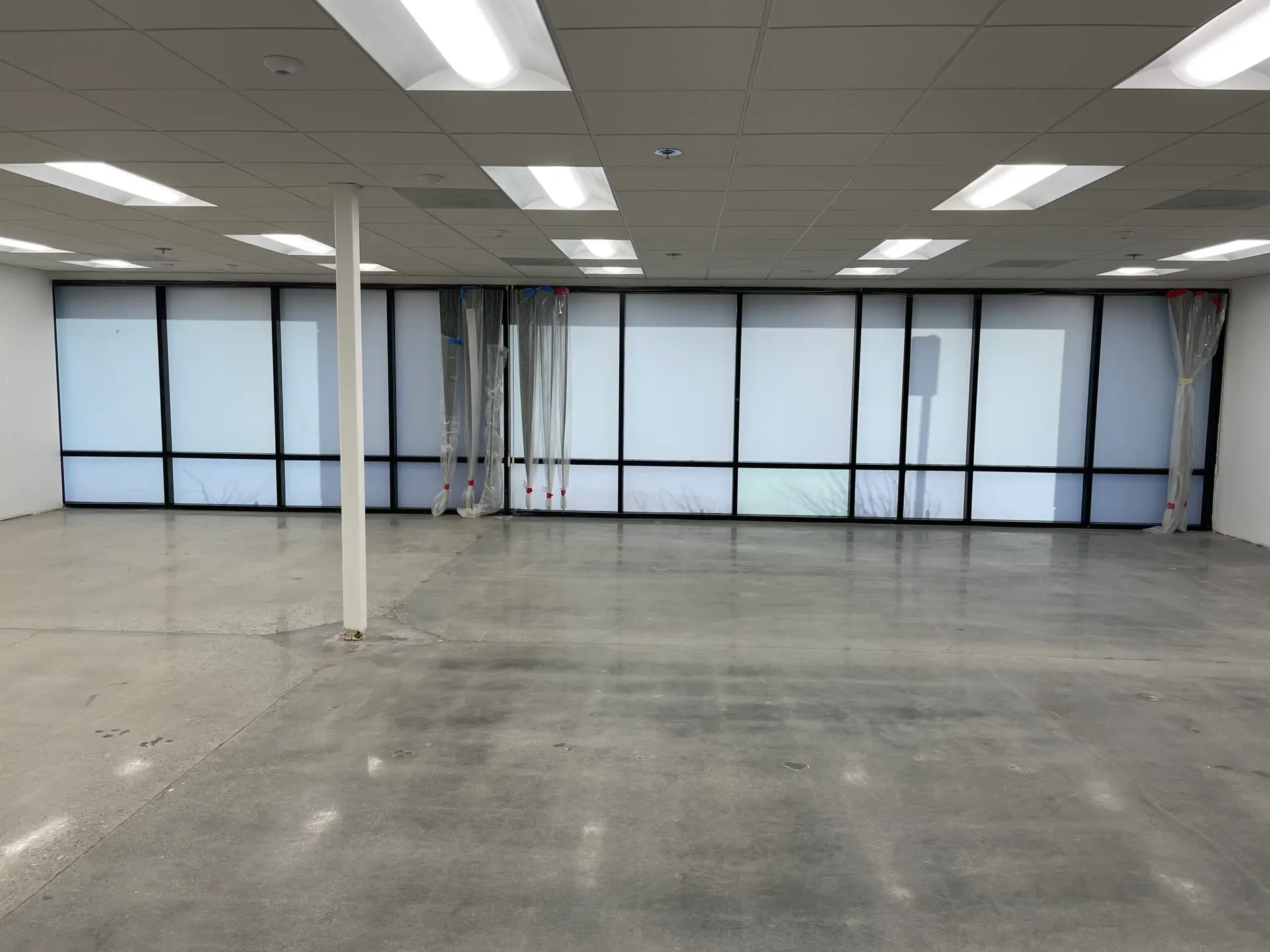
Frosted films come in different densities. For an Irvine medical facility, Comfort Pro installed about 800 square feet of 3M Fasara San Marino for patient privacy. 3M’s specification sheet lists it at 21% visible light transmittance, blocking at least 99% of UV light, for interior glass. That is a dense, milky look suited to rooms that need strong screening. A lighter frost such as Madico Frost Matte, listed at 67% visible light transmitted, keeps more daylight for spaces where some light matters more than complete screening.
Bands and gradients work well on interior glass, such as a glass-front consultation room off a hallway, where privacy is needed at seated height but the room shouldn’t feel boxed in. For more ideas, see our guide to office window frosting.
What film does and doesn’t do for privacy rules
The U.S. Department of Health and Human Services explains that the HIPAA (Health Insurance Portability and Accountability Act) Privacy Rule doesn’t require practices to eliminate every risk of incidental disclosure. It expects reasonable safeguards and minimum-necessary policies. Privacy film can be one of those physical safeguards, by limiting who can see a patient or a screen through glass. It isn’t a compliance measure by itself, and it doesn’t address sound, records handling or screen positioning. Your practice’s privacy officer or compliance advisor should decide what your safeguards need to cover.
Solar film for waiting rooms and exterior glass
Waiting rooms with large storefront windows can get hot and bright, especially facing west. Patients move away from the sunny seats, and staff close the blinds, which makes the office feel darker and less welcoming. A clear or light solar film can reduce heat and UV while keeping the view.
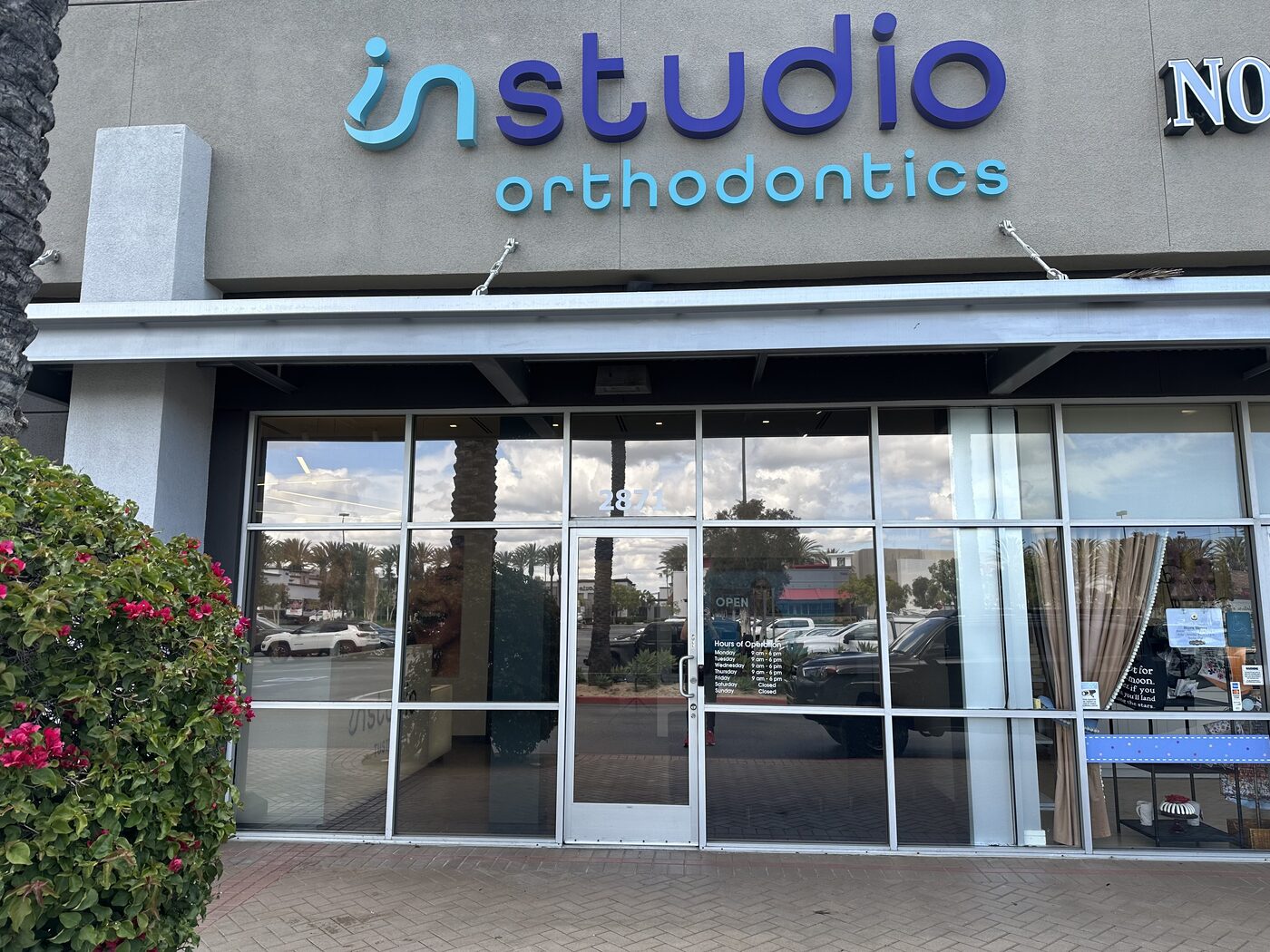
At InStudio Orthodontics in Irvine, Comfort Pro installed about 250 square feet of Panorama CX Ceramic 50 for heat reduction with a clear view. Solar Gard describes CX 50 as offering considerable heat and glare control while maintaining the look of the original windows inside and out. Light films like this won’t add privacy, so street-facing glass where patients sit may need a decorative band or frost in addition.
If glare on reception monitors is the main complaint, a darker film cuts more of it but also reduces daylight. Our guide to reducing lobby and office glare covers that trade-off.
Safety film for glass that could break
Safety and security films help hold broken glass together if it is struck or breaks, which can reduce the hazard from falling shards and slow down someone trying to get through. Results depend on the film, the glass, the frame and whether the film is anchored to the frame with an attachment system. Manufacturers are direct about the limits: the 3M Ultra S800 technical data sheet states that the film is not designed to stop intruders. For ground-floor entries and offices that store medication or equipment, it’s a reasonable layer alongside locks, alarms and cameras. See commercial security film and shatter-resistant film for details.
Practical points for clinics
- Cleaning. Clinics clean glass often. Ask for the manufacturer’s care instructions for the exact film and check them against the cleaning products your staff use before you choose.
- Installation in an occupied office. Interior film installs are usually quick and quiet, and work can often be scheduled around patient hours or room by room.
- Hospitals and larger facilities. Facilities with their own code, fire-safety or infection-control review should run film selections through those teams first. Ask for spec sheets and any fire-performance data the manufacturer publishes for the exact film.
- Leased suites. Many medical offices are tenants. Check whether the landlord needs to approve film, especially on exterior glass.
- Glass compatibility. Solar films absorb heat, and some glass needs to be checked before film is applied. The International Window Film Association notes that manufacturers publish film-to-glass guidance for installers.
When film isn’t the right fit
- The room needs sound privacy. Film doesn’t reduce what can be heard through a glass wall.
- Privacy is needed only sometimes. A consultation room that should be open most of the day may be better served by blinds or switchable glass.
- Nighttime privacy from a solar film. If a clinic is open after dark, don’t rely on a dark or reflective film for privacy. Use frosted or decorative film where it matters.
- The glass itself needs replacing. Fogged dual-pane units or damaged glass should be fixed first.
Plan film for your practice
Comfort Pro installs privacy, solar and safety film for medical and professional offices across Orange County and Los Angeles. We can walk the office with you, check the glass and bring samples for each room. See office decorative and privacy film and commercial solar film, or contact us to set up a visit.