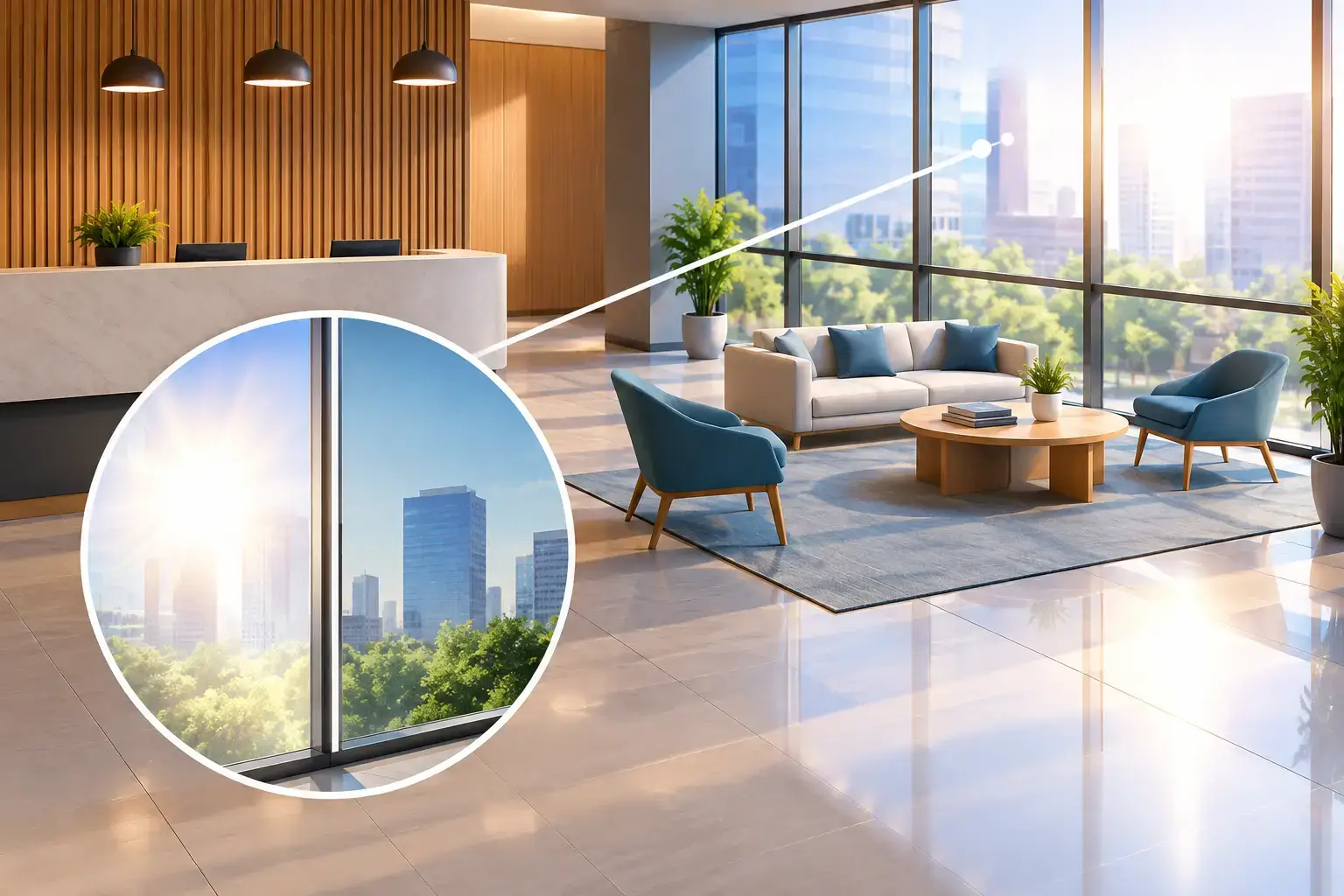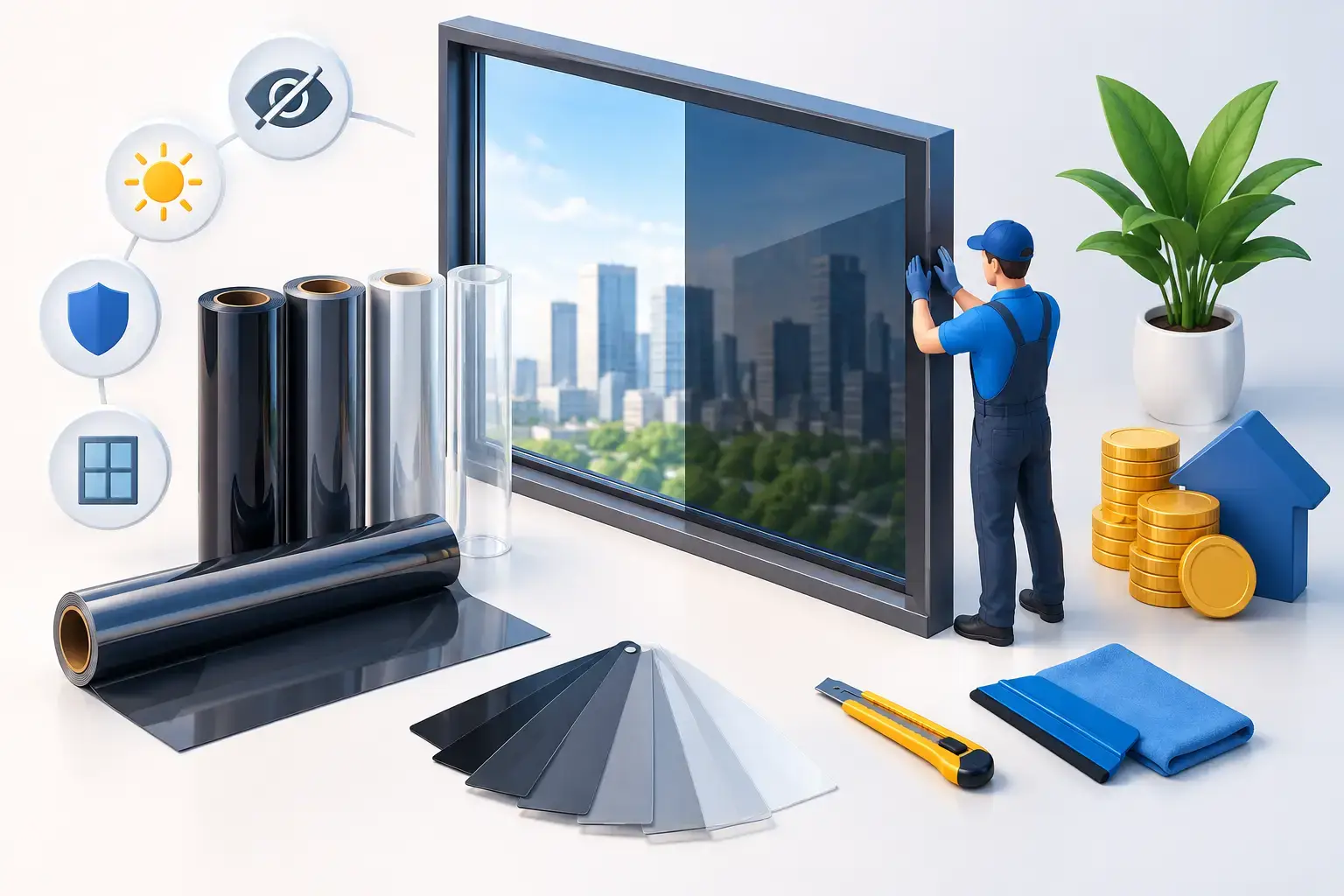
A clear conference room wall can create an awkward moment before the meeting even starts. Employees see every presentation, visitors can look into sensitive discussions, and a busy hallway becomes a distraction. The right office window frosting ideas solve those problems without turning a bright, open workplace into a row of closed-off rooms.
Decorative privacy film gives offices a practical middle ground: visual separation where it matters, natural light where it helps, and a finish that feels intentional rather than temporary. From a subtle frosted band to a fully customized graphic, the best choice depends on how people use the space and what they need to see – or not see – through the glass.
Why Frosted Window Film Works in Offices
Glass is a valuable design feature in commercial interiors. It carries daylight deeper into the floor plan, makes smaller suites feel less confined, and lets teams maintain a visual connection across the office. But clear glass does not provide much discretion. Conference rooms, executive offices, HR areas, wellness rooms, and client-facing spaces often need more privacy than clear partitions can offer.
Frosted window film obscures direct views while still allowing light to pass through. It can be applied to existing glass, which usually makes it a faster and more cost-conscious option than replacing panels or adding permanent architectural elements. It is also available in different opacity levels, patterns, colors, and printable formats, so privacy does not have to look generic.
The practical benefit is control. A reception area may need partial coverage so staff can see approaching visitors. A medical or financial office may need much higher privacy. A creative studio may prefer a pattern that creates separation without hiding the activity and energy of the space.
Office Window Frosting Ideas by Space and Purpose
1. Frost the lower half of conference room glass
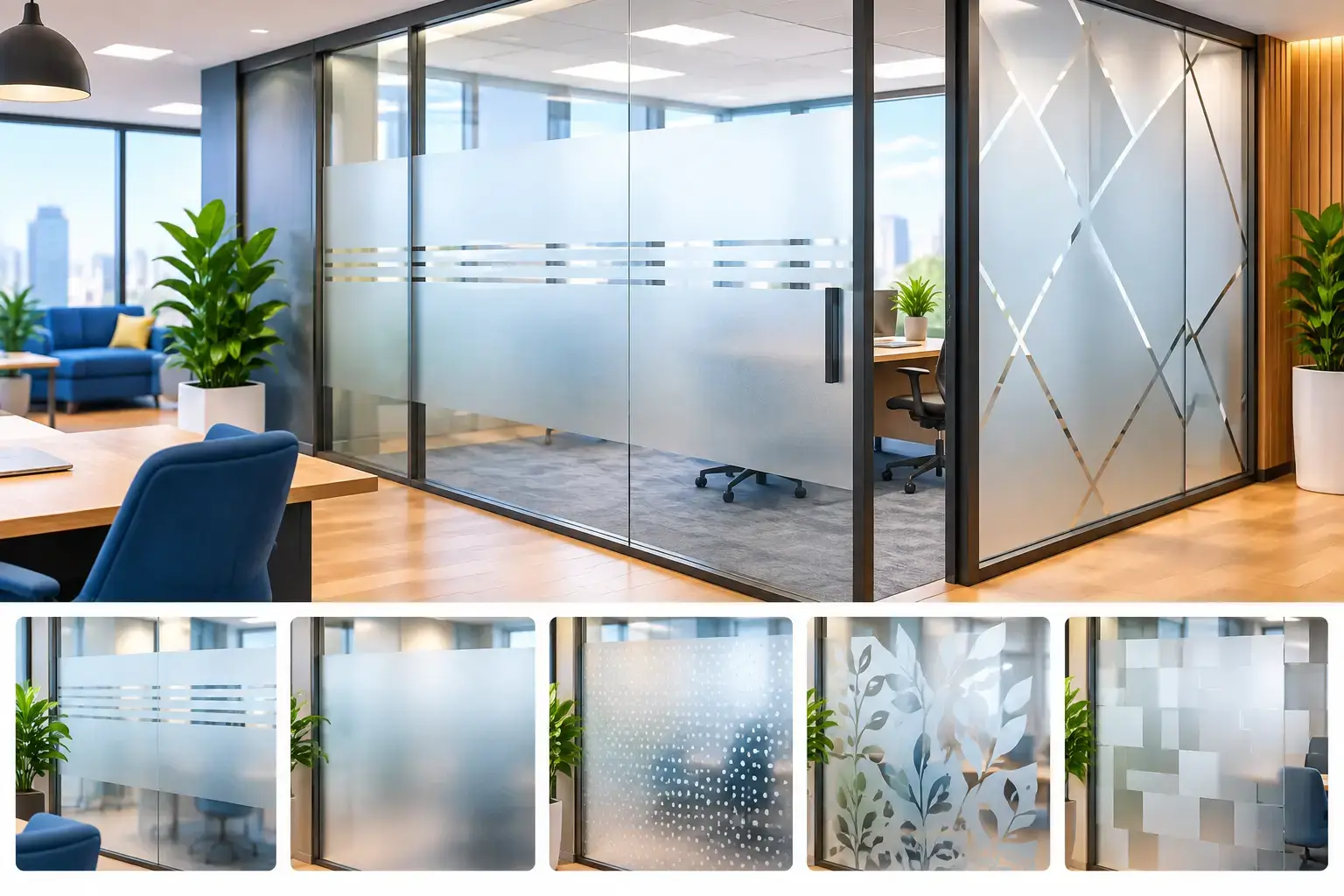
A frosted lower panel is one of the most useful solutions for conference rooms facing hallways or shared work areas. It blocks the seated-level view into meetings, screens, and whiteboards while preserving a clear upper section for openness and daylight.
This approach works especially well when the room has glass doors and sidelights. Set the frosted area at a consistent height across every panel for a clean architectural look. The exact height should account for sightlines from both seated and standing positions, not simply follow the center of the glass.
2. Use horizontal bands for polished partial privacy
Horizontal frosted bands are a classic choice because they look clean, organized, and easy to repeat throughout an office. They can be placed at eye level to break direct sightlines or arranged in multiple bands to create a more graphic design.
This option is a strong fit for offices that want privacy without making the glass feel heavily covered. Band widths, spacing, and placement should align across doors, partitions, and conference room walls. Small inconsistencies become noticeable quickly on large expanses of interior glass, so precise installation matters.
3. Add a gradient for a lighter visual effect
Gradient frosting transitions from more opaque coverage to a clearer finish. It can be installed with the denser portion at the bottom, top, or center of the glass depending on the view that needs to be blocked.
A bottom-up gradient is often effective for open offices because it protects desk-level privacy while keeping upper views open. It provides a softer look than a hard band and can make a glass-heavy space feel more refined. Keep in mind that gradients offer less complete visual screening than solid frost, so they are better for general discretion than highly confidential rooms.
4. Create a private focus room or wellness space
Focus rooms, lactation rooms, counseling offices, and wellness spaces require a higher level of privacy. Full frosted film is often the right answer for sidelights, transom windows, and glass doors in these areas. It helps occupants feel comfortable using the room while maintaining the bright, open quality of the broader workplace.
For rooms with sensitive conversations or personal information, evaluate the entire opening. A frosted glass wall will not provide privacy if a clear sidelight or door window still offers a direct view inside. Privacy film manages visibility, but it does not replace sound control where acoustic confidentiality is required.
5. Turn glass walls into branded design elements
Frosted film can carry a company logo, a mission statement, or a subtle custom pattern. Rather than applying a small decal to otherwise clear glass, consider using negative space: frost most of the panel and leave the logo clear, or reverse the treatment for a more understated mark.
This works particularly well in entryways, reception areas, and client meeting spaces. A custom design can reinforce brand identity while adding meaningful privacy. The key is restraint. Oversized graphics or too many competing messages can make a professional environment feel cluttered, especially when viewed through multiple glass partitions.
6. Use geometric patterns to define neighborhoods
Patterned frosting is useful in larger offices with repeated work zones. Fine lines, squares, angled shapes, or organic patterns can distinguish departments, meeting rooms, and collaborative areas without adding physical barriers.
Patterns should support the building rather than fight it. A grid-style film can complement modern office architecture, while a softer, nature-inspired pattern may suit a hospitality-focused or wellness-oriented space. Request a sample or visual mockup before approving a large installation. A pattern that looks subtle on a small swatch can appear much busier across a 10-foot glass wall.
7. Give reception areas selective screening
Reception areas must balance welcome and privacy. Visitors need a clear sense of where to go, but staff may need protection from direct views of computer screens, paperwork, or back-office activity. Partial frosting on adjacent partitions can guide sightlines without making the front desk feel closed in.
Consider a banded design that incorporates the business name or a simple directional element. This gives the entry a finished appearance and makes the privacy treatment feel like part of the overall interior design, not an afterthought.
8. Use whiteboard-compatible film in collaboration rooms
Some specialty decorative films can create writable surfaces on glass partitions. This is a smart option for huddle rooms and project spaces where teams need quick access to notes, timelines, or brainstorming space.
The film should provide enough opacity to improve privacy while remaining easy to clean and suitable for the intended marker type. It is not the right choice for every glass wall, but in active team spaces, it can make one surface serve two purposes.
9. Soften street-facing office windows
Ground-floor offices and suites with close neighboring buildings often need privacy from outside without losing daylight. Frosted film on lower sections of street-facing windows can limit direct views into workstations and reception areas while retaining clearer views above.
Before choosing full coverage, consider the value of the exterior view. If the view is a major amenity, a partial or gradient treatment may be the better compromise. For sun-exposed glass, decorative film can also be paired with a separate solar control solution when glare and heat are part of the concern.
10. Coordinate frosting with doors, partitions, and signage
The most successful office frosting projects are coordinated rather than pieced together. When only one conference room receives film while adjacent doors and partitions remain untreated, the result can feel disconnected. A consistent privacy strategy makes the workplace look planned and professionally maintained.
That does not mean every window needs the same pattern. It means the design language should stay consistent: similar opacity, repeated band heights, compatible graphics, and deliberate transitions between public and private areas.
How to Choose the Right Frosting Design
Start with the reason for the project. If the goal is to reduce distraction, partial bands or gradients may be enough. If the goal is to protect confidential discussions, payroll work, patient information, or employee wellness, a more opaque treatment is likely necessary.
Next, assess lighting and sightlines at different times of day. Light changes can affect how visible an interior is from the outside, particularly with exterior-facing windows. Walk the space from the hallway, neighboring offices, reception, and the street before finalizing coverage. A professional site evaluation helps identify those overlooked angles.
Also consider maintenance and longevity. Quality decorative film should have clean edges, even alignment, and a finish that remains stable under normal office cleaning. Low-cost materials or rushed installation can show bubbles, lifting edges, inconsistent pattern alignment, and visible seams. Those issues are especially noticeable on conference room glass and client-facing entryways.
For offices in Southern California and Northern California, Comfort Pro can help match the film design to the privacy requirement, lighting conditions, and existing architecture. A measured consultation is the simplest way to avoid choosing a pattern that looks good in a sample but misses the functional need on the actual glass.
Plan for Privacy Without Losing the Office Feel
The best frosting design does more than hide a room. It makes people more comfortable using it. Employees can focus, visitors can be received with confidence, and the office retains the light and visual openness that made glass appealing in the first place.
Before selecting a film, stand where your employees and guests stand. The right design is usually the one that quietly improves that daily experience without asking anyone to think about the glass at all.