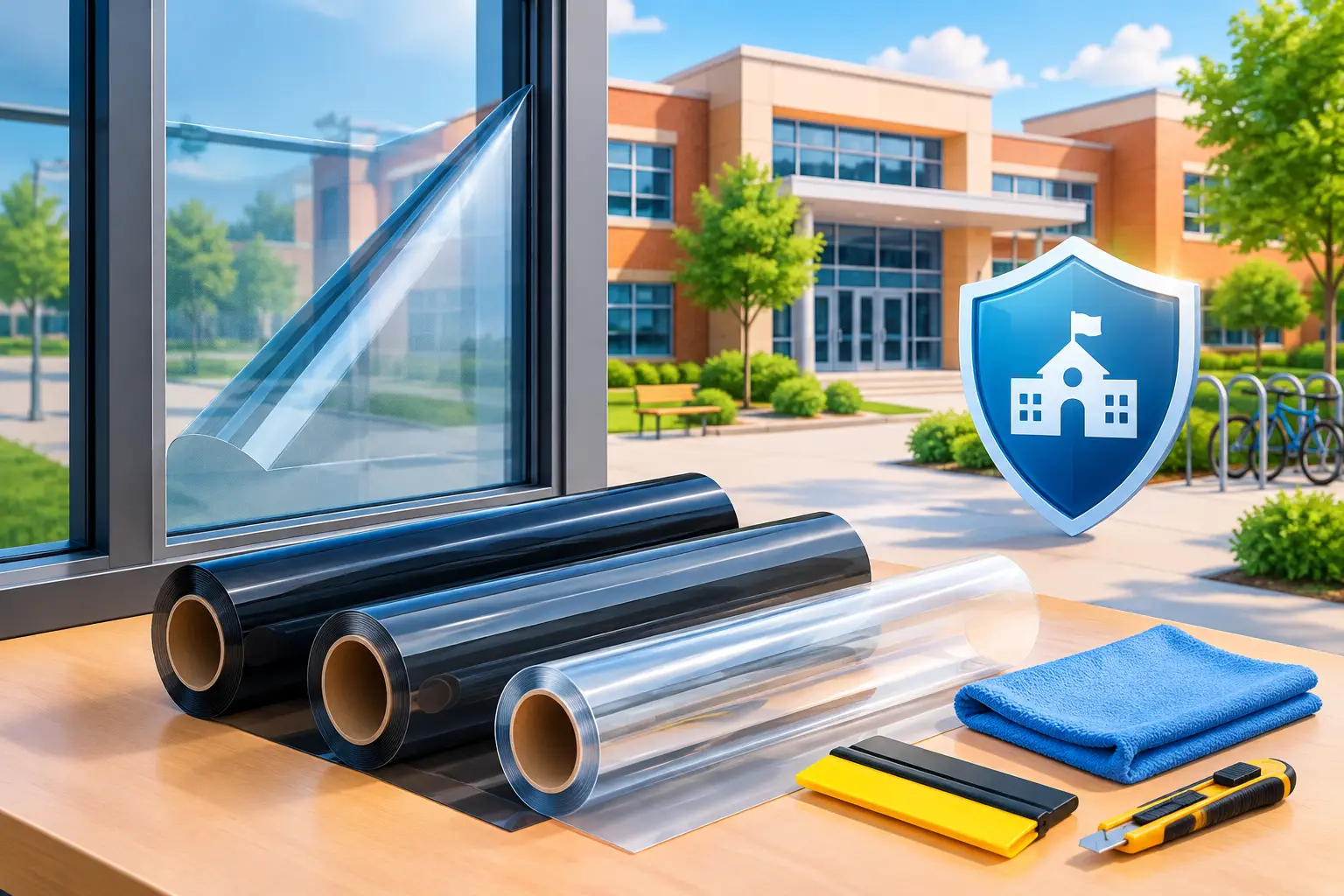
A broken classroom window creates more than a cleanup problem. It can expose occupants to flying glass, leave an unsecured opening, interrupt instruction, and put facility teams under pressure to respond quickly. This school safety film buying guide helps administrators, facility managers, and procurement teams evaluate the right film system for their buildings – without confusing a basic glass-fragment solution with a complete security upgrade.
Safety film can be a practical improvement for existing glass, especially when replacing every window is not realistic. But products, installation methods, and expected outcomes vary widely. A well-chosen system starts with the campus risk assessment, the existing glazing, and a clear understanding of what the film is designed to do.
Start With the Security Goal, Not the Film Roll
Schools use safety and security film for different reasons. A district may want to reduce injuries from accidental glass breakage. Another may be addressing forced-entry concerns at ground-level doors and sidelights. Older schools may be improving vulnerable glass as part of a broader campus security plan, while a new facility may need a solution that fits particular glazing requirements.
Those are related goals, but they are not identical. Standard safety film is primarily intended to help hold broken glass together and reduce hazardous shards. Security film is generally thicker and is selected for greater tear resistance and delayed entry performance. The right choice depends on the threat scenario, the glass construction, and whether the film is installed with a structural attachment system.
Do not buy film based on thickness alone. A thicker product may be appropriate for certain applications, but overall performance depends on the glass, frame, adhesive, edge retention, and installation quality. A film that adheres well to glass but releases from the frame after breakage may not provide the retention time a school expects.
What School Safety Film Can – and Cannot – Do
Properly specified window film can help retain broken glass, reduce loose fragments, and create a more difficult barrier to breach. That added delay can support a school’s response plan by giving staff and students more time to follow established safety procedures.
It is not a substitute for a complete security strategy. Film does not make standard glazing indestructible, and it should never be represented as guaranteed protection from every threat. Glass can still break. A determined intruder may still gain entry, particularly if the opening is not supported by a tested attachment method or other protective measures.
This distinction matters during budgeting. Safety film is often a cost-effective retrofit for existing windows, but it works best when coordinated with door hardware, access control, visitor procedures, communications, landscaping, lighting, and emergency planning. The goal is a better protected building envelope, not a single-product promise.
Evaluate the Existing Glass and Frames
Before requesting bids, create an inventory of the openings under consideration. Include classroom windows, entry doors, sidelights, office partitions, glass vestibules, and any accessible ground-floor glazing. Record approximate dimensions, pane type, frame material, condition, and whether the glass is single-pane, insulated, tempered, laminated, or wired.
This survey affects both product selection and price. Film can be installed on many existing glass surfaces, but some conditions require special attention. Damaged seals, deteriorated frames, cracked glass, and failed insulated units should be addressed before installation. Applying film over a compromised surface is not a durable fix.
Tempered glass also deserves careful review. It breaks into small pieces rather than long, sharp shards, but it can still leave an opening when it fails. Depending on the school’s objective, a properly engineered attachment system may be more relevant than film thickness alone. A professional site assessment should identify which openings are suitable for film and which may call for glass replacement or another security measure.
Ask About Structural Attachment Systems
For applications focused on delayed entry and glass retention, ask whether the proposed system includes a structural attachment component. These systems bond the film to the window frame using a compatible sealant or attachment method. Their purpose is to help the filmed glass remain in the frame after impact instead of separating as a single sheet.
Not every opening needs this approach. Interior glass intended mainly to reduce fragment scatter may have different requirements than an exterior entry door. Still, if a proposal describes itself as a security solution, the contractor should clearly explain whether attachment is included, where it is needed, and how it affects performance and cost.
Compare Performance Evidence, Not Sales Language
Manufacturers may reference impact, forced-entry, or blast-related testing. Those terms can be meaningful, but they should be tied to a specific product configuration. Ask for documentation showing the film, glass type, frame, and attachment method used in testing. A test result for one setup does not automatically apply to every opening on campus.
A capable installer should be prepared to discuss relevant safety glazing standards and the limits of available test data in plain language. They should also explain how the recommended system aligns with your district’s requirements, building conditions, and security consultant recommendations.
When comparing proposals, look beyond the initial square-foot price. Request clear answers on these four points:
- The exact film product, thickness, finish, and manufacturer warranty
- Whether structural attachment is included, and which openings will receive it
- The condition of the glass and frames required before installation
- The expected installation schedule, site protection plan, and warranty on workmanship
A low bid that omits attachment, prep work, warranty details, or project coordination may cost more later. Schools need a partner who can document the scope, communicate with campus staff, and complete the work carefully around occupied spaces.
Consider Visibility, Daylight, and Daily Operations
Most clear safety films have minimal effect on visible light and are a natural fit where maintaining classroom daylight and sightlines is important. However, some schools choose combined solutions that add solar control, glare reduction, or privacy. These can improve comfort in offices, libraries, multi-purpose rooms, and west-facing classrooms, but the visual and thermal priorities should be evaluated separately from the security objective.
For example, a tinted film may reduce glare and heat in a sunny administrative area, while clear security film is better suited to an entry where visibility is critical. Decorative privacy film can improve privacy on interior partitions, but it should not be treated as a security film unless it has been specifically designed and installed for that purpose.
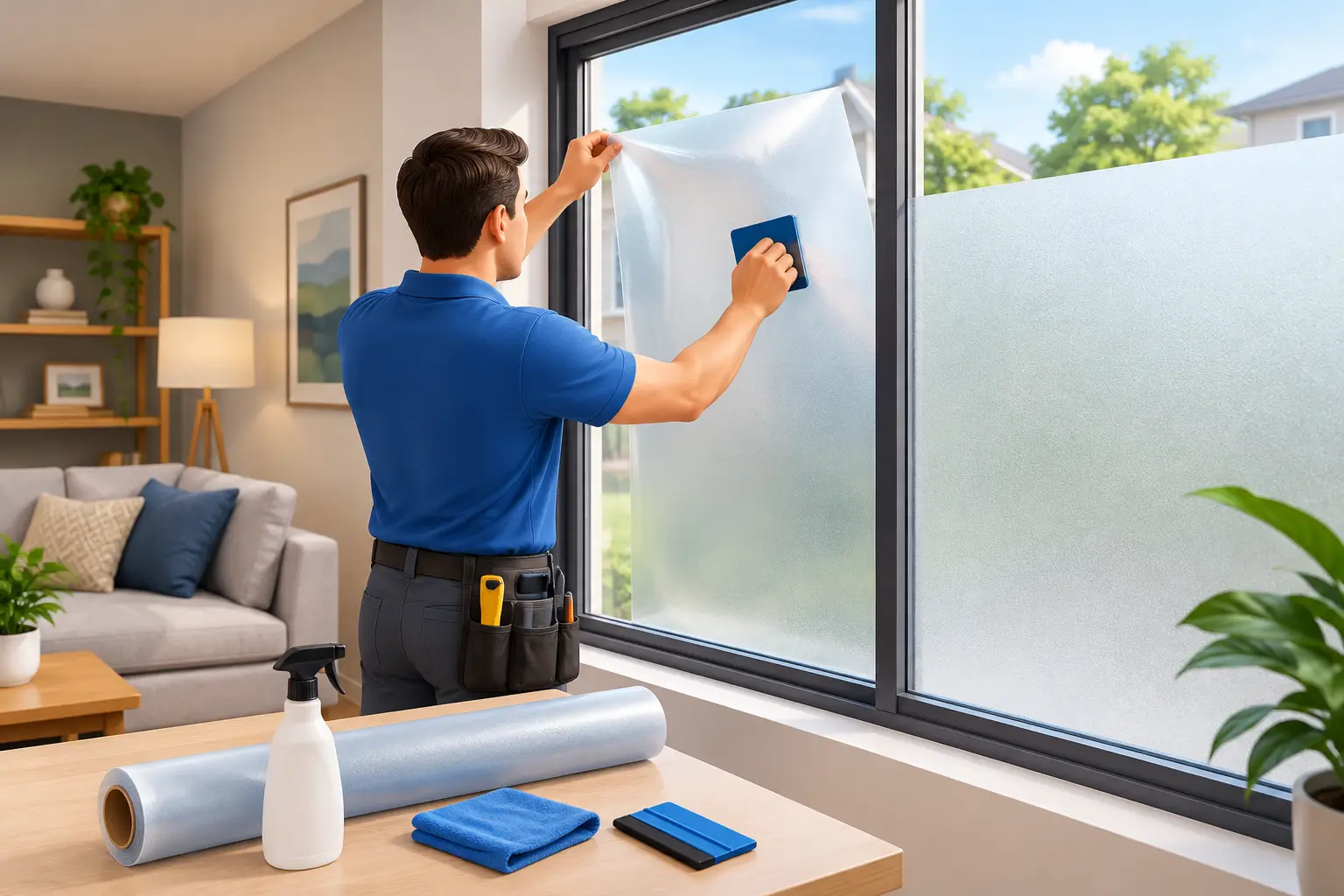
Think through cleaning and maintenance as well. Staff should know when the film can be cleaned after installation, which non-abrasive products are appropriate, and how to report edge lifting, scratches, or damage. A good installer will provide straightforward care guidance at project closeout.
Plan Installation Around the School Calendar
Installation quality has a direct effect on appearance and long-term performance. The glass must be thoroughly cleaned, film edges carefully finished, and attachment materials applied according to manufacturer requirements. Dust control, access equipment, cure time, and occupied-building safety all need to be part of the plan.
For large campuses, phased installation often makes sense. Work can be scheduled by building, floor, or priority zone to keep entries open and limit disruption. Summer and school breaks may offer the easiest access, but smaller projects can often be completed during off-hours with proper coordination.
Ask the installer who will perform the work, how crews will protect floors and adjacent surfaces, and what daily communication process they use. This is particularly valuable in active California school environments where multiple vendors, custodial schedules, and campus events can affect access.
A School Safety Film Buying Guide for Smarter Procurement
The strongest purchasing decision is based on documented needs, not generalized claims. Begin with the highest-priority openings, verify existing conditions, and match the film system to the security goal. If an attachment system is recommended, make sure it is defined in the scope rather than assumed.
Select an installer with experience assessing commercial glass, coordinating around occupied facilities, and standing behind precise workmanship. The film itself matters, but installation is what turns a product specification into a functioning protective measure.
For schools, the best result is rarely the most aggressive-sounding option. It is the system that fits the glass, supports the campus plan, preserves a welcoming learning environment, and is installed with the care students, staff, and families deserve.