
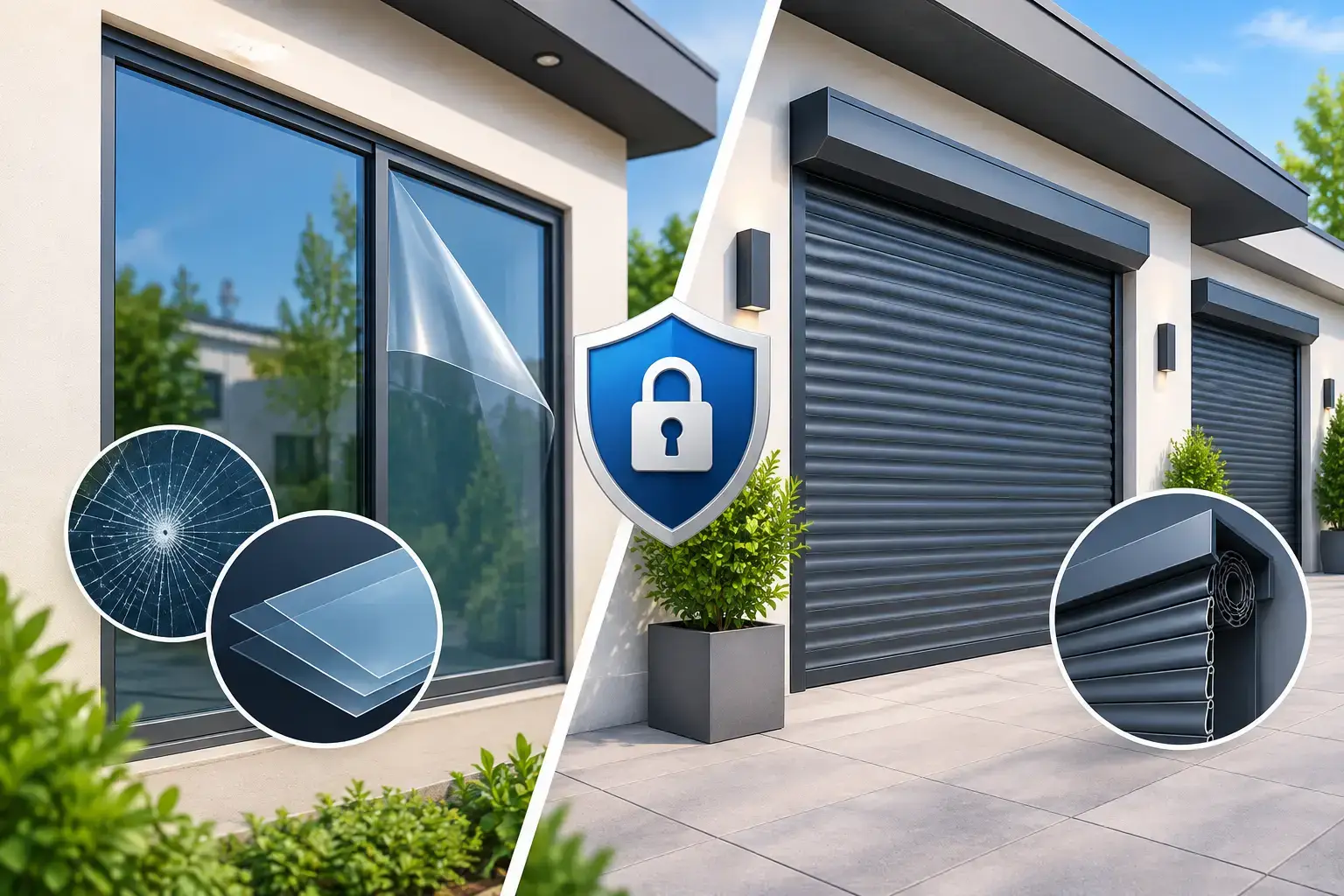
A broken window is rarely just a glass replacement issue. It can interrupt operations, expose a home or business to weather, create a cleanup hazard, and leave occupants feeling vulnerable. When comparing security film vs shutters, the right choice comes down to the threat you want to address, how the property operates each day, and how much you want the security measure to affect light, visibility, and appearance.
Security window film and shutters can both improve window protection, but they work in very different ways. One reinforces the glass you already have. The other creates a physical barrier in front of it. Understanding that distinction makes the decision much easier.
How Security Film Protects Glass
Security film is a clear, heavy-gauge film professionally applied to the interior surface of glass. When glass breaks, the film helps hold shattered pieces together instead of allowing them to scatter or fall away immediately. The goal is containment and delay.
That delay matters. A window with properly selected and installed security film can require repeated impacts before an opening is created. In a break-in attempt, extra time and noise can discourage an intruder or create more opportunity for someone to respond. For schools, storefronts, offices, healthcare facilities, and homes, the film also helps reduce the hazard of flying or falling glass after accidental impact or certain weather events.
Security film does not make a window unbreakable. The glass can still crack or fracture under sufficient force. It is also not the same as replacing standard glass with a rated impact-resistant glazing system. Its value is in helping the broken glass remain in place and making access more difficult.
For higher-risk applications, the installation method is as important as the film itself. A mechanical or structural attachment system can help anchor the filmed glass to the window frame, improving retention after breakage. Glass type, frame condition, window size, and the desired level of performance should all be evaluated before specifying a product.
How Shutters Create a Physical Barrier
Security shutters, often rolling shutters, sit outside the window or door opening and close over the glass. They create an obvious physical barrier before anyone reaches the window. Depending on the system, shutters may be manually operated, motorized, integrated with controls, or designed to provide both security and weather protection.
For a retail storefront, a shutter can be a practical choice when the property is unoccupied overnight. It visibly signals that the opening is protected and can help limit direct access to the glass. In some locations, shutters are also selected for privacy, light blocking, or storm-related concerns.
The trade-off is that shutters are only protective when they are closed. If employees forget to lower them, if a motor fails, or if the property needs open sightlines during operating hours, the windows remain exposed. Shutters also change the exterior look of a building more dramatically than clear film, which can be a concern for residential properties, design-conscious retail spaces, and buildings with architectural restrictions.
Security Film vs Shutters: The Key Differences
The most meaningful difference between security film and shutters is where the protection happens. Film works with the glass, helping it stay together after impact. Shutters block access to the glass when deployed.
Security film is generally the less visually disruptive option. Clear security film preserves natural light and outward views, which is especially valuable in offices, lobbies, homes, and storefronts where the window is part of the experience. Once installed, it works continuously without needing to be raised, lowered, or remembered.
Shutters provide a more substantial exterior obstacle, but they affect visibility and daylight whenever they are closed. They require clearance around the opening, a suitable mounting surface, and ongoing attention to operation and maintenance. For some properties, those are worthwhile trade-offs. For others, they are a daily inconvenience.
Cost also depends heavily on the project. Security film is often more economical and faster to install across many existing windows, particularly where preserving the building exterior is a priority. Shutters can involve a larger investment because they require hardware, exterior mounting, electrical work for motorized systems, and more complex installation. However, a shutter may make sense for a small number of highly vulnerable openings where a visible barrier is the priority.
Light, Appearance, and Everyday Use
Security decisions should not force a property to become dark or unwelcoming. This is where film often has an advantage.
Clear security film is subtle. It allows a home to retain its curb appeal and a business to keep merchandise, signage, and interior spaces visible during normal hours. It also avoids the operational burden of opening and closing a barrier every day. Certain film options may add benefits such as UV reduction, glare control, or solar heat reduction, although performance varies by product. A security-focused film should be selected for its safety and retention goals first, then paired with other benefits where appropriate.
Shutters can provide complete visual privacy and strong light blocking when closed. That may be useful for a closed retail location, a storage area, or an opening that does not need daylight after hours. During business hours, though, shutters must be open to preserve visibility. A closed shutter can also make an occupied storefront appear unavailable or inaccessible.
Aesthetic requirements matter as well. Homeowners associations, commercial landlords, historic districts, and local building requirements may limit the type, color, or visibility of exterior shutters. Film usually presents fewer exterior design concerns because it is applied on the inside of the glass.
Maintenance and Long-Term Considerations
Professionally installed security film requires little daily maintenance. Routine cleaning with appropriate nonabrasive products helps keep the glass looking clear, and the film should be inspected if the window experiences an impact. If the glass breaks, the filmed unit will still need repair or replacement, but the film can help control the breakage until the opening is secured.
Shutters need more active care. Tracks must remain clear, moving parts need periodic inspection, and motorized units may eventually require service. Coastal California properties should pay particular attention to corrosion resistance and hardware condition. A shutter that sticks, rattles, or cannot close reliably is not delivering the protection it was purchased to provide.
Neither option should be selected without considering emergency egress. Windows and doors that serve as required exits need a solution that does not compromise safe evacuation. Commercial properties may also need to review fire, accessibility, permitting, and local code requirements before installing exterior shutter systems.
When Security Film Is Usually the Better Fit
Security film is often the better fit when you want protection without changing how the property looks or operates. It is especially practical for broad window coverage in offices, schools, medical facilities, retail spaces, and residences. It can also be an effective upgrade for glass adjacent to entry doors, sidelights, ground-floor windows, and other openings where broken glass could create fast access.
It is a strong option when retaining natural light, views, and a polished appearance matters. Property managers also appreciate that film can be deployed across multiple openings without adding daily tasks for tenants, employees, or maintenance teams.
That said, film should be specified honestly. If your main objective is to create a highly visible, heavy-duty exterior obstruction, shutters may better match that expectation. Security film is designed to delay and contain, not to replace every form of physical security.
When Shutters May Be Worth the Investment
Shutters can be the better choice for a limited number of openings with elevated exposure, particularly when the property is vacant overnight and the system can remain closed for long periods. They may also suit owners who want complete privacy or blackout capability in addition to a physical barrier.
A business with a history of repeated attempted break-ins may choose shutters for street-facing glass, while using security film on interior glass, side windows, or areas where shutters would be impractical. This layered approach can make sense when different parts of a property face different risks.
A Practical Way to Choose
Start with the opening, not the product. Consider what is behind the glass, when the property is occupied, whether the window needs to remain visible, and how quickly a broken pane could create access. Then look at the frame, glass type, exterior mounting conditions, budget, and local requirements.
For many properties, professionally installed security film provides the most balanced answer: added glass retention, minimal visual impact, no daily operation, and the ability to preserve the comfort and appearance of the space. For others, shutters offer the right level of visible physical defense. A careful site evaluation from a qualified specialist such as Comfort Pro can identify where each solution makes the most sense, so your investment protects the property without working against the way you use it.