The right office should not force people to choose between natural light and a usable workspace. Yet direct sun, screen glare, hot perimeter offices, faded furnishings, and exposed meeting rooms are common reasons workspaces feel less comfortable than they should. The top office window comfort upgrades address those problems at the glass, improving the daily experience without the cost and disruption of a major renovation.
For property managers and business owners, the best solution depends on window orientation, building use, existing glass, and the specific complaint employees or tenants raise most often. A west-facing executive suite has different needs than a street-level conference room or an open office with floor-to-ceiling glazing.
Start With the Problem Behind the Window
Window upgrades work best when they are selected for a clear purpose rather than a general desire to make the space feel better. If employees close the blinds every afternoon, glare may be the main issue. If offices near the glass run noticeably warmer than interior workstations, solar heat gain is likely the concern. If confidential discussions are visible from a neighboring building or public walkway, privacy takes priority.
A careful walkthrough can reveal patterns that utility bills alone will miss. Look at which rooms are avoided during peak sun, where monitors are positioned, whether furniture is fading, and which windows need blinds constantly lowered. These details help determine whether one targeted application or a broader building-wide upgrade will produce the best return.
Solar Control Window Film for Heat and Glare
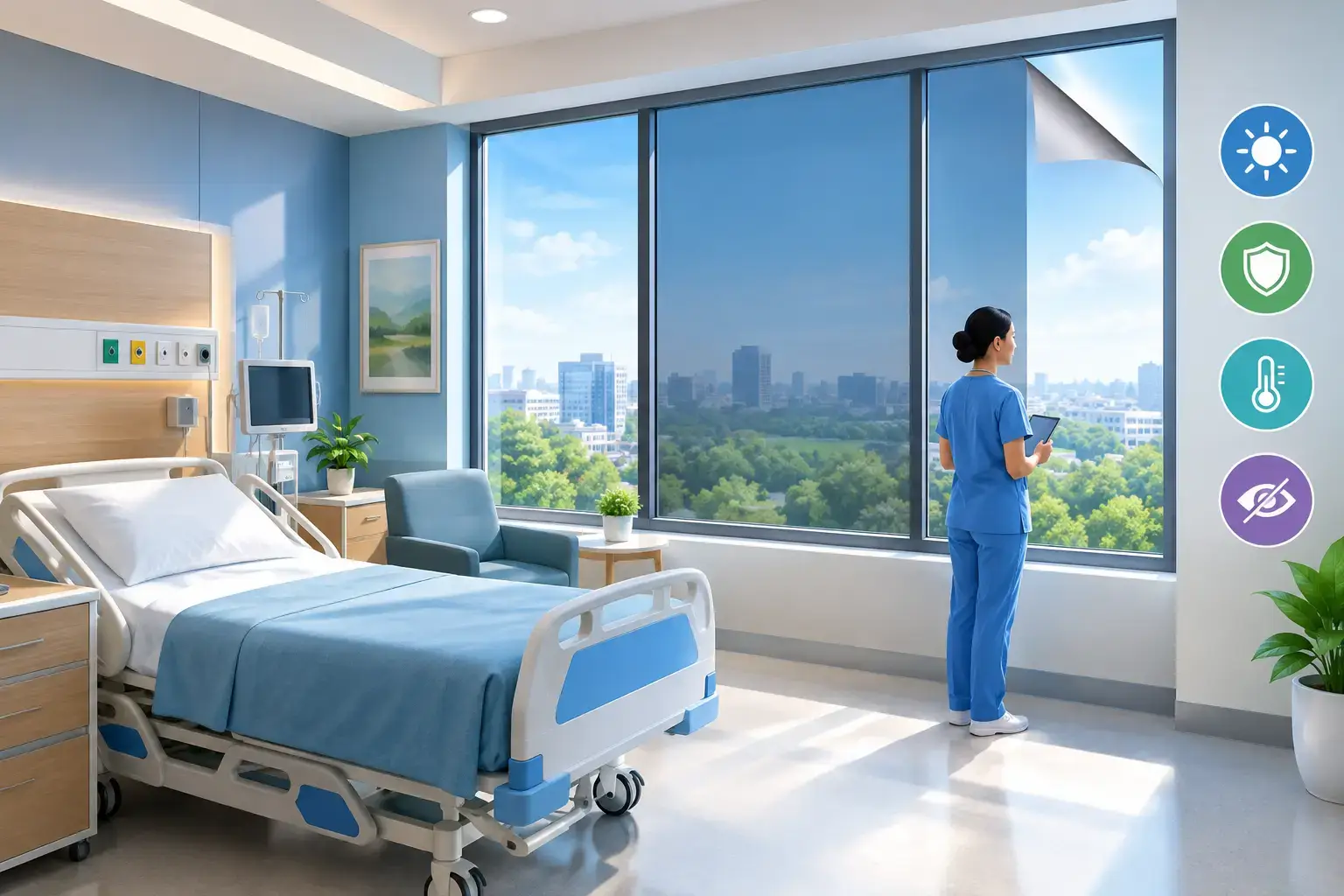
For many commercial spaces, solar control window film is the most practical comfort improvement available. It is professionally applied to existing glass and can reduce solar heat, soften harsh brightness, block the ultraviolet exposure that contributes to fading, and maintain much of the daylight that makes an office feel open.
This matters in California offices where sunny exposures can create pronounced temperature differences across a floor. HVAC systems often work harder to compensate for heat building up near untreated windows. A properly selected film can help create a more even environment, particularly in perimeter offices, reception areas, and conference rooms with significant glass.
Film is not a one-size-fits-all product. Lighter, more neutral films are often a strong choice when preserving a bright, natural appearance is essential. More reflective or darker options may provide stronger glare and heat control, but they can alter exterior appearance and reduce visible light more noticeably. The right balance comes from evaluating the glass, the building orientation, and how the space is used throughout the day.
Choose performance, not just darkness
A common misconception is that the darkest film delivers the best result. Visible darkness is only one part of the equation. Quality architectural films are evaluated for factors such as visible light transmission, glare reduction, ultraviolet rejection, and solar heat performance. A nearly clear film may still offer meaningful UV protection, while a carefully chosen medium-tone film can make computer work far more comfortable without making the office feel closed in.
Existing glass also matters. Some insulated, tempered, coated, or specialty glass systems require specific film recommendations to protect the glass and preserve warranty considerations. Professional assessment before installation helps avoid selecting a product based only on a sample held against a window.
Privacy Film for Offices That Need Discretion
Privacy is a comfort issue as much as a security or design issue. Employees are more likely to use glass conference rooms, wellness rooms, offices, and street-level spaces when visibility is managed intentionally.
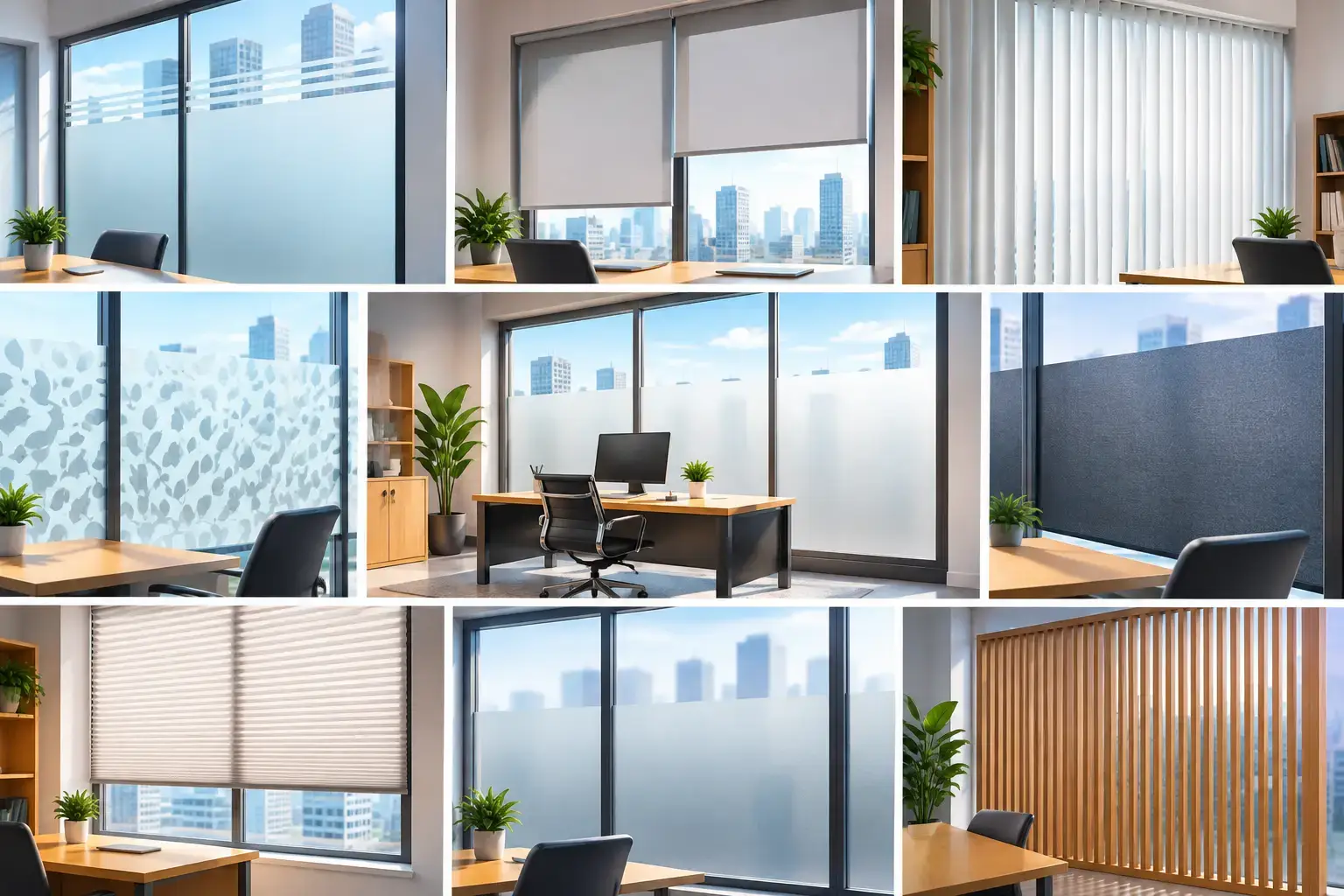
Decorative privacy film is a versatile answer for interior and exterior glass. Frosted, gradient, patterned, and custom-cut designs can obscure views while still allowing light to travel through the space. This is particularly useful for meeting rooms where full opacity would feel restrictive, but clear glass leaves conversations, whiteboards, and screens exposed.
For medical offices, HR spaces, financial service firms, and other workplaces handling sensitive information, privacy film can support a more professional environment without replacing the glass. It also gives office interiors a finished appearance, especially when plain partitions or sidelights make the layout feel overly exposed.
Privacy film involves a trade-off: greater coverage means greater discretion, but it can also limit visibility and change the feel of a room. Partial bands, gradient designs, and strategically placed graphics often provide enough screening while preserving an open floor plan.
Window Treatments Still Have a Place
Roller shades, blinds, and drapery remain useful office comfort upgrades, particularly when occupants need to adjust daylight throughout the day. They can provide immediate control in training rooms, presentation spaces, and areas with changing screen-use needs.
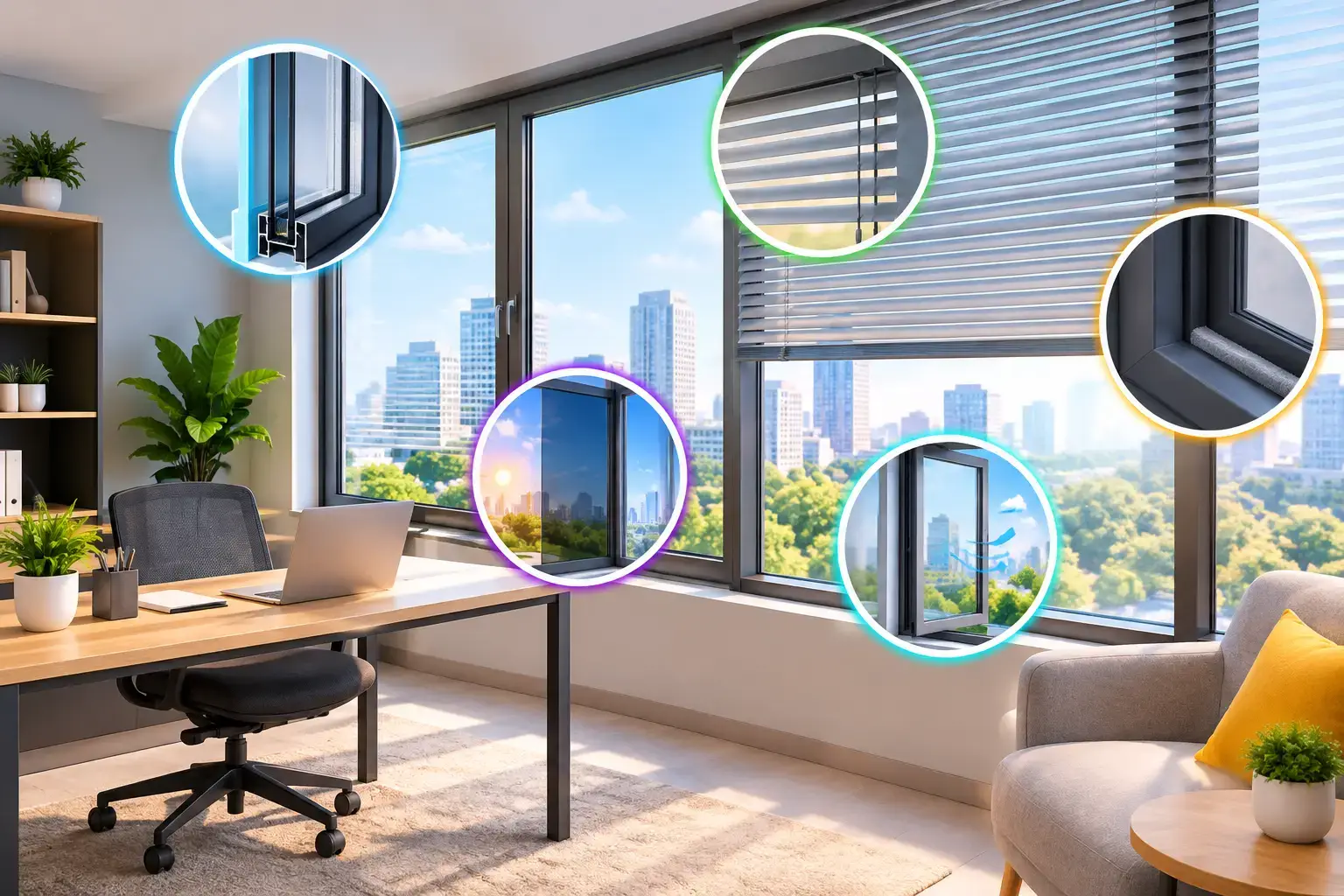
However, window treatments alone do not always solve the underlying issue. Closed shades may block glare, but they can also remove daylight and views. They generally do not stop solar heat as effectively once it has passed through the glass. In many offices, solar control film and shades work best together: film reduces the baseline heat and glare, while shades provide additional control when direct sun is strongest.
This combination is worth considering in boardrooms with large displays, south- or west-facing work areas, and offices where occupants want daylight most of the time but need occasional room-darkening capability.
Safety and Security Film for Vulnerable Glass
Comfort also comes from knowing that glass is better prepared for impact and breakage. Safety and security film is designed to help hold broken glass together after an impact, reducing the risk of dangerous shards entering an occupied space. It can be a smart consideration for ground-floor offices, schools, retail-adjacent work areas, lobbies, and facilities with large glass doors or sidelights.
It is important to set the right expectation. Security film is not a replacement for every physical security measure, and its performance depends on the film specification, glass type, attachment method, and installation quality. Its value is in adding a protective layer that can help delay entry and reduce glass fragmentation, while maintaining a clean, professional appearance.
For offices dealing with frequent scratches, graffiti, or wear on glass partitions and high-contact surfaces, protective surface films may also be appropriate. These sacrificial layers can be replaced when damaged, helping preserve the underlying finish and reduce restoration costs.
Improve Appearance While Solving a Functional Problem
The most successful office upgrades rarely look like afterthoughts. Decorative film can reinforce branding, create visual consistency across glass partitions, or turn a plain storefront-facing office into a more polished environment. Custom printed film can add graphics or messaging while providing practical screening where it is needed.
Appearance should not be separated from usability. A beautifully branded conference room that creates glare on every video call is not performing well. Likewise, a highly reflective exterior film may be technically effective but may not fit a property’s design guidelines. Reviewing samples in the actual lighting conditions helps stakeholders make a decision they will be comfortable with long after installation day.
Which Top Office Window Comfort Upgrades Deliver First?
When priorities compete, start with the issue affecting daily operations most directly. Solar control film is often the first choice for heat, glare, fading, and energy-related concerns. Decorative privacy film usually delivers the quickest improvement for exposed meeting rooms and interior glass. Safety and security film is the more focused choice where glass vulnerability is the primary concern.
A full window assessment is especially valuable for multi-suite properties or offices with varied exposures. One elevation may need a high-performance solar film, while another needs only privacy treatment. Treating every window identically can increase cost without improving comfort where it matters most.
Professional installation is central to the result. Clean preparation, precise trimming, proper curing, and careful attention around frames and existing conditions affect both appearance and long-term performance. Quality materials deserve the same level of care in installation.
The most useful next step is simple: stand in the space during the time of day when complaints are highest. Notice the heat, the reflections, the sightlines, and the rooms people avoid. Those observations will point directly toward a window upgrade that makes the office easier to work in every day.