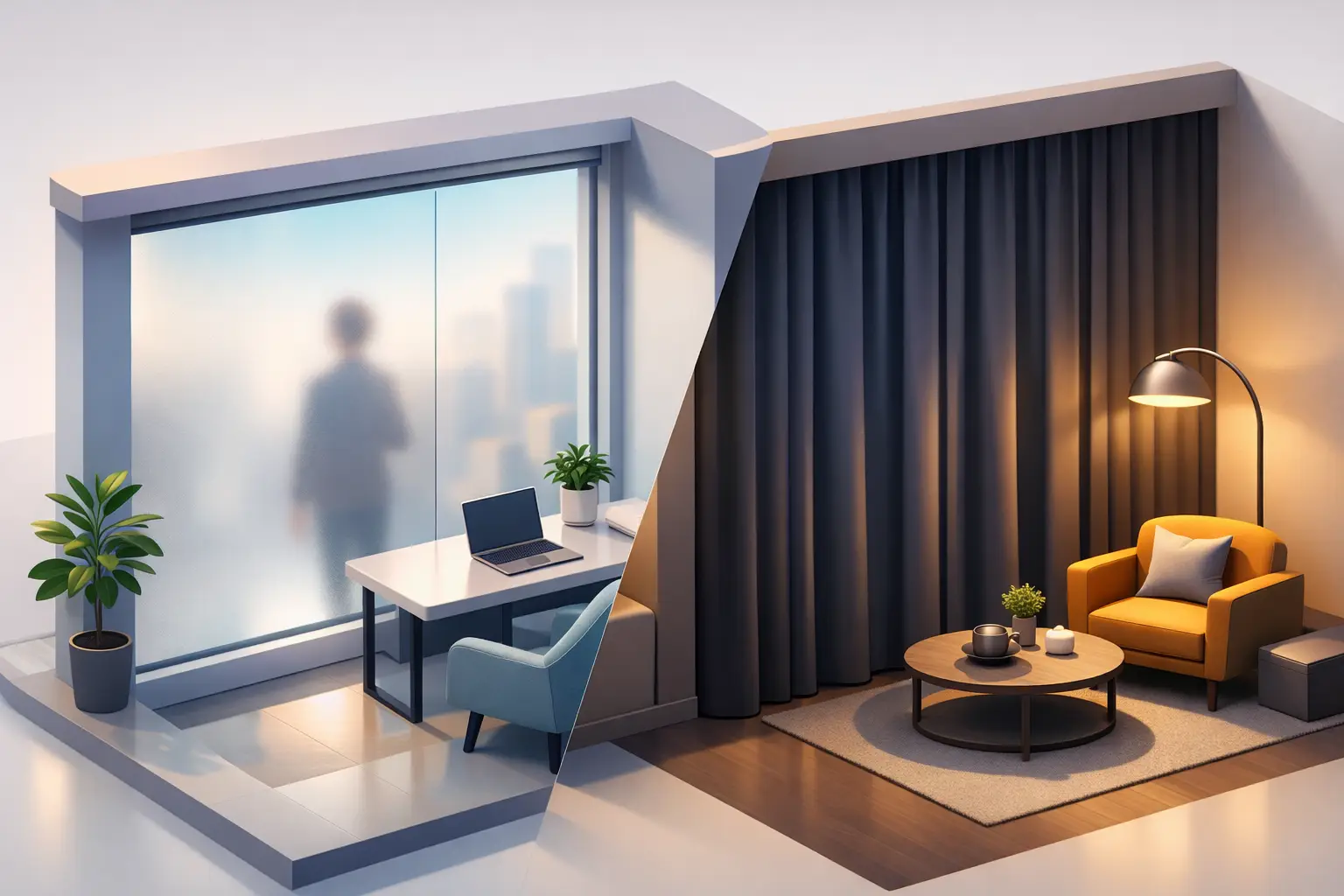
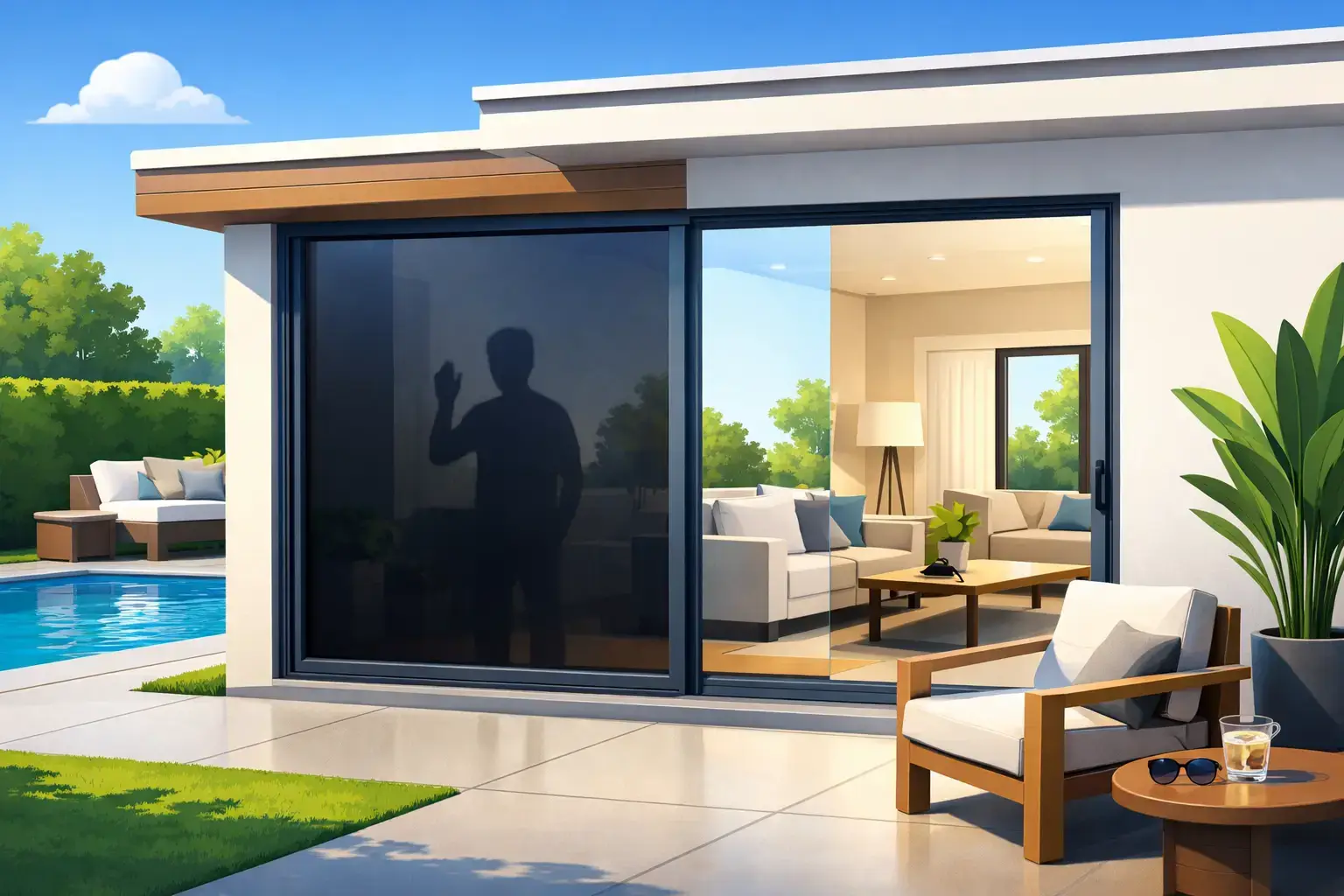
A clear front window can make a beautiful room feel exposed. If you keep blinds shut during the day, avoid using certain rooms at night, or feel like neighbors have a direct view into your home, home window tint for privacy can solve a very real daily frustration without sacrificing natural light.
The key is choosing the right kind of film for the way you live. Privacy film is not one product with one result. Daytime privacy, nighttime privacy, decorative obscuring, glare reduction, and solar performance can overlap, but they are not all the same thing. That is where many homeowners get disappointed – they buy based on appearance alone and expect the film to do something it was never designed to do.
What home window tint for privacy actually does
Window film changes what can be seen through glass by altering light transmission, reflectivity, or clarity. In practical terms, that means it can make it harder to see into your home, soften direct visibility, or fully obscure a space depending on the product.
Some films create daytime privacy by making the exterior side of the glass more reflective when it is brighter outside than inside. These are popular for street-facing living rooms, front entry sidelights, and homes with close neighbors. They can also reduce glare and heat, which makes them a strong fit for California homes where sun exposure is part of the privacy problem.
Other films are frosted or decorative. These do not rely on outdoor brightness to work. Instead, they diffuse or block visibility on a more consistent basis, making them useful for bathrooms, garage door glass, home offices, and any room where you want privacy throughout the day.
The difference matters. If your goal is full-time obscured glass, a reflective solar film may not be enough. If your goal is preserving the view while reducing daytime visibility from outside, a frosted film may be too aggressive.
Daytime privacy vs nighttime privacy
This is the question homeowners ask most often, and for good reason. Many people assume privacy film works like a one-way mirror all the time. It does not.
Reflective and darker window films perform best for privacy when the exterior is brighter than the interior. During the day, that usually means people outside have a harder time seeing in, while you maintain a clearer outward view. At night, when your indoor lights are on and it is dark outside, the effect can reverse. If someone is standing outside, visibility into the home can increase.
That does not mean reflective film is a poor choice. It just means expectations need to be accurate. For many homeowners, daytime privacy is the priority because that is when street traffic, neighbors, and direct sun are most noticeable. For nighttime privacy, film often works best when paired with shades, drapery, or room-specific decorative film where constant obscurity is needed.
A professional recommendation should always start with this question: when do you need privacy most, and how much visibility are you willing to give up from inside?
Best types of privacy film for different rooms
A street-facing living room usually benefits from a solar privacy film that balances reflectivity, glare control, and visible light. If the room gets intense afternoon sun, that same film can improve comfort and protect furnishings from UV exposure and fading.
Bathrooms are different. Most homeowners want privacy at all hours, not just when the sun is out. Frosted or etched-look decorative film is often the better answer here because it blocks direct views without making the room feel closed off.
For front doors, sidelights, and entry glass, the right choice depends on your goals. If you want to keep natural light while limiting visibility into the home, decorative privacy film is often the cleaner and more dependable option. If heat and glare are also issues, a solar film may make more sense on surrounding windows.
Home offices and bedrooms can go either way. If the room faces nearby homes or a busy sidewalk, privacy may be the top concern. If the issue is more about eye strain, screen glare, and afternoon heat, a film that combines moderate privacy with solar control may deliver better overall value.
Large modern homes with expansive glass often need a mixed approach. One film may work beautifully on a west-facing family room, while another is better suited for bathroom glass or a front-facing office. Good results usually come from treating the house by use case, not forcing every window to match.
What to look for besides privacy
Privacy is usually the first reason people shop for film, but it should not be the only one. A quality installation can improve several parts of the home at once.
Heat rejection matters, especially in sun-heavy markets where large windows can make rooms uncomfortable even with air conditioning running. Glare reduction can change how a room functions, particularly if you work from home or spend time watching television near uncovered windows. UV rejection is another practical benefit because it helps protect flooring, furniture, artwork, and fabrics from fading.
Appearance matters too. Some homeowners want a subtle look that is barely noticeable from inside. Others prefer a more reflective exterior for a cleaner, more uniform façade. There is no universal best option here. It depends on the style of the home, the direction of the glass, and whether preserving the view is more important than maximizing obscurity.
This is also where film quality and installation precision make a visible difference. Cheap material can discolor, bubble, or fail early. Even a good film can look poor if edges are misaligned or contaminants are trapped under the surface.
Why professional guidance makes a difference
Privacy film is one of those products that looks simple until you are trying to choose between multiple shades, finishes, reflectivity levels, and performance specs. On paper, two films can seem similar. On actual glass, they can behave very differently.
A professional installer can help evaluate how the window is used, what direction it faces, how much light the room gets, and whether the goal is privacy alone or privacy plus solar control. That saves homeowners from picking a film that is too dark, too shiny, or ineffective for nighttime expectations.
Professional installation also protects the finish result. Clean prep, precise cutting, proper edge alignment, and careful application all affect how the film looks and how long it lasts. On large panes, specialty glass, or highly visible front-facing windows, craftsmanship is not a minor detail. It is the difference between a finished upgrade and a project that always looks slightly off.
For homeowners in California, there is also the climate factor. Strong sun, heat, and long exposure periods can put lower-grade film under stress. Selecting a proven product with a solid warranty and experienced installation tends to pay off over time.
Common mistakes homeowners make
The first is expecting one-way privacy at all hours from a reflective film. It is a common misunderstanding, and it leads to frustration when nighttime visibility changes.
The second is choosing the darkest film available without considering how it will affect the room. A darker film may improve privacy, but it can also alter the feel of the space more than expected. In some homes, a lighter or more selective film gives a better balance of comfort, appearance, and visibility.
The third is treating every window the same. The bathroom, living room, and front entry do not have identical needs. A whole-home approach can still be cohesive without being uniform.
Another mistake is focusing only on price. Film is a finish product that stays in view every day. Quality, clarity, and installation standards matter more than a small upfront savings if the goal is a result that looks polished and lasts.
Is home window tint for privacy worth it?
For many homeowners, yes – especially when the problem is constant exposure, not just occasional inconvenience. Good privacy film can make a room more usable, more comfortable, and less dependent on closed blinds. It can also deliver added benefits in glare control, UV protection, and heat reduction, which improves the value of the investment.
That said, the best result depends on matching the film to the window. If you want daylight privacy while keeping your view, reflective solar film may be the right fit. If you need reliable obscurity in a bathroom or entry area, decorative privacy film is usually the better choice. If you want both privacy and heat control across a sun-exposed home, a tailored combination often works best.
At Comfort Pro, this is where careful planning matters most. The right film should not just look good on day one. It should solve the actual privacy problem, fit the space, and keep performing well over time.
If your windows are making you choose between natural light and personal privacy, that is usually a sign the glass can work harder for you.