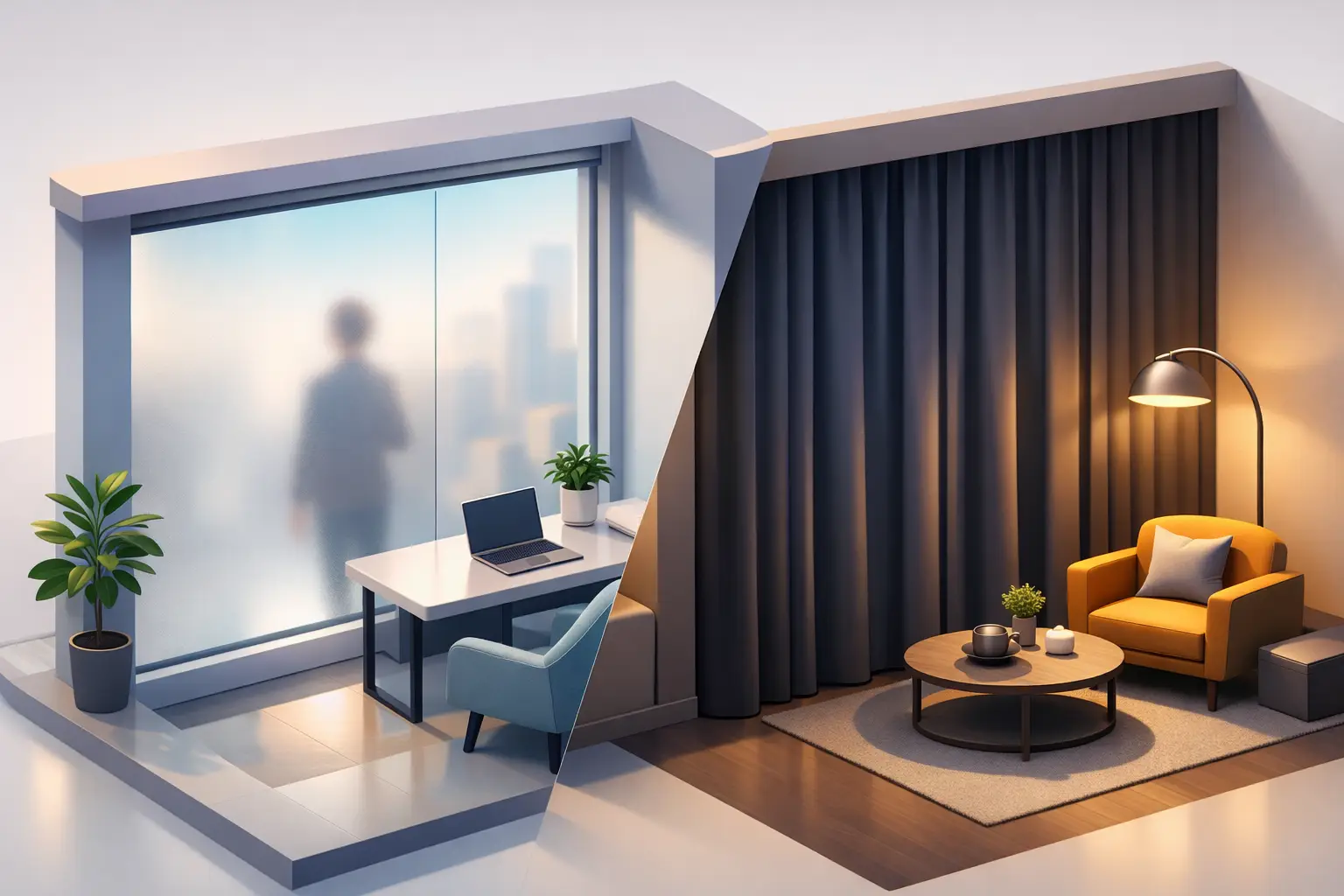
An office can feel exposed long before it feels uncomfortable. Glass conference rooms, street-facing windows, interior sidelights, and entry partitions all look clean on paper, but in practice they can create distraction, privacy issues, and a space that feels unfinished. Decorative window film for offices solves that problem without closing off light or committing to permanent glass changes.
For business owners, property managers, and facility teams, that matters because the right film does more than make glass look better. It helps define private areas, improves the day-to-day experience for staff and visitors, and gives a workspace a more intentional finish. When it is selected well and installed cleanly, it can make an office feel more professional almost immediately.
Why decorative film makes sense in office spaces
A lot of office upgrades come with disruption. New walls change layouts. Window coverings can darken rooms. Etched or custom glass can be expensive and slow to replace. Decorative film sits in a more practical middle ground.
It gives you privacy where you need it while still letting natural light move through the space. That is especially useful in conference rooms, private offices, waiting areas, shared work zones, and glass entry systems. Instead of making an office feel boxed in, film can preserve openness and still create separation.
It also gives businesses more control over appearance. Plain clear glass often reads as sterile, especially in medical offices, professional suites, and retail-adjacent workspaces. A frosted, patterned, gradient, or branded film treatment can soften the environment and make it feel more intentional without a full remodel.
There is also a maintenance advantage. Decorative film is applied to existing glass, so you are improving what is already there rather than replacing it. For many commercial spaces, that keeps costs lower and timelines shorter.
What decorative window film for offices can actually do
The most common reason companies consider decorative film is privacy, but that is only part of the picture. The better question is how the glass needs to perform.
In some offices, the goal is simple visual screening. You want people in a conference room to feel less visible from the hallway, but you still want the room to feel bright and open. Frosted or dusted films are often a strong fit there because they obscure direct sightlines without blocking daylight.
In other spaces, branding is the priority. A reception area, front entrance, or interior glass wall may need a logo, a repeated design motif, or a finish that aligns with the company’s visual identity. Custom decorative films can turn plain glass into part of the brand experience without overwhelming the space.
Then there are offices where the issue is not just privacy, but distraction. Employees seated near glass partitions often feel like they are constantly on display. Partial coverage, banding, or gradient film can reduce that exposure while keeping the space modern and visually light.
Some decorative films can also be paired with performance goals. Depending on the product, you may be able to improve privacy and aesthetics while also addressing glare or UV exposure. That depends on the glass, the location, and the specific film selected, so it is worth looking at the full use case instead of treating decorative film as a purely cosmetic choice.
Popular styles and where they work best
Not every office needs the same finish. The best decorative window film for offices depends on how formal the space feels, how much privacy is needed, and how the glass is used throughout the day.
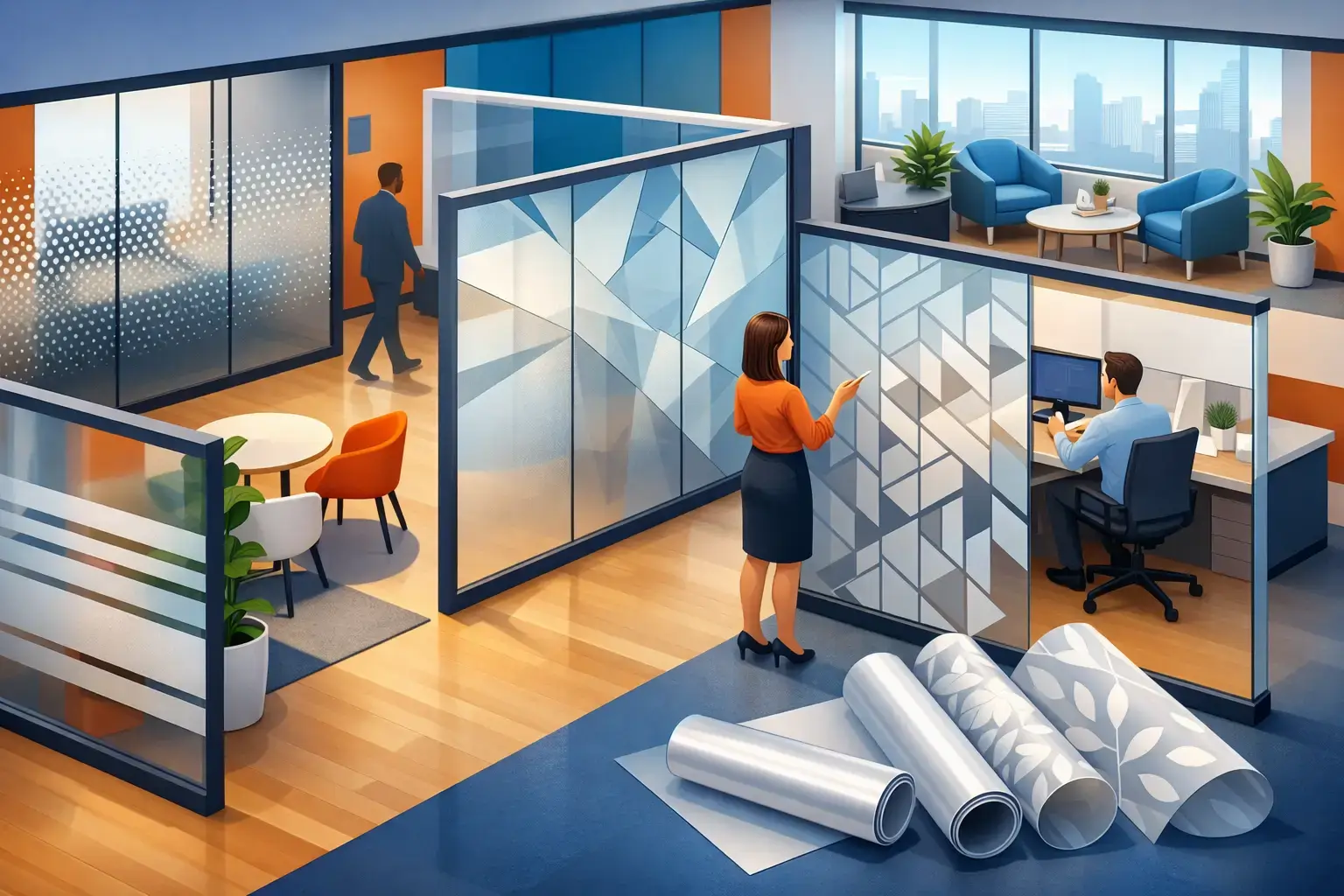
Frosted film is the standard choice for a reason. It works in law offices, financial firms, healthcare spaces, shared office suites, and corporate interiors because it is clean, professional, and versatile. It can cover full panes, lower sections, or just a central band.
Patterned film is often used when the goal is to add character without going too bold. Subtle geometric designs, linen-like textures, or repeated motifs can make a workspace feel more designed while still keeping the glass functional.
Gradient film works well in contemporary offices that want privacy without a fully opaque look. It is especially useful in conference rooms or executive areas where people want visual screening at seated eye level but still prefer open sightlines above.
Custom cut graphics and logo films are a strong option for reception areas, storefront-adjacent offices, and branded interiors. When handled with restraint, they look polished and intentional. When overused, they can make a space feel busy, so scale and placement matter.
The trade-offs most buyers should know
Decorative film is flexible, but it is not one-size-fits-all. A good recommendation usually starts with how the space is used, not just what looks attractive in a sample book.
More privacy generally means less visibility through the glass. That sounds obvious, but it affects how connected a space feels. A fully frosted conference room may solve privacy concerns, yet it can also make the room feel more closed off than expected. In some cases, partial coverage or a banded design creates a better balance.
Pattern and branding choices also need discipline. What looks striking in a small mockup can feel too dominant when applied across an entire glass wall. Offices usually age better with designs that support the architecture instead of competing with it.
There is also the matter of consistency. If one conference room uses a heavily frosted film and another uses a bold custom graphic, the office can start to feel pieced together. For multi-room spaces, a coordinated film plan usually produces a stronger result than treating each pane independently.
And while decorative films are durable, installation quality matters. Misalignment, trapped debris, uneven edges, and poor pattern placement are immediately visible on glass. This is one of those upgrades where precision is not a bonus. It is the difference between a polished finish and something that looks temporary.
How to choose the right decorative window film for offices
Start with the problem you are trying to solve. If your staff feels exposed in meeting spaces, privacy is the lead issue. If your office looks plain or inconsistent, appearance may be driving the project. If visitors walk into a reception area that feels generic, branding may be the better starting point.
Then look at the glass itself. Interior partitions, exterior-facing windows, sidelights, and entry doors all behave differently. An interior conference room may only need visual screening, while a sun-exposed perimeter office may benefit from a film solution that considers glare and UV along with appearance.
Think about sightlines at standing and seated height. This is where many office film projects succeed or fail. A glass wall may not need full coverage if the real issue is visibility into chairs and computer screens. Strategic placement often produces a cleaner result than maximum coverage.
It also helps to consider how the office may change. If teams move, rooms get reassigned, or branding evolves, film offers more flexibility than custom glass. That makes it a smart fit for growing businesses, leased commercial spaces, and property managers planning practical upgrades across multiple suites.
Where professional installation pays off
Office film projects are rarely just about applying material to glass. They involve layout decisions, edge consistency, symmetry across multiple panes, and coordination with how the space is used. A conference room with uneven horizontal bands or a front entry with off-center graphics will be noticed every day.
Professional installation helps protect the visual standard of the whole office. It also makes decision-making easier upfront. An experienced installer can point out where privacy needs are overstated, where a design may feel too heavy once installed, or where a different film type would create a better balance of light, coverage, and appearance.
That guidance is especially useful in larger commercial environments, medical offices, retail offices, and multi-tenant buildings where the film needs to perform well and look consistent across many glass surfaces.
For California businesses dealing with bright daylight, open office layouts, and client-facing interiors, the right film plan can be both aesthetic and functional. Comfort Pro works with businesses that want that balance done carefully, with materials that hold up and installation that looks clean from every angle.
A smarter upgrade than most offices expect
Decorative film is one of the few office improvements that can affect privacy, appearance, and everyday comfort at the same time. It does not require a major renovation, but it can make a workspace feel more finished, more usable, and more aligned with the way your team actually works.
If your glass is creating exposure, distraction, or a space that feels too plain, this is often the simplest place to make a meaningful change. The best results come from choosing a film that fits the room, the people using it, and the standard you want the office to reflect.