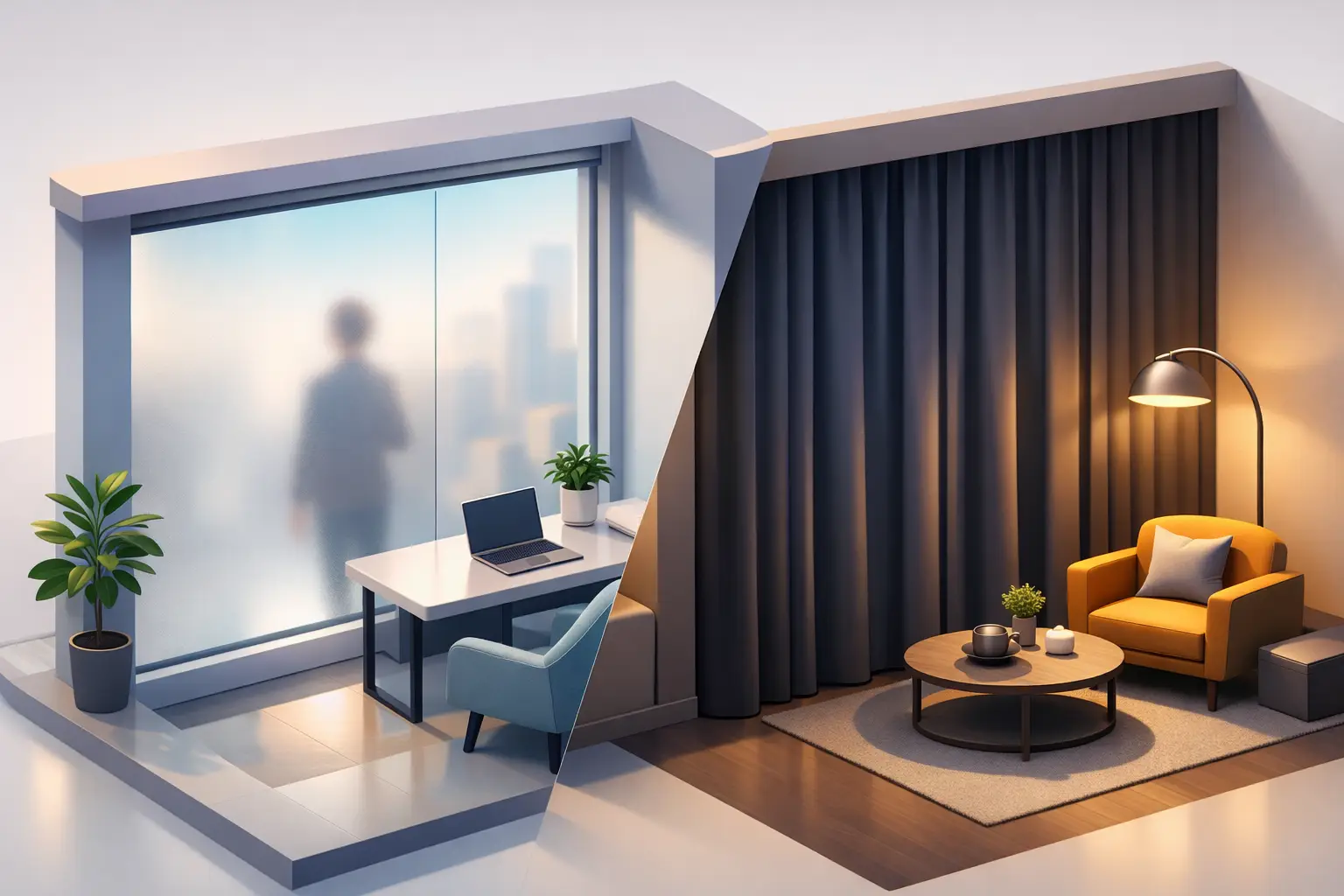
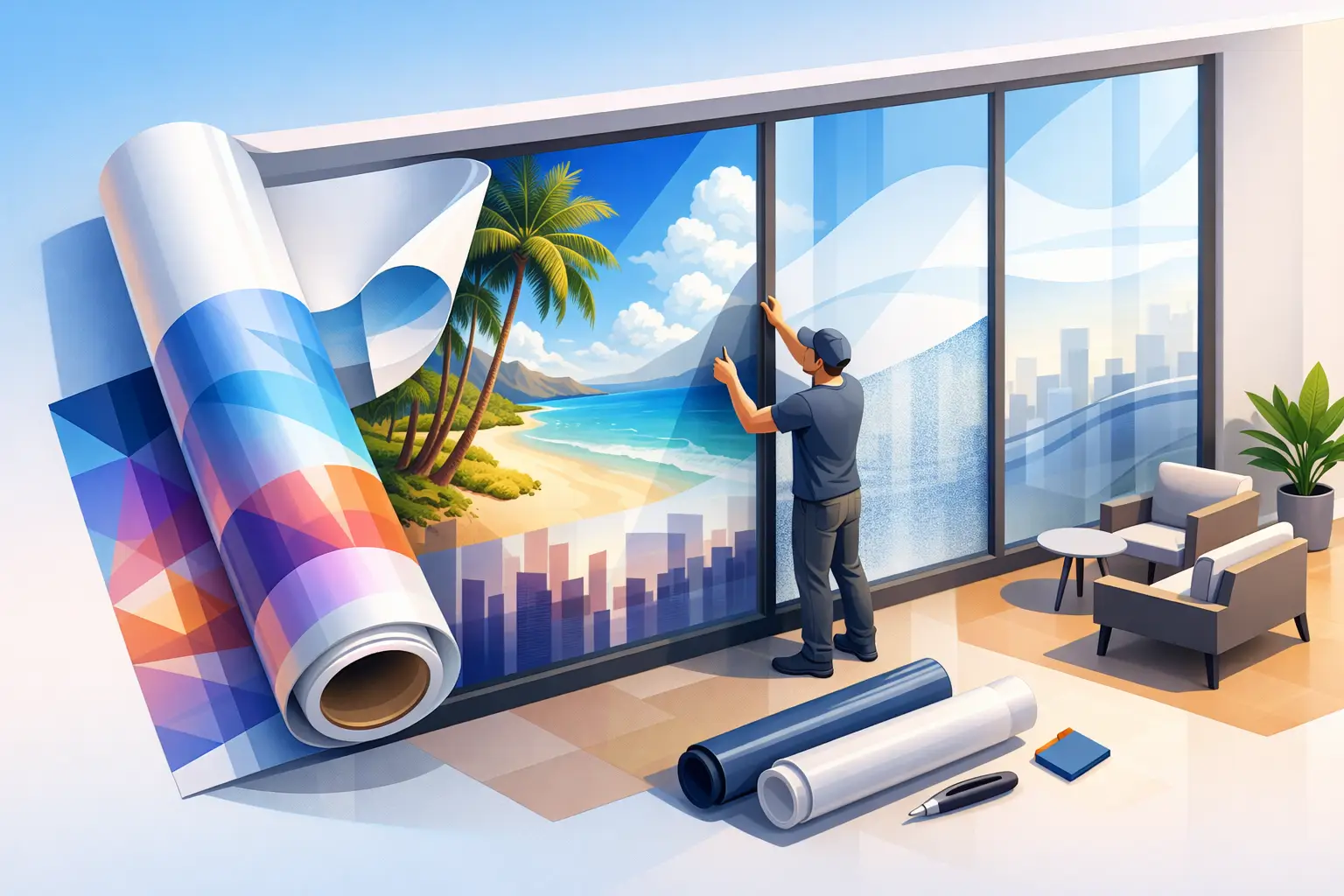
A blank glass wall can make a space feel unfinished fast. In a retail storefront, office, clinic, or school, that unused surface is a missed chance to guide visitors, add privacy, or reinforce your brand. Custom printed window film solves that problem without the cost, permanence, or disruption of replacing the glass itself.
For many property owners and managers, the appeal starts with visibility. You can turn ordinary glass into branded signage, decorative privacy, directional graphics, promotional messaging, or a polished design feature that fits the space. But the best results are not just about the print. They depend on the right material, the right design approach, and clean installation that makes the finished film look intentional rather than temporary.
What custom printed window film is really good at
Custom printed film is a flexible graphic layer applied to glass. It can be full coverage, partial coverage, opaque, translucent, frosted in appearance, or designed with cutouts and patterns. That makes it useful across very different environments, from a boutique storefront that needs seasonal campaign graphics to a medical office that wants privacy without closing off natural light.
What makes this option stand out is the balance between appearance and function. Traditional signage can handle branding, and standard privacy film can handle screening, but custom printed film lets you combine those goals. A business can add its logo, brand colors, and messaging while still softening visibility into conference rooms, lobbies, treatment spaces, or street-facing interiors.
For homeowners, the use case is more selective, but still valuable. Decorative glass features, entry sidelights, shower surrounds, home office panels, and street-facing windows can all benefit from a printed design that adds privacy and style without making the space feel closed in.
Where custom printed window film makes the most sense
Storefronts are one of the clearest fits. Street-facing glass needs to work hard. It should attract attention, support the brand, and sometimes shield inventory or interior activity from direct view. Printed film can do all three while staying easier to update than painted glass or rigid signage.
In offices, the priority is often a little different. Conference rooms, interior glass partitions, and reception areas need visual separation, but they also need to feel professional. A clean frosted effect with a logo, pattern, or subtle brand element often lands better than fully opaque coverage. It keeps the workspace open while giving employees and clients more privacy.
Healthcare and education spaces often need film for both communication and discretion. Printed graphics can help with wayfinding, room identification, branded environments, and privacy screening. In these settings, clarity of design matters just as much as appearance. Graphics need to look calm, readable, and appropriate to the environment.
Multi-site commercial properties and property managers often like custom printed window film because it is scalable. Once the design standards are set, film can be reproduced across multiple locations with better consistency than many on-site graphic methods.
Design matters more than most buyers expect
One of the biggest misconceptions is that any graphic can simply be printed and applied to glass. Technically, that is often possible. Visually, it is not always a good idea.
Glass behaves differently from walls, panels, or paper. Light passes through it, reflects off it, and changes throughout the day. A design that looks balanced on a screen may become too faint in daylight, too dense from the exterior, or hard to read once installed on a sunlit facade. That is why smart planning matters before production starts.
The strongest designs usually account for viewing distance, lighting conditions, interior visibility, and the purpose of the film. If the goal is privacy, artwork needs enough coverage to actually screen the space. If the goal is branding, logos and messaging need to stay legible from the angles people will actually see. If the goal is both, the layout has to do more than just look good in a proof.
This is also where professional guidance pays off. A well-made film can still underperform if the artwork is wrong for the glass size, the environment, or the intended use.
Choosing the right finish for custom printed window film
Not every printed film should look the same. Some spaces need bold, high-color graphics. Others benefit from a softer, more architectural finish.
Opaque printed film creates the strongest visual block and is often used for branding, temporary campaigns, or full graphic statements. It is effective when privacy is the priority or when the design needs to command attention from outside.
Translucent and frosted-style films offer a more refined look. These are common in office interiors, hospitality settings, and professional service environments where you want privacy and branding without creating a heavy visual barrier. They also tend to age well stylistically because they do not depend on trend-driven graphics.
Perforated or view-through options may be considered for some exterior applications, but they are not always the best answer. Visibility, lighting, maintenance needs, and local conditions all affect performance. In areas with strong sun exposure, such as many California commercial settings, material choice needs to be considered carefully rather than selected on appearance alone.
Installation quality changes the final result
Printed film is one of those products that looks simple from a distance and highly technical up close. Alignment, edge finish, panel matching, trapped debris, and surface prep all affect the finished appearance.
On a small logo application, slight installation flaws may be manageable. On large conference room walls or storefront glass, they become obvious fast. Crooked placement, inconsistent spacing between panels, or contamination under the film can make even a strong design look rushed.
That is why professional installation matters. A careful installer evaluates the glass condition, checks for existing coatings or damage, prepares the surface properly, and places the film with precision. This becomes even more important on older glass, large panes, or multi-panel applications where consistency is critical.
If the glass has scratches, residue, seal issues, or previous film adhesive, those conditions should be addressed upfront. Skipping that step can compromise both appearance and longevity.
The trade-offs to consider before you order
Custom printed window film is versatile, but it is not one-size-fits-all. If your main goal is heat rejection or glare control, a printed film may not deliver the same performance as a dedicated solar control product. If your main goal is impact resistance or hold-in-place protection, safety and security film may be the more appropriate base solution.
Sometimes the best answer is a layered strategy. In other cases, it means choosing one priority over another. A heavily printed privacy film may look excellent but reduce natural visibility more than your staff wants. A subtle frosted pattern may preserve openness but do less for branding from the street.
Budget, timeline, and update frequency also matter. For a long-term brand installation, it makes sense to invest in a design and material combination built for durability. For promotions, temporary messaging, or leasing situations, a more changeable approach may be smarter.
This is where a consultative process helps. The right recommendation depends on how the glass is used every day, not just how the finished product looks in a mockup.
What a better buying process looks like
The easiest projects usually start with a few clear questions. What should the film accomplish first: branding, privacy, decoration, or wayfinding? Is the glass interior or exterior facing? Is the look meant to be permanent, seasonal, or easy to refresh? Are there visibility, lighting, or compliance concerns that need to be considered?
From there, the process should move into material selection, artwork review, site measurement, and installation planning. For commercial customers, consistency across locations, departments, or glass types should be discussed early. For homeowners, the focus is usually more on design fit, privacy level, and how the film will look from both inside and outside.
A good provider will also set realistic expectations. Printed film can dramatically improve a space, but the best projects come from matching the product to the use case instead of forcing one material to solve every problem.
Why this upgrade keeps gaining traction
Businesses want more from their glass now. They do not want windows and partitions to be passive surfaces. They want them to support privacy, reinforce branding, and improve the experience of the space. Custom printed window film does that while staying faster and less invasive than many traditional renovations.
For a service-focused installer like Comfort Pro, that value is not just in the material itself. It is in helping customers avoid the common missteps: the wrong opacity, the wrong design scale, the wrong finish, or installation that undercuts the result.
When done well, printed film feels built into the space. It does not look like an afterthought. And that is usually the difference between a project that simply covers glass and one that makes the entire property feel more polished, more intentional, and easier to use.
If you are considering a glass upgrade, start with the problem you want solved first. The right custom film solution tends to become much clearer once the glass has a job to do.