
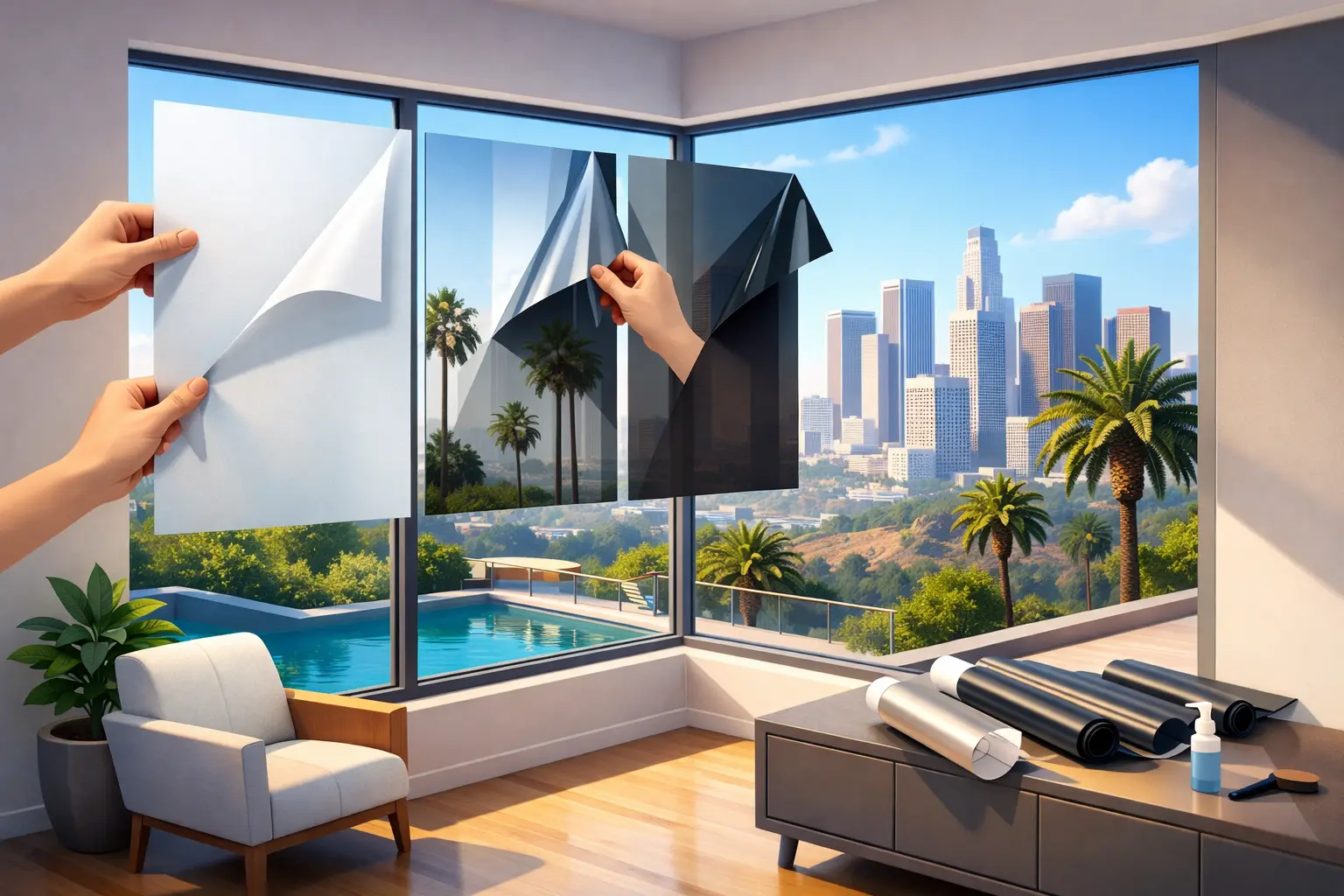
A glass wall can make a Los Angeles home or business feel open and bright, right up until it puts every room, workstation, or display in full view. Privacy window film Los Angeles property owners choose can solve that problem without asking them to sacrifice the natural light that made the glass appealing in the first place.
The right film is not simply about making a window less transparent. It is about controlling sightlines, preserving the feel of a space, and selecting a finish that performs well for the specific glass, exposure, and use of the room. A street-facing conference room needs something different than a bathroom window, a medical office, or a retail storefront with afternoon sun.
What Privacy Window Film Can Change
Traditional blinds and curtains can certainly cover glass, but they also add cleaning, hardware, and a closed-off look. Privacy film applies directly to the glass, creating a more permanent visual boundary while keeping the window profile clean.
For homeowners, this can mean enjoying a bathroom, bedroom, entry sidelight, or overlooked living area without closing the room off from daylight. In a commercial setting, film can create discreet offices, partition meeting rooms, shield treatment areas, or make interior glass feel more intentional. It can also help define zones in open-plan spaces without the cost and disruption of replacing glass.
Privacy is only one part of the decision. Depending on the product, window film may also reduce glare, filter UV exposure, soften harsh views, and give plain glass a finished architectural appearance. The best result comes from treating these benefits as a package rather than choosing a film solely from a small sample.
Privacy Window Film in Los Angeles Has to Work With Light
Los Angeles properties often have abundant sun, close neighboring homes, and highly visible street-facing glass. That combination makes privacy a design and comfort issue, not just a matter of coverage.
A film that looks excellent in a shaded interior corridor may feel too opaque on a bright kitchen window. Conversely, a lightly tinted product can preserve an expansive view but provide very little privacy once interior lights are on after dark. Professional recommendations begin with where people stand, where they look from, and how the room is used throughout the day and evening.
Daytime Privacy Is Different From Nighttime Privacy
This is the point many property owners miss. Reflective or one-way style films can limit outside views into a bright interior during the day, when the exterior side is brighter. At night, the relationship reverses if lights are on inside. People outside may be able to see in unless shades or another privacy solution are used.
For dependable privacy around the clock, frosted, etched, opaque, or patterned decorative films are usually the better choice. They obscure views from both sides while still allowing useful light to pass through. The degree of obscurity varies by product, so the goal should be clear from the start: partial visual separation, blurred silhouettes, or complete concealment.
Privacy Does Not Have to Mean a Flat White Finish
Frosted film remains a popular choice because it is clean, versatile, and effective. But it is far from the only option. Decorative films can replicate etched glass, add subtle linear patterns, use gradients to conceal only part of the pane, or incorporate custom designs that support a business’s visual identity.
A gradient treatment works especially well where privacy is needed at seated or standing eye level but clear glass is preferred above. It can make a conference room, reception area, or interior partition feel open while shielding the activity that should remain private. For retail and hospitality spaces, a custom printed film can provide privacy while carrying brand elements, directional information, or a polished graphic treatment.
Choosing the Right Level of Coverage
The most effective privacy film is selected room by room, not property wide by default. Consider the view from outside, the amount of daylight the room needs, and whether occupants need visual access in either direction.
A bathroom or changing area may call for full frosted coverage. A front door sidelight may need only a narrow obscured section that blocks direct views while preserving brightness. A medical or professional office may benefit from decorative bands on glass partitions, allowing staff to see whether a room is occupied without exposing conversations or paperwork to passersby.
For conference rooms and executive offices, the question is often broader than privacy. Glass may create distraction from nearby foot traffic, reveal screens during meetings, or make a room feel visually noisy. A well-chosen film can add privacy and improve focus without turning the space into a closed box.
Installation Quality Matters as Much as the Film
Premium film is only as good as the surface preparation and installation behind it. Glass must be assessed carefully, cleaned thoroughly, and finished with precise edges. Poor installation can leave contamination, uneven alignment, visible gaps, or premature lifting at the edges – all details that are especially noticeable on large panes and interior glass walls.
Film selection also requires an understanding of the glass itself. Different glazing systems, existing tints, insulated units, and sun exposure conditions can affect which products are appropriate. A qualified installer should evaluate the glass before recommending a film, particularly when a project also involves heat reduction or solar control performance.
At Comfort Pro, the process centers on understanding the room first, then matching the film and installation approach to the result the customer wants. That means discussing privacy expectations honestly, showing how a finish will look on the actual glass, and paying close attention to the details that keep the completed work looking intentional.
Where Privacy Film Delivers the Most Value
Privacy film is often installed to address a specific pain point, but its value can extend further once the glass is considered as part of the space. Homes commonly benefit in bathrooms, shower enclosures, entryways, garage windows, and rooms that face neighboring properties. For multi-family properties, it can improve privacy in shared amenity spaces, leasing offices, and ground-level units.
Businesses have equally practical applications. Interior glass partitions can be treated to create more confidential meeting areas. Street-level storefronts can protect back-office visibility while maintaining a clean customer-facing appearance. Healthcare, education, and service environments can use obscured glass to support discretion without making halls and rooms feel dark.
The right design should match how people move through the space. If a clear view is useful for safety, supervision, or welcoming customers, full opacity may not be the answer. Partial coverage, patterned film, or strategically placed bands may create a better balance.
Questions to Ask Before Scheduling Installation
Before selecting a finish, decide whether privacy is needed during the day, at night, or both. Identify the exact viewing angles that cause the concern, since a window can be private from one direction and exposed from another. It also helps to consider cleaning needs, desired style, and whether the film should complement existing solar-control or safety upgrades.
Ask to see samples against the actual glass whenever possible. Light changes dramatically between a sample board and a large installed window. A careful consultation should also cover the finish’s expected appearance, the preparation process, and realistic care guidance after installation.
For commercial properties, confirm whether the glass must remain visible for operational reasons and whether graphics, safety markings, or brand elements should be included. Coordinating these decisions early can prevent a privacy upgrade from becoming an afterthought.
Privacy should make a room feel more comfortable, not more confined. With the right film, precise installation, and a finish chosen for the way the space is actually used, glass can continue bringing in light while giving people the discretion they expect.