A west-facing conference room can become the least useful space in an office by midafternoon. Screens wash out, employees pull the blinds, and the room that was designed to feel open suddenly feels closed off. Office window tinting Sacramento property owners choose is a practical way to manage that problem without giving up the natural light and street-facing appearance that make a workplace feel welcoming.
The right commercial window film can reduce glare, filter ultraviolet exposure, moderate solar heat, and add privacy or safety where it is needed. The best result is not simply a darker window. It is a film selection that matches the glass, the building’s orientation, the needs of the people inside, and the look of the property.
Why Sacramento offices benefit from window film
Sacramento businesses deal with intense sun for much of the year, particularly on south- and west-facing elevations. Glass brings daylight into an office, retail location, medical practice, or shared workspace, but it also allows solar energy to build up near windows. That can make perimeter desks uncomfortable even when the thermostat says the rest of the building is fine.
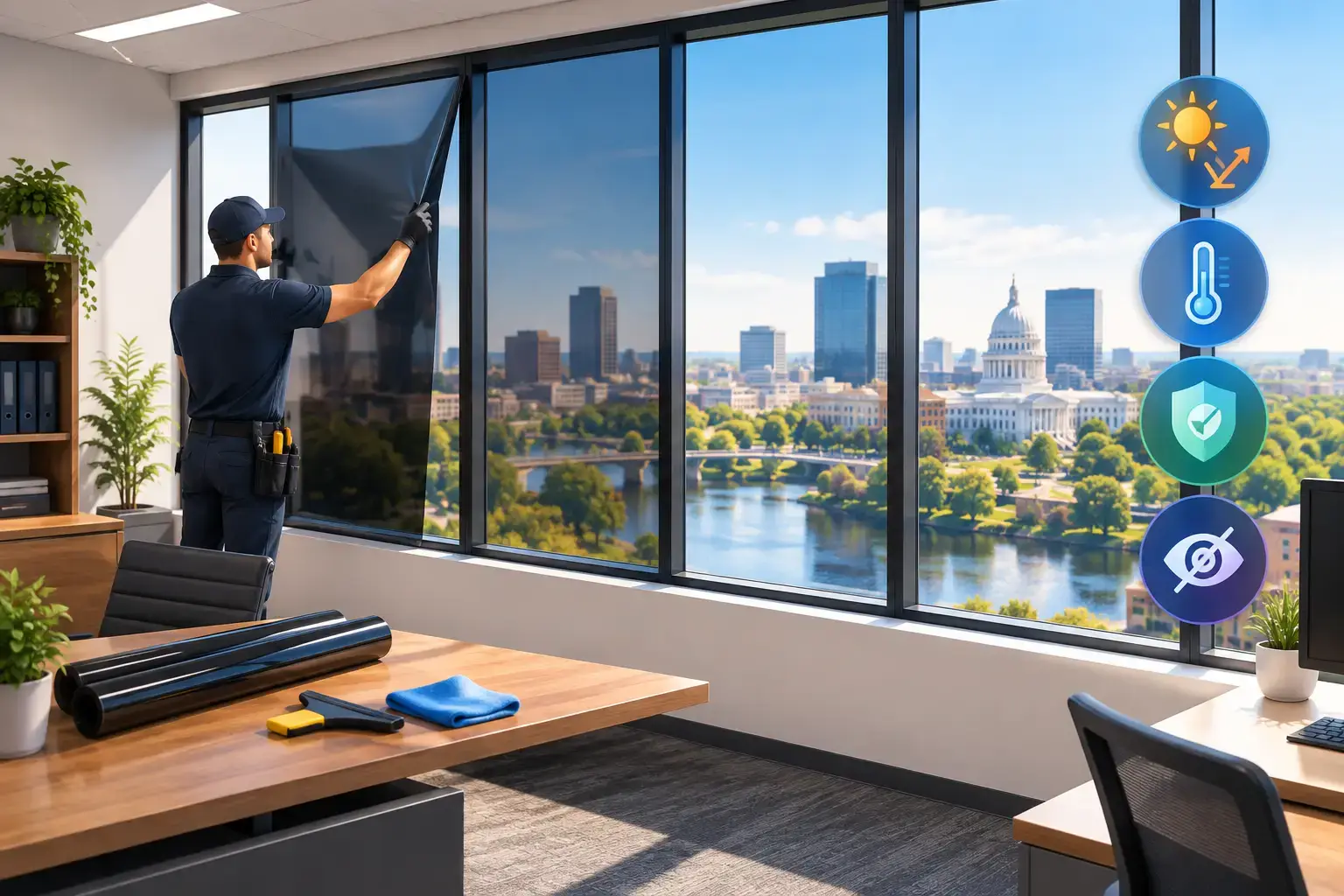
Solar control film helps address this imbalance by rejecting a portion of the sun’s heat and reducing the harsh visible light that causes glare. Employees can work more comfortably near windows, visitors can see digital displays more easily, and blinds do not have to stay closed all day. The outcome is a brighter, more usable space with fewer daily workarounds.
Ultraviolet exposure is another consideration. UV rays can contribute to fading on flooring, furniture, artwork, merchandise, and interior finishes over time. Window film is not a substitute for good interior design choices, but it adds a meaningful layer of protection for valuable interiors that receive regular sun exposure.
Energy savings can be part of the case for film, especially in buildings with large areas of older glass. Still, it is wise to view energy performance as one benefit among several. Savings depend on the building envelope, HVAC system, glass type, operating hours, shade conditions, and how occupants use the space. Comfort and glare reduction are often the benefits occupants notice first.
Office window tinting Sacramento businesses can tailor to each space
Not every office needs the same film, and applying one product across an entire building is not always the most effective approach. A careful assessment begins with the purpose of each area and the problem the glass is creating.
Solar control film for heat and glare
Solar control films are often the right starting point for sunny offices. They are available in a range of shades and reflectivity levels, from nearly clear options that preserve a natural appearance to more reflective products designed for high-sun exposures. A film that looks subtle from the outside can still provide a noticeable improvement in glare and heat management.
There is a trade-off. Darker or more reflective films may offer stronger solar performance, but they can change exterior appearance, reduce visible light, or create more of a mirror effect after dark. A professional recommendation should balance measurable performance with the way the building needs to look and feel.
Decorative film for privacy without permanent walls
Glass conference rooms, interior sidelights, and office partitions support an open design, but they can leave conversations and work areas too exposed. Decorative privacy film gives businesses a flexible alternative to replacing glass or building new walls. Frosted, gradient, patterned, and custom printed options can obscure views while allowing light to move through the space.
This is particularly useful for executive offices, medical and wellness settings, HR areas, training rooms, and conference rooms. Film can also carry subtle branding, directional elements, or custom graphics when a space needs a more finished look. Unlike a solid barrier, it can preserve the openness that made glass appealing in the first place.
Safety and security film for vulnerable glass
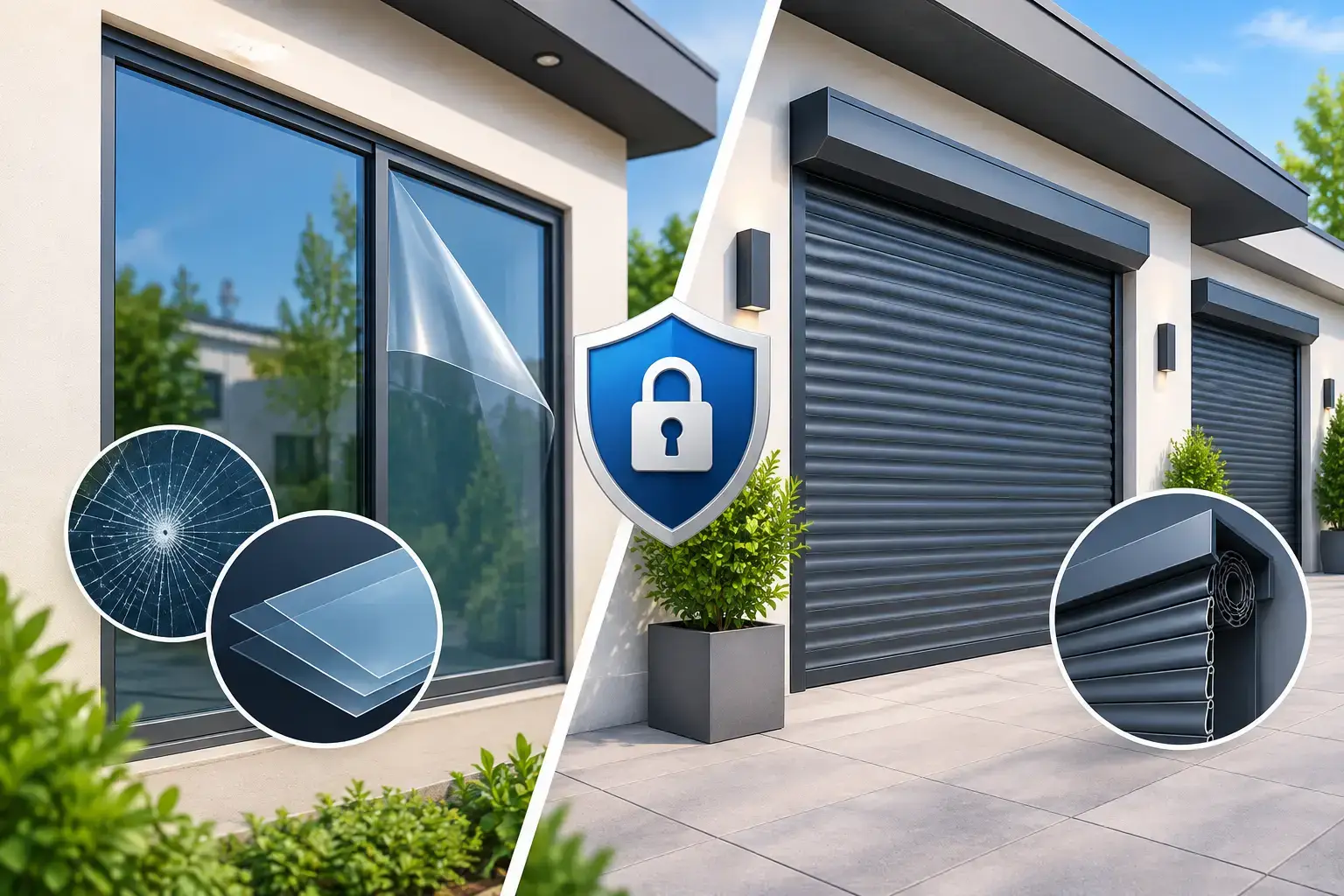
Safety and security film is designed to help hold broken glass together after an impact or breakage event. For ground-level offices, entry doors, sidelights, and glass near public-facing areas, this added protection can be valuable. It may help reduce the hazard created by flying shards and make forced entry through glass more difficult.
The level of protection depends on the film, the glass, the frame, and the attachment system used. It should not be presented as an identical solution for every threat or building condition. A site-specific evaluation is essential, especially when a facility has compliance requirements or heightened security concerns.
What determines a successful installation
Commercial window film is only as effective as the product selection and installation behind it. Before work begins, a qualified installer should identify the existing glass construction. Single-pane, insulated, tempered, laminated, and coated glass can respond differently to solar heat, and some film-and-glass combinations require additional review to avoid unnecessary thermal stress.
Orientation matters as well. The sun exposure on one side of a Sacramento office can be dramatically different from another. A west-facing wall may need more solar control than a shaded north-facing elevation, while interior glass may call for privacy film rather than heat reduction. Treating each exposure as its own condition leads to a more refined result.
Appearance should be discussed before installation, not after. Request samples and view them on the actual glass whenever possible. Film can look different under interior lighting, direct sun, and evening conditions. This is also the time to review any landlord rules, property management standards, historic considerations, or signage requirements that affect exterior-facing windows.
Precision installation matters at every stage. Glass must be cleaned thoroughly, film must be cut accurately, and edges need careful finishing around frames, seals, handles, and hardware. A professional crew also plans the work around business operations, protecting adjacent surfaces and minimizing disruption to employees, customers, and tenants.
How to plan a commercial film project
Start by identifying the issue instead of starting with a tint color. Is the priority glare on monitors, hot desks near the glass, fading finishes, visual privacy, security, or a combination of concerns? Clear priorities help narrow the product options and prevent spending on a film that looks right but does not solve the actual problem.
Next, walk the space at the time the problem occurs. A noon walkthrough may not reveal the glare that arrives at 4:30 p.m. in a west-facing lobby. Take note of where occupants close blinds, move workstations, avoid seating, or complain about heat. Those observations are often more useful than a broad assumption that every window needs treatment.
A commercial consultation should also include practical details: window measurements, glass type, accessibility, lift requirements, occupied versus unoccupied work areas, and installation scheduling. For multi-suite properties or portfolios, standardizing film specifications can simplify future maintenance while allowing exceptions for unique exposures.
Comfort Pro approaches these details with a consultative process, helping businesses compare premium film options and plan an installation that respects the property, its occupants, and its day-to-day schedule.
Common questions before choosing office window film
Will tinting make an office too dark?
Not necessarily. Many modern films are designed to maintain high levels of visible light while reducing UV exposure and solar heat. The right choice depends on the existing daylight, the amount of glare, and whether occupants need clear exterior views. A sample on the glass provides the most reliable answer.
Can window film be installed without shutting down the office?
Often, yes. Many projects can be completed in phases, by elevation, room, or floor. Installation areas need access and reasonable clearance near the glass, but thoughtful scheduling can limit interference with meetings, customer traffic, and normal operations.
How long does commercial window film last?
Quality film installed correctly is intended to be a long-term building improvement. Actual lifespan depends on the product, sun exposure, glass condition, cleaning practices, and environmental conditions. Product warranties should be reviewed alongside the installer’s workmanship standards.
Is window film better than blinds?
They solve different problems. Blinds provide adjustable privacy and can block direct sun, but they also block views and are often left closed. Window film works continuously to reduce solar heat, glare, and UV exposure while maintaining a more open appearance. In many offices, film and shades work well together.
A better office does not have to mean a major renovation. When a room is too hot, too bright, too exposed, or too vulnerable, the right film can make the glass work harder for the people inside it. A professional assessment gives you a clear path from a recurring comfort complaint to a durable, well-finished improvement.