
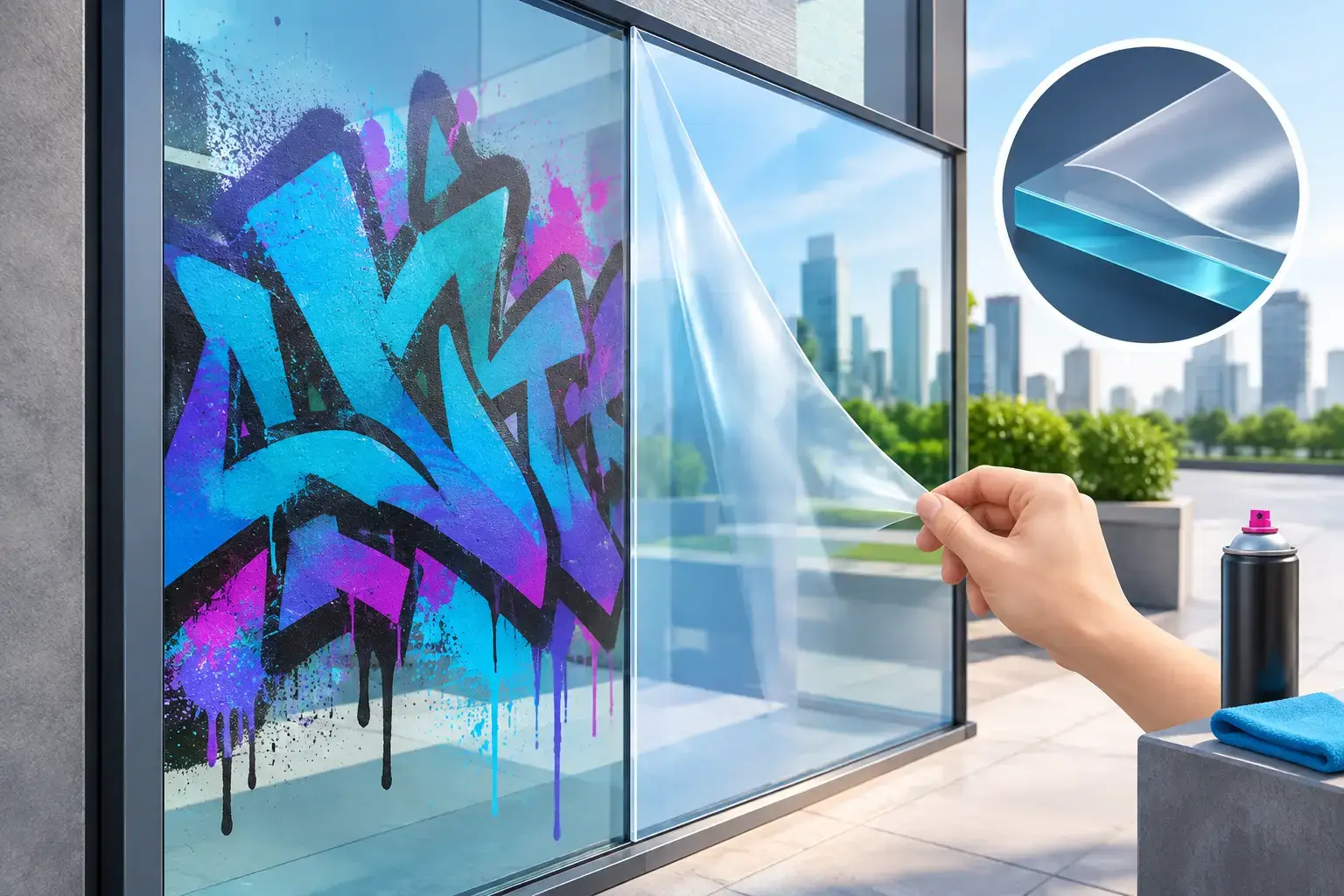
A single etched tag on a glass storefront can turn a clean, well-maintained property into a costly replacement project. Anti graffiti film for glass gives property owners a practical way to protect the original glass, remove the damaged layer when needed, and restore the appearance of an entryway without replacing an entire pane.
For retail operators, property managers, schools, healthcare facilities, and commercial buildings, this is not simply a cosmetic upgrade. It is a maintenance strategy that helps control repair costs, reduce downtime, and preserve a professional appearance in areas that receive frequent public traffic.
What Anti Graffiti Film for Glass Does
Anti-graffiti film is a clear, sacrificial protective layer applied over existing glass. It is designed to take the damage from graffiti, scratching, adhesive residue, marker, paint, and many forms of surface abrasion before the glass itself is affected.
When the film is vandalized, a trained installer removes and replaces that layer. The goal is straightforward: preserve the underlying glass rather than treating replacement glass as the first response to every incident.
This approach is especially valuable when the glass is large, custom-sized, difficult to access, or part of a coordinated storefront system. Replacing one damaged pane may involve ordering lead times, tenant disruption, safety considerations, and a repair bill that is far higher than a film replacement.
Anti-graffiti film is generally optically clear, so it can protect visibility while keeping the original appearance of the glass intact. The right product and precise installation matter. Poorly installed film can show edge lift, debris, distortion, or premature wear, which defeats the purpose of protecting a polished commercial environment.
Where Protective Film Makes the Most Sense
The strongest case for anti-graffiti protection is usually made where glass is accessible from the street or shared public areas. Ground-level storefronts, exterior doors, glass partitions, elevator interiors, lobby glazing, transit-adjacent properties, and building entrances are common applications.
Retail spaces often benefit because their windows are both highly visible and expensive to replace. A graffiti incident outside business hours can affect how customers perceive the store before the doors even open. With a sacrificial film in place, the response can be much more controlled: assess the damage, schedule removal and replacement, and return the surface to a clean condition.
Multi-tenant properties face a different but equally important challenge. Property managers need a consistent standard across common areas while keeping maintenance predictable. Applying protective film to vulnerable glass can make it easier to address vandalism without approving full glass replacement every time an incident occurs.
Homes may also be good candidates when exterior glass is particularly exposed, such as entry sidelights, street-facing glass, or vulnerable patio doors. The decision depends on the location, likelihood of vandalism, and the cost or complexity of replacing the existing glass.
Film Protects the Surface, Not Every Risk
Clear expectations are essential. Anti-graffiti film is made to protect against surface-level damage. It is not a substitute for security film, safety film, or impact-resistant glazing when the primary concern is forced entry, glass retention, or breakage.
If a pane is shattered, the protective film cannot be expected to solve the same problem as a purpose-built security solution. If your building needs both vandalism protection and enhanced glass retention, the right solution depends on the glass type, application, risk profile, and local requirements. A professional assessment can determine whether one film system, multiple measures, or a different glazing approach is appropriate.
It also helps to understand that no protective layer is invulnerable. Severe gouging, intentional cutting, and aggressive chemical exposure may require the film to be replaced. That is not a failure of the system. The film has done its job if the damage is contained in the replaceable layer rather than permanently etched into the glass.
Why Glass Replacement Is Not Always the Best First Step
Once graffiti has been scratched or etched into glass, cleaning alone may not be enough. Paint and marker can often be removed, but etching physically changes the surface. Restoration may be possible in some cases, yet deep scratches or etched markings can leave distortion or require extensive labor.
Replacing glass is sometimes necessary, particularly when damage is severe or the pane already has existing defects. But replacement can be disruptive. It may require measurements, fabrication, special ordering, temporary boarding, coordination with tenants, and installation during limited access hours.
Protective film changes the maintenance equation. Instead of waiting for damage and then deciding whether restoration or replacement is feasible, you add a planned, replaceable surface before the damage occurs. For properties that experience repeat incidents, that predictability can be valuable.
Choosing the Right Anti-Graffiti Film for Glass
Not every clear film is suitable for every glass surface. Film selection should account for the type of glass, whether it is installed indoors or outdoors, the amount of direct sun exposure, how the glass is cleaned, and what kind of vandalism the property has experienced.
Exterior-facing film needs to stand up to weather, ultraviolet exposure, cleaning, and daily contact. Interior applications may prioritize abrasion resistance and appearance in high-touch areas such as elevators, hallways, and glass partitions. The location of the film matters because the exposed side is the side that receives the protection.
Existing window films and coatings also deserve attention. If glass already has solar control film, decorative film, a special coating, or prior damage, the installation plan should be evaluated carefully. Layering products without checking compatibility can create avoidable issues with appearance, adhesion, or future maintenance.
For branded retail environments or design-focused properties, optical clarity is another priority. The finished installation should look intentional, clean, and nearly invisible from normal viewing distance. That result comes from careful preparation, accurate cutting, clean working conditions, and attention to edges and corners.
Installation Quality Determines Long-Term Performance
Protective film is only as effective as the surface preparation and installation behind it. Glass should be thoroughly cleaned and inspected before application. Dust, adhesive residue, existing chips, moisture, and contamination can affect how the film lays and adheres.
A skilled installer will also consider access around frames, seals, handles, mullions, and hardware. These details affect the finished appearance and can influence whether edges are exposed to frequent contact or cleaning chemicals. On high-traffic commercial glass, those details are not minor. They often determine how well the installation holds up over time.
At Comfort Pro, the focus is on selecting a film solution that fits the actual surface and use case, then installing it with the precision needed for a clean, durable result. A careful consultation can prevent a property owner from paying for a product that is not suited to the exposure or maintenance demands of the location.
Maintenance and Replacement After Damage
Routine care should be simple. Use cleaning methods approved for the installed film and avoid harsh abrasives, scraping blades, or aggressive pads that may dull the protective surface. Building staff should know that the film is present, particularly if they use outside cleaning vendors or perform frequent spot cleaning.
When graffiti occurs, photograph the damage before attempting removal. In some situations, a gentle, approved cleaning method may remove surface paint or marker. If the film has been scratched, etched, or visibly damaged, repeated scrubbing may make the appearance worse. A professional can determine whether cleaning is worthwhile or whether replacing the affected film panel is the cleaner solution.
For larger properties, it helps to keep basic records of installation dates, film locations, and any repeated damage patterns. That information can guide future protection decisions, whether that means extending film coverage, improving lighting, adjusting access controls, or planning replacement film in advance.
Is It Worth the Investment?
Anti-graffiti film is most worthwhile when the cost of one damaged glass pane would exceed the cost of protecting it, or when the operational disruption of replacement is the bigger concern. It is particularly compelling for expensive storefront glass, frequently targeted entryways, and public-facing interiors where appearance affects tenant, customer, or visitor confidence.
For a low-risk window in a protected location, film may not be necessary. For a visible pane that is difficult to replace or regularly exposed to pedestrian traffic, it can be a smart layer of protection. The best choice comes from evaluating the specific glass, the property’s history, and the cost of responding after damage rather than before it.
A protected glass surface gives you more control when vandalism happens. Instead of treating every mark as a glass replacement emergency, you have a practical path to restore the appearance of the property and keep the original glazing in service.