
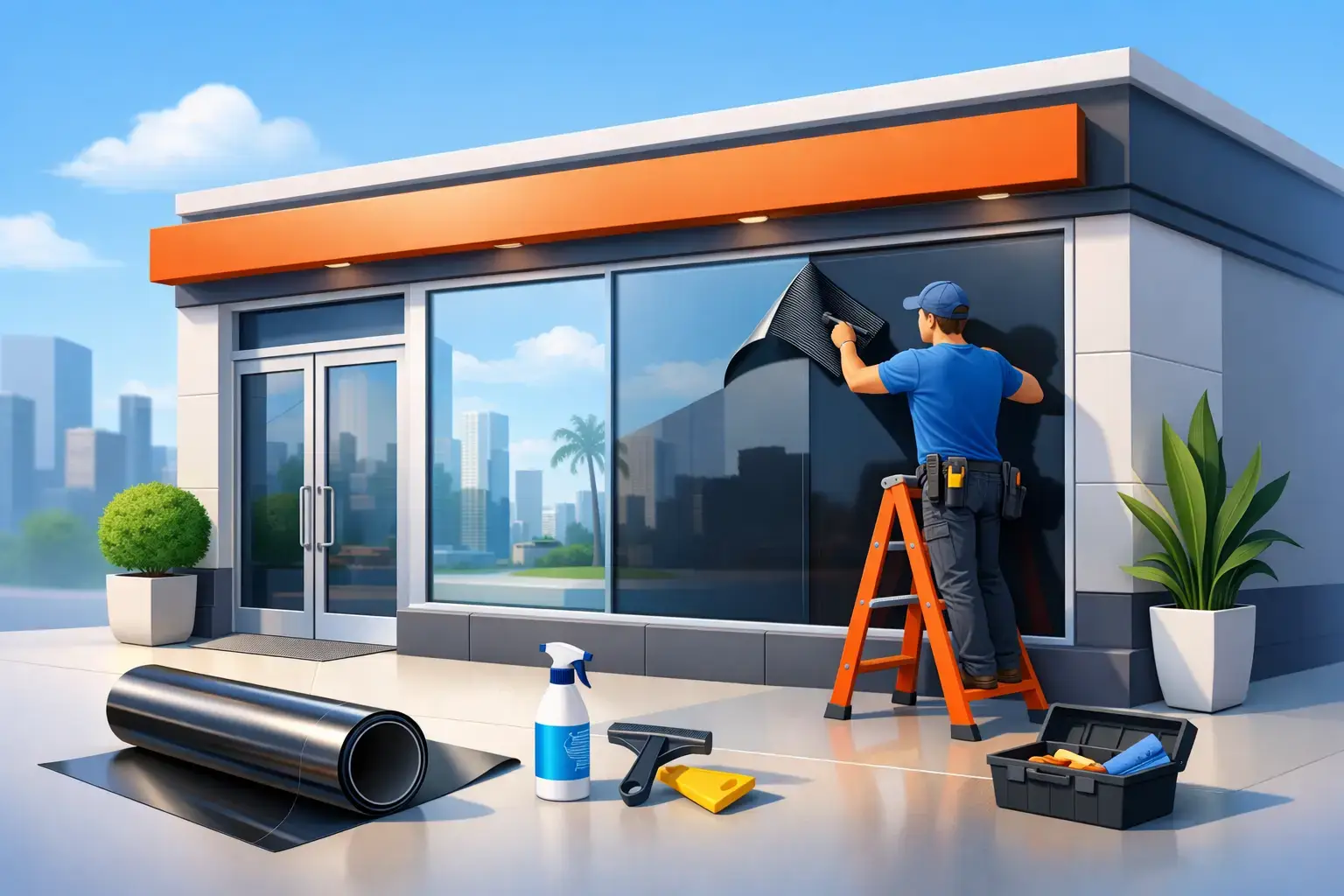
A storefront can work against your business when afternoon sun turns the sales floor into a hot spot, glare obscures displays, and passersby can see more than they should. Learning how to tint storefront windows starts with more than choosing a darker look. The right film should improve comfort and privacy while preserving visibility, supporting your brand, and performing safely on the glass you already have.
For retail operators, property managers, and business owners, storefront film is a practical upgrade with a visible result. The key is matching the film, glass, and installation method to the way the space is used.
Start With the Problem You Need the Film to Solve
Storefront window tint is not one product with one purpose. A bright, west-facing boutique may need solar control to reduce heat and glare. A street-level office may need privacy without creating a closed-off feeling. A retailer with premium merchandise may be focused on fading caused by ultraviolet exposure.
Before selecting a film, look at the glass from inside and outside at different times of day. Note where glare lands, which displays receive direct sun, whether customers struggle to see screens or signage, and where privacy is a concern. This assessment prevents a common mistake: choosing a film primarily for its color rather than its performance.
Solar control film can reject a meaningful amount of solar heat and reduce glare while allowing useful daylight into the space. Decorative and frosted films create privacy or define zones without requiring permanent glass replacement. Security and safety films are designed to help hold broken glass together after impact, which can be especially valuable for vulnerable storefronts. The best option depends on your goals, the existing glazing, and the appearance you want to maintain.
Check Your Glass, Lease, and Local Requirements
Not every film is appropriate for every pane of glass. Storefronts may use tempered glass, insulated glass units, laminated glass, or older single-pane glazing. Applying the wrong film to the wrong glass can increase heat absorption and, in some situations, contribute to thermal stress. Existing seals, edge conditions, and the direction the window faces also matter.
A qualified installer should identify the glass type and review manufacturer compatibility guidelines before recommending a product. This is particularly important for insulated units, dark films, and windows exposed to intense California sun. A careful evaluation protects both the glass and the film warranty.
Also review your lease if you occupy rather than own the property. Many commercial leases require approval for exterior-facing changes, even when the film is subtle. Shopping centers, business districts, and local jurisdictions may have rules regarding window coverage, visibility, graphics, or required emergency signage. Decorative film and custom printed film can be excellent branding tools, but they should support compliant storefront visibility rather than interfere with it.
How to Tint Storefront Windows: Choose the Right Film
The right tint balances performance with the customer experience inside and outside the store. A film that looks great from the street but makes the interior feel too dark may create a poor shopping environment. Conversely, a nearly clear film may preserve the view but not provide enough glare or heat control for a sun-facing storefront.
Most commercial storefront projects fall into one or more of these categories:
- Solar control film reduces heat, glare, and UV exposure while helping maintain a more comfortable interior temperature.
- Decorative privacy film uses frosted, patterned, gradient, or custom designs to add privacy and visual interest.
- Security and safety film helps retain glass fragments after breakage and can add another layer of protection to vulnerable glazing.
- Custom printed film supports brand messaging, promotions, wayfinding, and display graphics directly on glass.
Visible light transmission is one of the most useful specifications to compare. It measures how much visible light passes through the glass and film. Lower transmission generally means a darker appearance and more glare reduction, but it can also change the mood of the space. Heat rejection figures are valuable as well, yet they should be viewed alongside glare reduction, UV rejection, reflectivity, and interior visibility.
A sample applied to a small window or reviewed against the actual storefront can help set realistic expectations. Film can look different depending on the glass tint, surrounding buildings, interior lighting, and time of day.
Prepare the Storefront Before Installation
Precision installation begins before the film touches the glass. Schedule the work for a time when displays, signage, and customer flow can be managed. If the film will cover large panels near merchandise, move sensitive inventory away from the work area and protect nearby surfaces.
The glass must be thoroughly cleaned to remove dust, adhesive residue, silicone contamination, paint overspray, and everyday grime. Small particles can become visible under a finished film, particularly on clear or lightly tinted applications. Old decals and failed film should be removed completely, and any scratches, chips, or damaged seals should be identified before installation.
This is also the time to decide how the film will interact with existing graphics. In some cases, replacing outdated decals with a single custom film application creates a cleaner, more consistent storefront. In others, the best choice is to leave key branding visible and use solar film on selected panes only.
Install With Care, Not Shortcuts
Professional storefront tinting is a controlled process. The installer measures each pane, cuts the film accurately, prepares the glass, applies the film with a slip solution, and uses professional squeegees to remove water and air from beneath the surface. Edges are trimmed cleanly so the finished work looks intentional, not improvised.
Large commercial panes are less forgiving than they appear. A small alignment error can become obvious across a wide piece of glass, and contamination trapped beneath the film is difficult to correct once the adhesive begins to cure. Multiple panels also need to align visually, especially where mullions, door frames, and graphics create clear reference lines.
It is normal to see some moisture haze or tiny water pockets shortly after installation. Most films need time to cure, and the process can take several days or longer depending on film type, weather, and glass conditions. Do not judge the final appearance on the first day. Your installer should explain what is normal during curing and when to report a concern.
Plan for Doors, Edges, and Daily Wear
Storefront windows experience more contact than many commercial glass surfaces. Entry doors are touched constantly, display panes are cleaned frequently, and exterior glass is exposed to weather and maintenance equipment. Door film needs especially careful edge work because frequent use can test even a high-quality installation.
For high-traffic locations, discuss cleaning procedures with your installer. In general, use a soft cloth or clean rubber squeegee with a mild, nonabrasive solution once the film has cured. Avoid abrasive pads, rough paper towels, and harsh chemicals that can scratch or dull the film surface. Staff should also know not to scrape decals or tape from filmed glass without checking first.
If your storefront has existing scratches, etching, or graffiti damage, restoration may be worth considering before film is applied. Film can improve the finished appearance, but it does not erase every defect underneath. Addressing surface issues first gives the installation a cleaner, longer-lasting result.
Know When Professional Installation Is the Better Value
Small decorative projects may seem simple, but storefront tinting carries higher stakes. You are working with visible glass, customer-facing branding, possible lease restrictions, and materials that need to perform under constant sun and wear. A poor installation can leave bubbles, lifted edges, inconsistent panel appearance, or an unsuitable film choice that does not meet the original goal.
A professional consultation reduces those risks. Comfort Pro helps commercial clients evaluate solar exposure, privacy needs, existing glass, and the look they want before installation begins. That careful approach is particularly useful for multi-pane storefronts, security film projects, custom graphics, and occupied spaces where downtime needs to stay minimal.
Your storefront is part of the customer experience before anyone opens the door. Select film for the real conditions of the space, insist on compatible materials and precise preparation, and treat the finished glass as a long-term investment in comfort, protection, and presentation.