
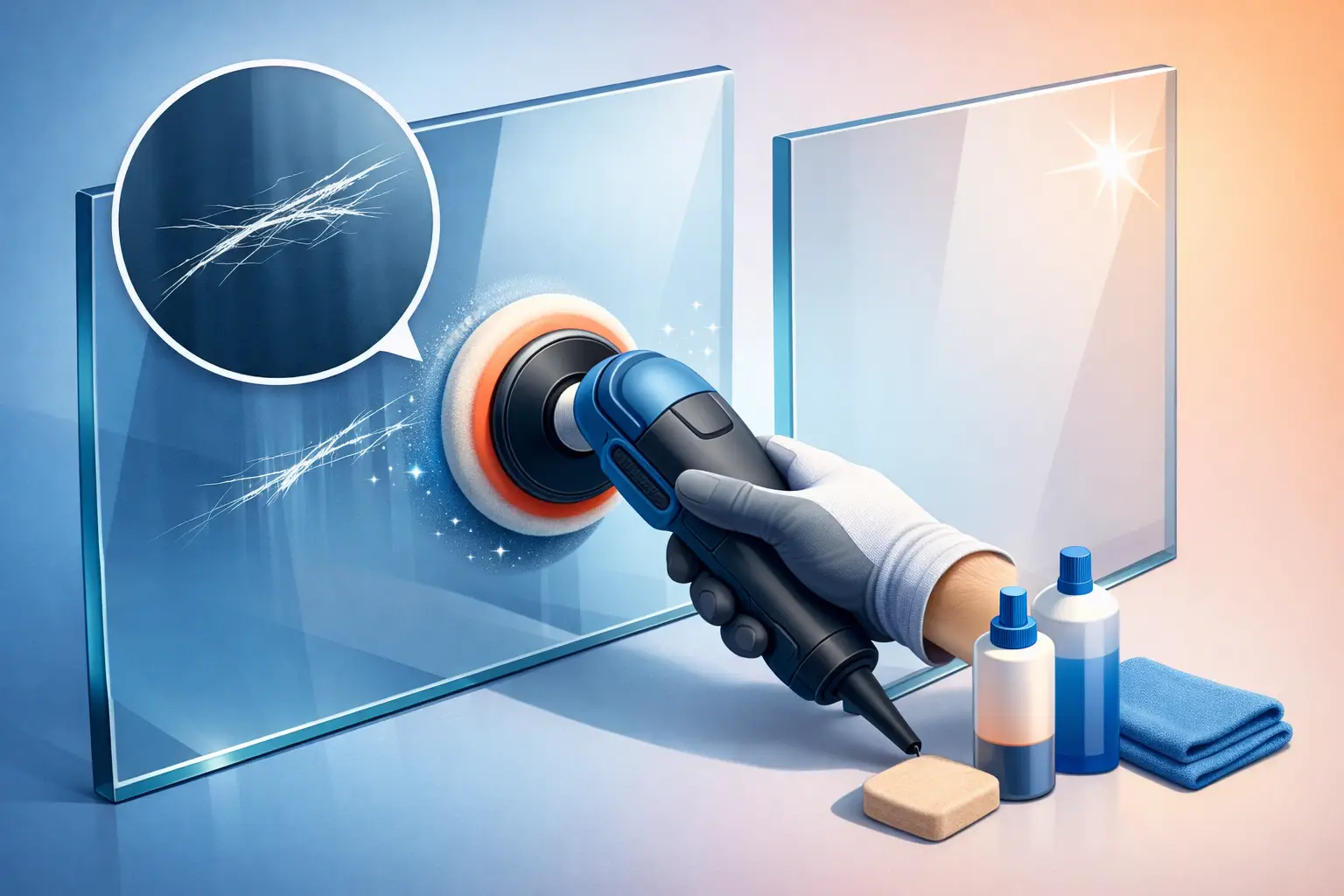
A scratch across a glass door, storefront, or interior partition can make an otherwise well-maintained space look neglected. Knowing how to restore scratched glass starts with one critical distinction: not every mark on glass is actually a scratch, and not every true scratch should be polished. The wrong method can create haze, distortion, or a larger repair problem than the original damage.
For homeowners and property managers, the right approach protects both the appearance and performance of the glass. It also helps determine when a careful cleaning, a targeted restoration process, or replacement is the most practical choice.
Start by Identifying What Is on the Glass
Before attempting a repair, clean the surface thoroughly. Dust, dried mineral deposits, paint overspray, adhesive residue, and metal transfer can all resemble scratches from a distance. Use a clean microfiber cloth, a glass-safe cleaner, and fresh water. Avoid abrasive pads, scouring powders, or rough paper towels, which can add fine surface damage while you clean.
Once the glass is clean and dry, inspect the mark from several angles. Run a clean fingernail lightly across it. If your nail does not catch, the issue may be a removable surface deposit or a very light abrasion. If it catches clearly, the glass has likely been scratched deeply enough to require more than simple polishing.
Look at the damage in changing light. Mineral staining often appears cloudy or spotty and may fade when wet. Scratches tend to show as defined lines, especially when sunlight or interior lighting reflects off the pane. On commercial glass, nearby metal fixtures, carts, cleaning tools, and construction activity are common sources of surface marks.
When Light Scratches Can Be Restored
Very fine scratches may be improved with controlled glass polishing. Professional restoration typically uses a specialized polishing compound, often cerium oxide, paired with the right pad, pressure, speed, and cooling technique. The objective is not to fill the scratch. It is to carefully level a minute amount of surrounding glass until the scratch becomes far less visible.
That process requires restraint. Glass restoration works by removing material, so aggressive polishing can leave a lens-like effect, visible swirl marks, or optical distortion. Those risks increase on large windows, insulated glass units, glass walls, and areas viewed at an angle or in direct sunlight.
DIY kits can help with extremely faint wear on a small, non-critical area, but expectations should be realistic. They are not a reliable answer for scratches that catch a fingernail, widespread abrasion, or damage in a highly visible location. A bathroom mirror, decorative panel, or small side window may be a lower-risk place to test a method than a storefront entry or a floor-to-ceiling residential window.
Avoid internet shortcuts involving toothpaste, baking soda, steel wool, or household polishing products. These materials are not designed to restore architectural glass consistently. They may leave an uneven sheen, create additional micro-scratches, or damage coatings that are not visible to the eye.
The importance of glass type and coating
Not all glass should be treated the same way. Tempered glass, laminated glass, insulated glass units, mirrors, low-emissivity glass, and glass with factory-applied coatings each have different limitations. Polishing a coated surface can permanently alter its appearance or performance. On insulated units, excessive heat from friction can also introduce unnecessary risk.
If the glass has an existing window film, decorative film, safety film, or anti-graffiti film, do not polish over it. A mark may be in the film rather than the glass beneath it, which is often good news. Replacing a damaged protective film can be much more straightforward and cost-effective than attempting a glass repair.
How to Restore Scratched Glass Safely
For a light surface mark on plain, uncoated glass, begin with the least aggressive option. Clean and inspect the area first, then test any polishing method in an inconspicuous spot. Keep the work area clean so loose grit does not become an abrasive under the pad or cloth.
Use a glass-specific polishing product according to its instructions, and keep the surface from overheating. Work a small area at a time with light, even pressure. Stop regularly, clean the residue, and inspect the glass in reflected light. The goal is gradual improvement, not a fast result.
If the scratch remains obvious after a conservative attempt, do not increase pressure or continue polishing for extended periods. This is where many repairs go wrong. Repeatedly working one spot can create a visible polished depression that stands out more than the original scratch.
For larger panes and prominent glass, professional assessment is usually the wiser route. A trained glass restoration specialist can evaluate scratch depth, surface condition, coating concerns, and the viewing angle before deciding whether restoration is appropriate. The best result may be a substantial visual improvement rather than complete scratch removal. That distinction matters because clear, distortion-free glass is the standard worth protecting.
When Restoration Is Not the Right Answer
Deep scratches, chips, cracks, edge damage, and damage affecting the structural integrity of a pane should not be treated as cosmetic issues. A scratch that is easily felt with a fingernail may be too deep to polish safely. Cracks and chips, especially near corners or edges, can worsen with temperature changes, door movement, or everyday building vibration.
Replacement may also be the better choice when damage covers a broad area. A heavily scratched storefront panel or glass partition can require extensive polishing, and the labor involved may exceed the value of a new pane. This depends on glass size, type, availability, and whether the unit has specialty features such as insulation, tinting, or safety glazing.
For commercial properties, it is also worth considering the operational impact. An entry door, retail display, reception partition, or public-facing glass wall is part of the customer experience. If the damage is noticeable, waiting for a temporary DIY solution to work can create more disruption than scheduling a focused professional repair or replacement plan.
Prevent New Scratches After Restoration
Restoring glass is only half the job. The next step is reducing the conditions that caused the damage in the first place. Proper cleaning methods make a meaningful difference. Use clean microfiber towels, change them frequently, and avoid wiping dry dust or grit across the glass. Use a clean squeegee blade for large surfaces, and keep metal tools away from the pane.
Construction and maintenance activity deserve special attention. Glass near painting, remodeling, landscaping, deliveries, or facility work can be exposed to debris, adhesives, and accidental contact. Temporary surface protection can help during active projects, particularly on interior partitions, storefronts, elevator surrounds, and high-traffic glass.
For locations exposed to repeated tagging, abrasion, or public contact, a sacrificial protective film can be a practical long-term solution. Anti-graffiti film is designed to take the damage first. When it becomes scratched or marked, the film can be removed and replaced while preserving the glass underneath. This approach can reduce downtime and help avoid repeated glass replacement costs.
Surface protection is also valuable in homes with large glass doors, busy common areas, or frequent renovations. The right solution depends on the glass type, how the area is used, and whether the priority is scratch resistance, privacy, UV control, safety, or appearance.
Get a Clear Recommendation Before You Repair
The most reliable repair decisions are based on a close inspection, not a guess from across the room. A specialist can determine whether the mark is residue, surface abrasion, film damage, or a scratch within the glass itself. That diagnosis prevents unnecessary polishing and helps preserve valuable glazing systems.
Comfort Pro helps homeowners, businesses, and property managers evaluate damaged glass and protective film options with a focus on clean results and long-term performance. When glass can be restored safely, precision matters. When protection or replacement makes more sense, the right recommendation can save time, preserve appearance, and keep the space looking cared for.