
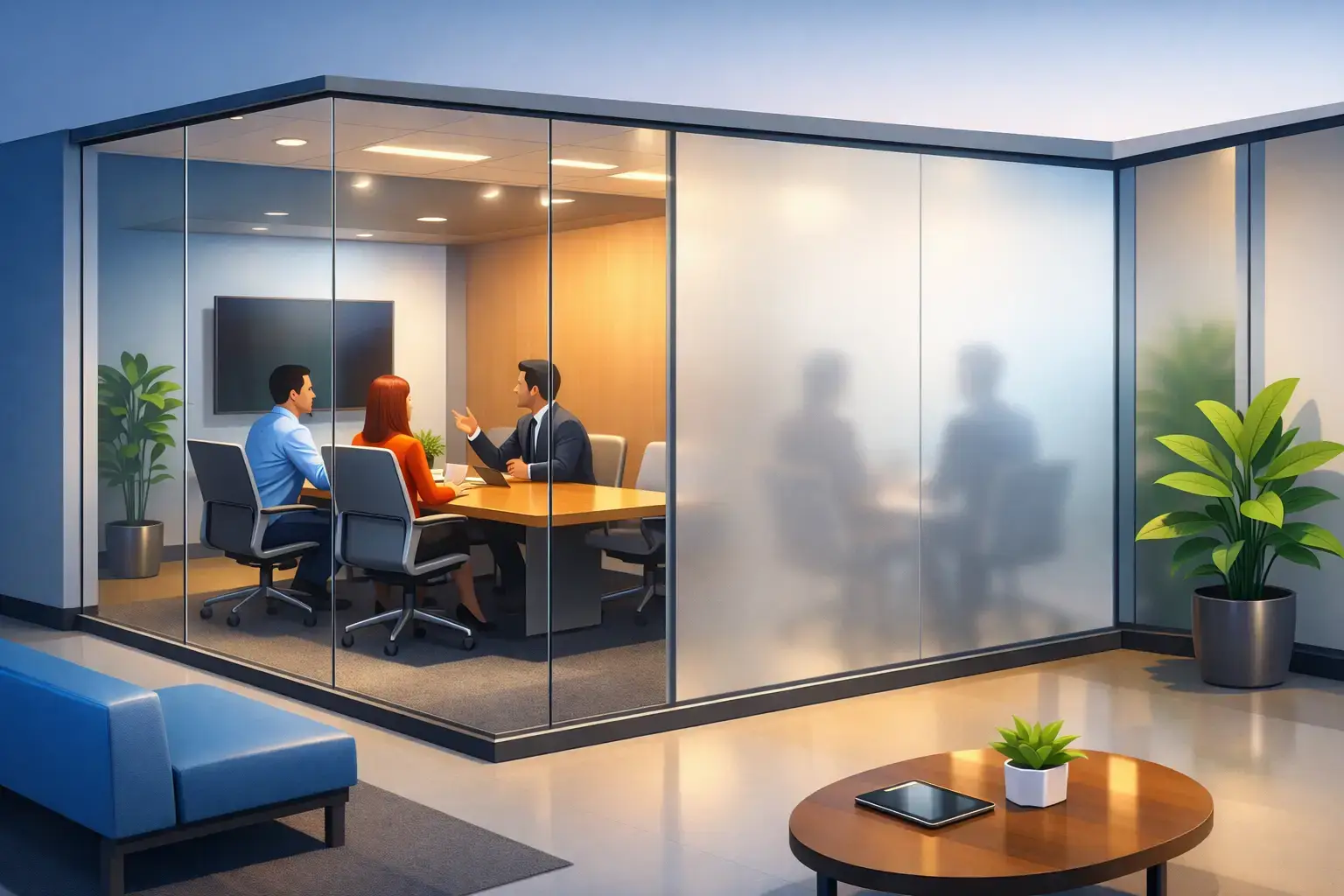
Glass-walled meeting spaces look sharp right up until the first confidential conversation starts. If your team is lowering voices, hunting for empty offices, or closing improvised blinds before every call, privacy film for conference rooms is usually a cleaner fix than replacing glass or sacrificing natural light.
Conference rooms have a tricky job. They need to feel open and professional, but they also need to protect conversations, presentations, and client information from everyone passing by. That tension is exactly where window film makes sense. The right film can create visual privacy, reduce glare on screens, soften harsh light, and improve the overall look of the space without making the room feel closed off.
Why privacy film for conference rooms is such a practical upgrade
Most offices choose glass conference rooms for good reason. They let light travel deeper into the building, make the floor plan feel larger, and support a modern design. The downside is obvious the moment someone shares financials on a wall display or discusses hiring decisions within view of the hallway.
Privacy film solves that problem at the glass itself. Instead of adding bulky treatments or permanent barriers, film changes how the glass performs. Depending on the product, it can obscure direct sightlines, diffuse visibility, or create partial privacy while still keeping the room bright.
That flexibility matters because not every conference room needs total concealment. A boardroom used for executive meetings may need much more privacy than a casual huddle room or training space. In many offices, the goal is not to turn glass opaque from top to bottom. It is to block the most distracting or sensitive lines of sight while preserving an open feel.
What types of privacy film work best in conference rooms
The best choice depends on how the room is used, what the surrounding light conditions look like, and how much privacy you actually need.
Frosted and etched-look film
This is one of the most common options for office settings because it gives a clean, architectural appearance. Frosted film obscures visibility through the glass while still allowing light to pass through. For conference rooms, it is often the safest recommendation when the goal is dependable privacy and a polished finish.
It also works well for partial coverage. Many businesses apply it as a band across the center of the glass to block seated or standing sightlines from hallways while leaving upper and lower sections open. That approach keeps the room feeling lighter and less boxed in.
Decorative privacy film
Decorative films offer privacy with more design flexibility. They can include gradients, patterns, stripes, geometric layouts, or custom branding elements. This option is useful when a plain frosted look feels too basic or when the office design calls for something more intentional.
There is a trade-off, though. Some decorative patterns create privacy only from certain distances or angles. If confidentiality is the top priority, design should come second to performance.
Gradient film
Gradient film transitions from more opaque to less opaque, which can be useful in conference rooms where you want privacy at eye level but still want some openness above or below. It has a modern look and can soften the visual barrier between private and public areas.
That said, gradient film is a style-forward choice. It works best when the privacy need is moderate rather than absolute.
Switchable or specialty smart film
For spaces that serve multiple purposes, switchable film can change from clear to private when activated. It offers impressive flexibility, especially in high-end environments where rooms alternate between open collaboration and confidential meetings.
This is usually the premium end of the category. It comes with a higher upfront cost and more complexity, so it is not always the best fit for every office. For many businesses, a well-chosen frosted or decorative film delivers the practical result they need at a much better value.
Privacy is not the only benefit
A lot of buyers start with privacy and then realize the room has other issues that film can help solve. Conference rooms are often packed with screens, glass, and overhead lighting, which creates glare fast. If people are squinting at presentations or shifting seats to avoid reflections, the glass may be contributing to the problem.
Some privacy films can also improve glare control or diffuse incoming light, making the room more comfortable for meetings. In offices with strong sun exposure, especially in parts of California where afternoon heat can build quickly, the right film may also help moderate brightness and reduce strain on the space.
There is also a visual branding benefit. Film can make conference rooms feel finished and intentional rather than exposed. Clean lines, precise placement, and consistent application across multiple rooms give the office a more organized, professional appearance.
How to choose the right privacy film for conference rooms
The smartest way to choose film is to start with the actual use case, not the product catalog. A conference room used for HR meetings, legal review, or executive planning has different demands than a room mainly used for brainstorming sessions or weekly team check-ins.
Think first about visibility. Do you need to stop people from seeing computer screens? Prevent passersby from making eye contact with occupants? Obscure whiteboards and wall displays? The more specific the problem, the easier it is to choose the right film.
Next, consider coverage. Full-height privacy film creates the strongest visual separation, but it can also change the feel of the room more dramatically. Partial coverage is often enough, especially if the concern is direct lines of sight from adjacent walkways or neighboring workstations.
Lighting matters too. Some films look different depending on daylight levels, interior lighting, and viewing angle. A product that seems ideal in a sample can perform differently on a large expanse of office glass. That is one reason professional guidance matters, particularly for businesses that want privacy without making the room feel dark or closed off.
Installation quality makes a visible difference
Conference room glass sits in one of the most noticeable parts of an office. Crooked edges, bubbles, dust contamination, and uneven seams are hard to ignore when they are right at eye level. This is not an area where rushed installation hides well.
Professional installation helps ensure the film is cut accurately, aligned consistently, and applied cleanly across every panel. That matters even more in offices with multiple conference rooms or long runs of interior glass, where visual consistency affects the whole space.
It also reduces the risk of choosing the wrong product in the first place. A good installer will look at privacy needs, room orientation, lighting, design goals, and maintenance expectations before making a recommendation. That consultative step saves a lot of frustration later.
Common mistakes to avoid
One of the biggest mistakes is assuming darker always means more private. In conference rooms, that is often not true. A heavily tinted film may change the appearance of the glass, but it may not give the interior privacy you actually need, especially on interior partitions.
Another mistake is focusing only on appearance. A film can look great in a showroom or sample book and still fall short once it is installed in a busy office. Performance in real conditions matters more than the sample alone.
It is also easy to overdo it. If every glass wall becomes fully blocked, the office can lose the openness that made glass attractive in the first place. The best solutions usually strike a balance between discretion and light, privacy and accessibility, design and function.
Is privacy film worth it for office conference rooms?
For most businesses, yes. Privacy film is usually far more cost-effective than replacing glass, building new walls, or adding bulky coverings that interrupt the design of the office. It can improve confidentiality, comfort, and appearance in one upgrade, with much less disruption than a larger renovation.
The value is even clearer when conference rooms are used constantly. If teams rely on these spaces for client calls, internal reviews, interviews, or presentations, the ability to create dependable privacy without losing light pays off quickly in day-to-day usability.
In markets where office design standards are high and natural light is a real asset, a well-installed film solution often hits the sweet spot. It gives the room more control without making it feel smaller or heavier.
The best conference rooms support focus. They let people talk freely, share information comfortably, and use the space without second-guessing who can see in. If your glass walls are getting in the way of that, privacy film is not just a design add-on. It is a practical improvement that helps the room do its job better.