
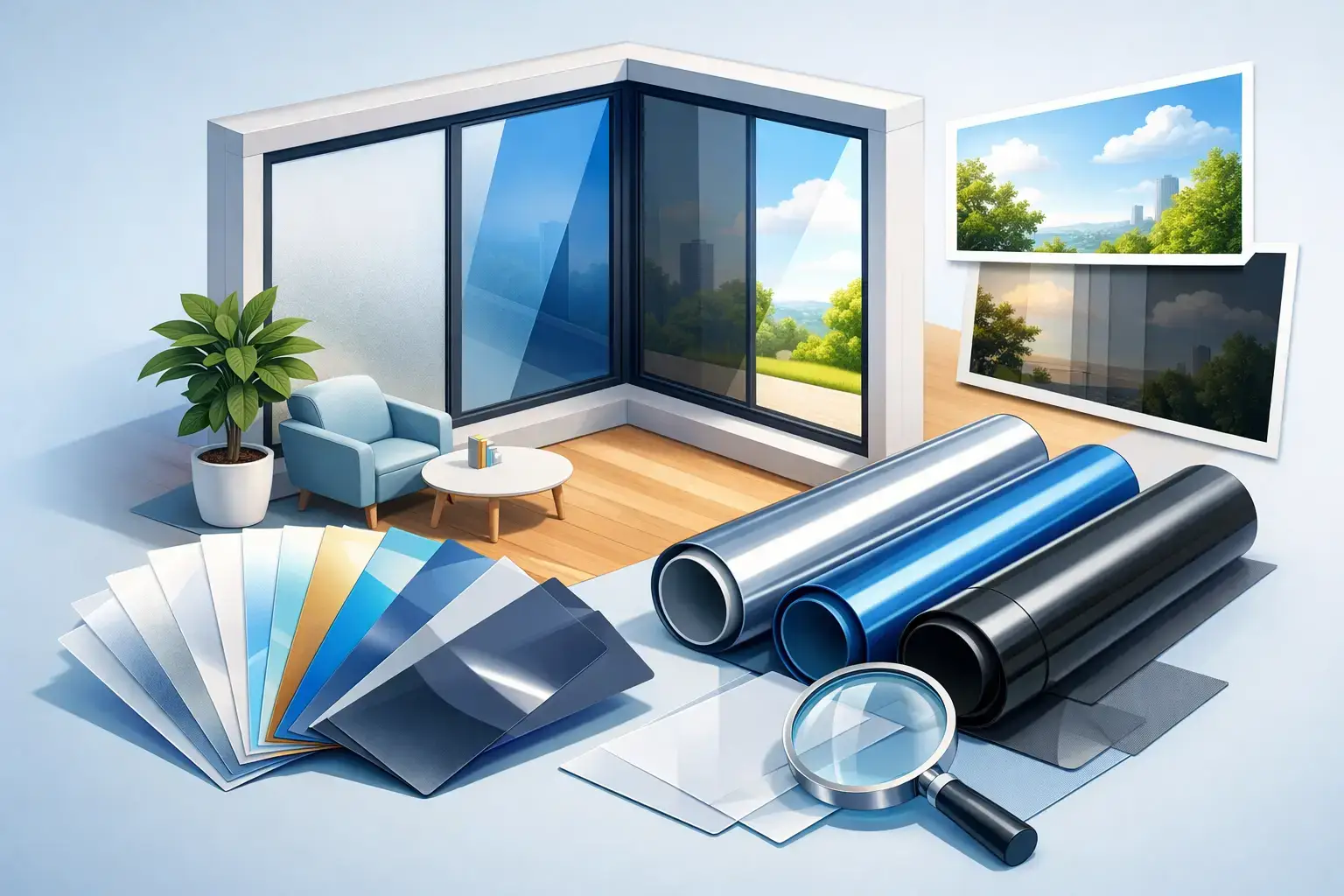
A conference room that turns into a glare box at 2 p.m. A living room that looks great until the sun starts fading the floors. A street-facing office that never feels quite private. If you’re asking how to choose window film, the right starting point is not the product label – it’s the problem you’re trying to solve.
Window film is not one-size-fits-all. Two products can look similar on glass and perform very differently once installed. The best choice depends on what matters most in your space: reducing heat, cutting glare, protecting interiors from UV damage, increasing privacy, improving safety, or changing the look of the glass.
How to choose window film starts with the goal
The most common mistake is shopping by darkness alone. Many people assume a darker film means better performance, but visible tint is only one part of the story. Some lighter, more advanced films reject significant heat while keeping the glass bright and natural-looking. Others prioritize privacy or decorative appeal over solar performance.
Start by identifying the main issue in the room or building. If your top concern is comfort, you will want a solar control film designed to reduce heat and glare. If you need daytime privacy for a storefront or office, a reflective or frosted option may make more sense. If the concern is broken glass, impact, or forced entry, safety and security film belongs in the conversation.
That sounds simple, but many properties have overlapping needs. A retail space may need glare reduction on the front windows, privacy film in a back office, and anti-graffiti film on vulnerable exterior surfaces. A home may need UV protection throughout, with stronger heat rejection on west-facing rooms and decorative privacy film in a bathroom. Good film selection is usually room-by-room, not building-wide by default.
Match the film type to the problem
Solar control film is often the best fit for homes and commercial buildings dealing with excess heat, bright light, and fading interiors. This category is built to reduce solar energy entering through glass. The result can be a more comfortable room, less strain on cooling systems, and fewer hot spots near windows. For many California properties with long sun exposure, this is the first category to evaluate.
Privacy film is different. Its job is to limit visibility, not necessarily reject the most heat. Frosted and decorative films are popular when you want privacy without making a space feel closed off. They work well in conference rooms, entry glass, bathrooms, sidelights, and interior office partitions. Reflective films can also create daytime privacy, but that effect changes after dark when interior lights are on.
Safety and security film is built to help hold shattered glass together. That matters in schools, storefronts, offices, and homes where breakage is a concern. It can support safety during accidents, storms, or impact events, but expectations need to be realistic. Security film can strengthen the glass system, but performance depends on the glass itself, the frame, and the attachment method.
Decorative film is more design-driven. It can add branding, soften visibility, create a custom look, or improve privacy in a more polished way than blinds or curtains. Anti-graffiti and surface protection films solve a different problem altogether – preserving glass and high-wear surfaces from damage, scratching, or vandalism.
Look beyond appearance and ask about performance
If you want to know how to choose window film intelligently, ask for performance data, not just a sample book. A clean-looking sample tells you very little about what the film will do once the sun hits the glass.
For solar film, the key metrics usually include heat rejection, visible light transmission, glare reduction, and UV rejection. Heat rejection affects comfort and energy performance. Visible light transmission tells you how much daylight still comes through. Glare reduction matters in rooms with screens, televisions, or reflective work surfaces. UV rejection helps protect flooring, furniture, merchandise, and finishes from fading.
There are trade-offs here. A film with stronger glare reduction may also darken the room more. A highly reflective product may improve daytime privacy but change the building’s exterior appearance. A very subtle, nearly clear film can preserve views and natural light while still improving UV and heat performance, but it may not deliver the same privacy effect as a frosted or reflective option.
That is why product selection should be tied to the experience you want in the room. If preserving natural light is non-negotiable, say that early. If the room is unusable from afternoon heat, performance may matter more than appearance.
Consider the glass you already have
Not every film works on every piece of glass. This is one of the most overlooked parts of the buying process.
Single-pane, dual-pane, tempered, laminated, low-E, and specialty glass can respond differently to film. The wrong product on the wrong glass can create stress and lead to seal failure or thermal breakage in some situations. Large commercial buildings can also have different glass types on different elevations, even within the same property.
This is where professional guidance matters. A careful site review helps determine what glass is installed, how much sun each area receives, and which film options are compatible. It also helps avoid a common problem in mixed-use spaces: choosing one film for visual consistency when the performance demands are actually different from one side of the building to another.
Think about day, night, and real-world use
Privacy is one of the biggest areas where expectations and reality can drift apart. Many customers want a film that lets them see out while stopping others from seeing in at all times. In most cases, there is a balance rather than a perfect one-way solution.
Reflective films can provide good daytime privacy because the brighter exterior light makes the outside act like a mirror. At night, that effect can reverse if the interior is brighter than the outside. Frosted and opaque films create more consistent privacy, but they also reduce or eliminate clear views through the glass.
The same practical thinking applies to glare and heat. If a room gets harsh morning sun for one hour but stays comfortable the rest of the day, a lighter film may be enough. If a west-facing office bakes every afternoon, stronger solar rejection may be worth the visual change. The right answer depends on how the space is actually used.
Installation quality matters as much as the film
A premium film cannot make up for poor installation. Dust, contamination, edge gaps, misaligned patterns, and sloppy finishing all affect appearance and longevity. In commercial settings, those details are especially visible on large glass panels, entry systems, and interior office partitions.
Good installation is also about proper prep, accurate cutting, and product-specific handling. Some films are more forgiving than others. Decorative and printed films, for example, require clean alignment and finish work to look intentional rather than improvised. Safety and security applications may involve more than standard installation methods depending on the performance goal.
That is why it makes sense to work with a specialist who can explain options clearly, inspect the glass, and recommend products based on performance rather than guesswork. The buying decision gets easier when the process includes real consultation instead of a generic quote.
How to choose window film for homes vs. commercial spaces
Homes usually center on comfort, fading, privacy, and aesthetics. In that setting, the best film often disappears into the space while quietly improving how it feels to live there. Homeowners tend to care about preserving views, reducing hot spots, and protecting finishes without making the house feel dark.
Commercial properties often have broader priorities. Offices may need glare control for screens, privacy in conference rooms, and a more consistent temperature from perimeter to interior spaces. Retail locations may care about storefront appearance, merchandise fading, security, and visibility. Schools and healthcare facilities often need a mix of safety, privacy, and clean aesthetics.
The point is not that one category is more complex than the other. It is that good recommendations should reflect how the space works day to day. A film that is perfect for a west-facing family room may not be right for a glass-heavy lobby or a street-level storefront.
Ask better questions before you decide
Before approving any film, ask what problem it solves first, what trade-offs come with it, and how it will look on your specific glass. Ask whether the product is designed for your glass type. Ask how noticeable the appearance change will be from both inside and outside. Ask what kind of warranty applies and what results you should realistically expect.
If you are comparing bids, make sure you are comparing the actual film category, performance level, and installation scope – not just the price. Lower pricing can sometimes reflect a thinner product, a shorter-lived adhesive, weaker heat rejection, or less precise installation.
The best window film choice usually comes from a short list, not a hundred options. Once the goal is clear, the field narrows quickly.
A well-chosen film should make the space feel better almost immediately – more comfortable, more private, easier on the eyes, and better protected without calling attention to itself. That is usually the clearest sign you chose well.