
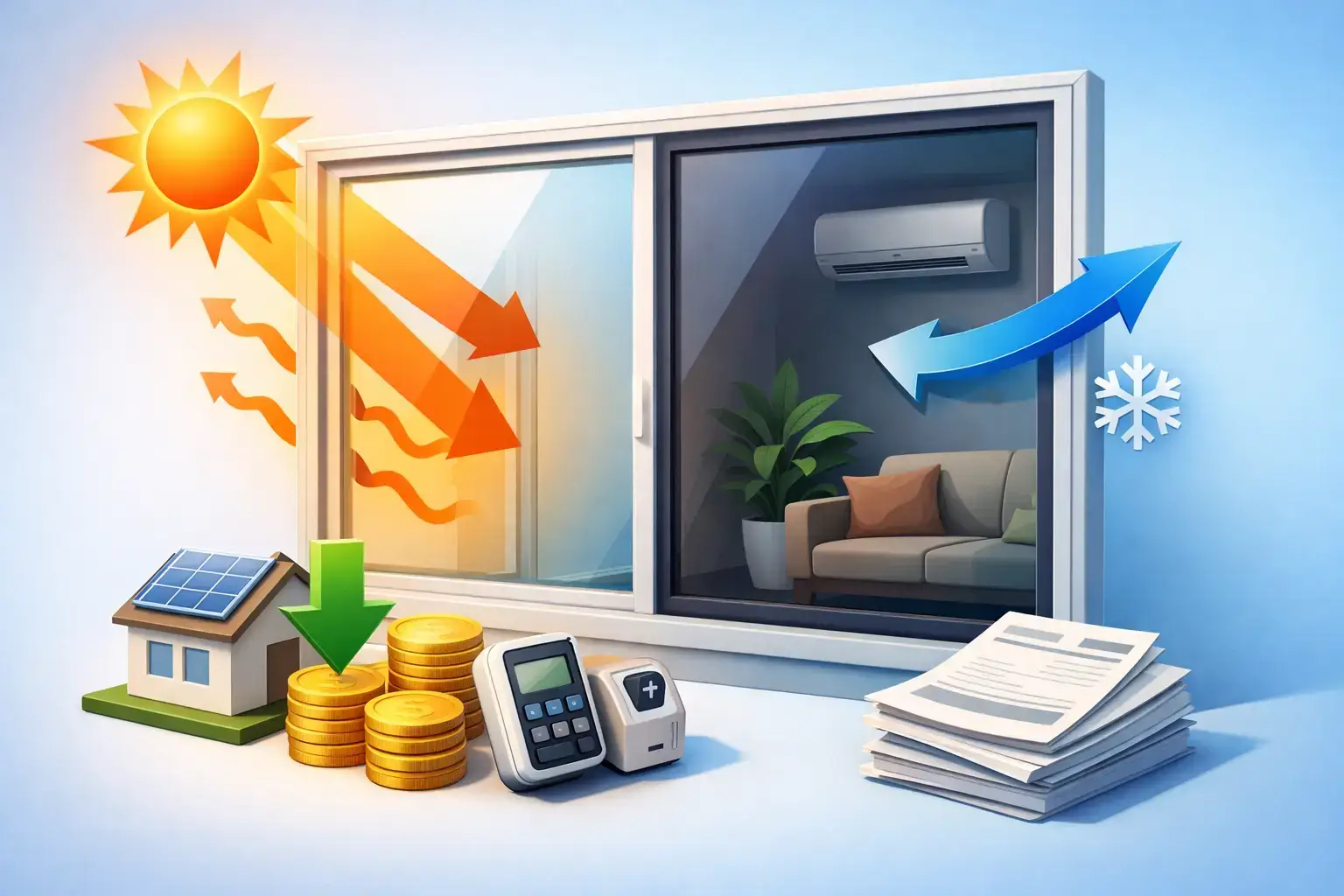
A west-facing living room can feel 10 degrees hotter than the rest of the house by midafternoon. A glass-fronted office can force employees to lower shades, shift desks, and run the air conditioning harder just to make the space usable. Energy saving window tint addresses that direct solar load at the glass, where heat and glare enter in the first place.
For California homes and commercial properties, window film is often one of the most practical ways to improve comfort without replacing functioning windows. The right film can reject a substantial portion of solar heat, reduce glare, and block UV rays that fade furnishings and finishes. But the results depend on the glass you have, the direction it faces, the film selected, and the quality of the installation.
How Energy Saving Window Tint Works
Window film is a thin, professionally applied layer that changes how glass handles sunlight. Solar-control films use dyed, metalized, ceramic, or spectrally selective technologies to reflect and absorb portions of the sun’s energy before it becomes indoor heat. High-performing films can also reject ultraviolet radiation while still allowing useful natural light into the room.
The key distinction is that not every dark film is an energy-efficient film. Visible darkness affects privacy and glare, but it does not tell the full story about heat rejection. A lighter, spectrally selective film can preserve a bright, open appearance while filtering a significant amount of infrared heat. That is often the better fit for homes with views, retail storefronts, lobbies, and offices that rely on daylight.
Film performance is commonly discussed through measures such as total solar energy rejected, visible light transmission, glare reduction, and UV rejection. These specifications help compare products, but they should be read together. A film with maximum heat rejection may also reduce more daylight than a homeowner wants. A balanced recommendation considers comfort, appearance, energy use, and the purpose of each room.
Where Window Film Makes the Biggest Difference
The greatest gains usually occur where sunlight is already causing a daily problem. South- and west-facing glass often receives intense afternoon exposure, particularly in Orange County, Los Angeles, San Diego, and other sunny California markets. Large panes of glass, older windows, skylights, and rooms with limited shade are especially strong candidates.
In a home, the difference may show up as a family room that stays comfortable longer, a home office with less screen glare, or hardwood floors and furniture that are better protected from fading. Window film does not replace insulation, weatherproofing, or an efficient HVAC system. It reduces the burden placed on those systems by limiting solar heat gain through the glass.
Commercial properties experience the issue differently but often more visibly. Employees may avoid desks near windows. Customers may hesitate near a hot storefront display. Conference rooms may become difficult to use when glare washes out screens. Applying solar-control film to targeted areas can make those spaces more functional while helping reduce cooling demand during high-sun hours.
Can Window Tint Actually Lower Energy Bills?
It can, especially when a building has substantial sun-exposed glass and relies heavily on air conditioning. By reducing solar heat gain, the film can help the cooling system run less frequently or recover more easily during the warmest part of the day. The financial result, however, is not identical for every property.
Savings depend on window size, orientation, local weather, HVAC efficiency, thermostat settings, existing shade, and utility rates. A small shaded window will not produce the same impact as a wall of west-facing glass. Buildings with older single-pane windows may see a more noticeable improvement than those with recently installed, high-performance glazing.
That is why realistic guidance matters. Window film should be evaluated as a performance upgrade with several benefits, not as a promise of one fixed percentage off an energy bill. The comfort improvement alone can be meaningful: fewer hot spots, reduced glare, and more consistent room temperatures often change how a space is used every day.
Choosing the Right Film for Your Windows
The best energy-saving film is not always the darkest or most reflective option. Selection starts with the specific concern. If the primary issue is heat in a bright living area, a low-reflectivity ceramic or spectrally selective film may provide strong solar control with minimal change to the view. If privacy is equally important, a more tinted or reflective option may be appropriate, though nighttime privacy should be discussed separately because interior lighting can reverse the effect.
For office buildings and storefronts, visual consistency matters. Film should complement the exterior appearance of the property and meet any building or lease requirements. A film that looks excellent on a single window may create an uneven facade if it is not planned across visible elevations.
Glass type is equally important. Tempered, annealed, insulated, laminated, and coated glass can react differently to heat absorption. Applying an unsuitable film to certain glass systems can increase thermal stress and potentially affect warranty coverage. A professional assessment identifies the glass construction and recommends compatible products rather than relying on color samples alone.
Homeowners should also consider the seasons. In warm climates, solar-rejection film is typically selected to reduce cooling pressure. In mixed climates, the decision involves a trade-off: reducing summer heat may also limit some beneficial winter solar warmth. The right balance depends on the property’s exposure, comfort goals, and annual energy use.
Questions Worth Asking Before Installation
Ask how much visible light the film will allow, how it will affect daytime and nighttime appearance, and whether it is compatible with your specific glass. It is also reasonable to ask about manufacturer warranties, expected longevity, and how the film will be cleaned after installation.
For commercial projects, ask whether the recommendation can be applied consistently across multiple suites or locations. Property managers often need a solution that is easy to maintain, visually controlled, and scalable as tenant needs change.
Why Professional Installation Changes the Result
Premium film performs best when it is measured, cut, prepared, and installed with precision. Clean edges, careful glass preparation, and proper curing all affect the finished appearance and long-term durability. Poor installation can leave contamination, uneven edges, bubbles, or visible distortion that undermines the reason for making the upgrade.
Professional installers also bring a product-selection advantage. They can evaluate the glass, the sun exposure, and the intended use of the room before recommending a film. That consultation is particularly valuable when a project involves insulated glass, older windows, unusual shapes, large commercial elevations, or a mix of privacy and energy-efficiency goals.
At Comfort Pro, the goal is not simply to place film on glass. It is to recommend a solution that improves the way the property feels and functions, then install it with the level of care a visible architectural finish requires.
What to Expect After Film Is Installed
Most customers notice reduced glare and a more comfortable feel near windows first. During the curing period, some moisture haze or a slightly cloudy appearance can be normal, depending on the product and weather. This clears as the film fully cures.
Once cured, window film is generally low maintenance. Use a soft cloth or rubber squeegee with a mild, nonabrasive cleaning solution. Avoid harsh scrub pads and abrasive powders that can damage the film surface. With proper care and a quality product, professionally installed film can deliver long-lasting performance.
If excessive heat, bright glare, or fading interiors are changing how you use a room, start with the windows that receive the hardest sun. A focused assessment can reveal whether energy-saving film is the practical upgrade that makes the space comfortable enough to enjoy again.