
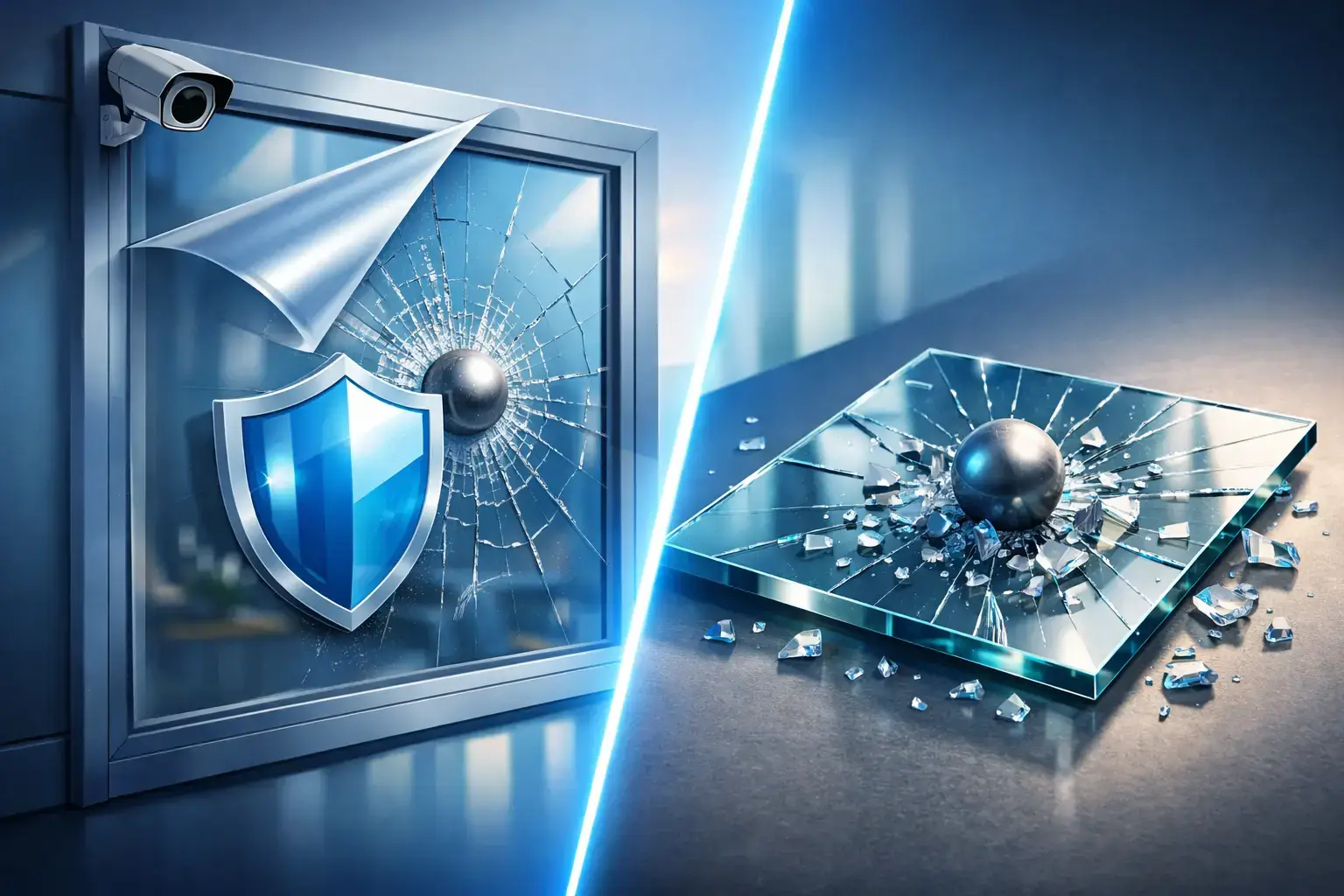
A broken storefront panel, a shattered sidelight by a front door, or a conference room window hit by accident all raise the same question fast: when protection matters, is security film enough, or do you need new glass? That is where the security film vs tempered glass decision becomes practical, not theoretical.
Both options improve safety, but they do it in very different ways. One is an applied solution that upgrades existing glass. The other is a type of safety glass manufactured to break differently under impact. If you are a homeowner, property manager, or business owner weighing cost, downtime, appearance, and real-world performance, the right answer depends on what problem you are trying to solve.
Security film vs tempered glass: the core difference
Security film is a clear or tinted polyester film applied to existing glass. Its job is to help hold shattered glass together when the pane breaks. Depending on the product and installation method, it can slow forced entry, reduce glass fallout, and improve post-break safety.
Tempered glass is glass that has been heat-treated during manufacturing to increase strength. When it breaks, it crumbles into small, blunt-edged pieces rather than sharp shards. That break pattern is why it is commonly required in certain locations such as doors, bathrooms, and other hazardous areas.
That difference matters. Security film changes how existing glass behaves after impact. Tempered glass changes the glass itself.
What tempered glass does well
Tempered glass is stronger than standard annealed glass under normal conditions. It handles everyday impact better, which is one reason it is so widely used in code-sensitive areas. If a person falls into it or something hits it with enough force, it is designed to break into many smaller pieces instead of dangerous jagged fragments.
For injury reduction, tempered glass is a strong choice. In homes, that can matter near patio doors, stairways, and shower enclosures. In commercial settings, it matters for entry systems, interior glazing near walking paths, and spaces where accidental contact is more likely.
But tempered glass has limits. Once it breaks, the opening is open. The glass may crumble and fall out quickly, which can reduce laceration risk but does not necessarily keep the opening secured. If your main concern is delaying intrusion or keeping broken glass in place during impact, tempered glass by itself may not solve the whole problem.
What security film does well
Security film is often chosen because it can retrofit existing glass without full replacement. That is a major advantage for occupied homes, schools, offices, and retail spaces that want added protection with less disruption.
Its biggest strength is glass retention. When properly selected and professionally installed, security film helps keep broken glass bonded together. Instead of immediately collapsing into a pile or scattering into a room, the pane can stay more intact. That can reduce injury from flying fragments and make smash-and-grab attempts more difficult.
This is where product selection and installation quality matter. Not all films marketed for safety or security perform the same way. Thickness, adhesive strength, glass type, frame condition, and whether the film is anchored into the framing system all affect results. A thin film applied without the right attachment method will not perform like a purpose-built security system.
For many properties, security film also delivers added value beyond protection. Some products can reduce glare, block UV rays, and help preserve interior finishes. That makes film appealing when owners want more than one benefit from the same upgrade.
Security film vs tempered glass for break-in resistance
If your top concern is forced entry, security film often has the advantage over tempered glass alone.
Tempered glass is stronger in everyday use, but under a determined attack, once it fails, the opening can become accessible very quickly. Security film, especially thicker security-grade systems with edge attachment, is designed to hold the broken pane together and force additional time and effort to get through it.
That extra time matters. In retail settings, it can disrupt smash-and-grab theft. In office or residential applications, it can create a delay that increases the chance of deterrence, detection, or response. It does not make glass impenetrable, and no honest installer should promise that. What it can do is make entry harder, slower, louder, and less predictable for the person trying to get through.
If the goal is true intrusion resistance, the best answer is sometimes layered protection: the right glass type, the right film, and the right framing details working together.
Which option is better for safety?
For accidental human impact, tempered glass is often the first conversation because building codes frequently require it in certain locations. If a pane needs to meet code as a hazardous location, replacing standard glass with tempered glass may not be optional.
For containment after breakage, security film brings a different advantage. It can help prevent shattered pieces from spraying across a room or dropping to the floor. In schools, healthcare facilities, and busy commercial interiors, that containment can be valuable.
So which is better for safety? It depends on the type of safety you mean. If you mean code-driven human impact safety, tempered glass is often essential. If you mean holding broken glass together and reducing fallout, security film is often the more direct answer.
Cost, disruption, and retrofit realities
This is where many projects are decided.
Replacing glass with tempered glass usually costs more than applying security film to existing panes. There is the glass itself, fabrication, potential lead times, labor for removal and replacement, and in some cases downtime for the space. For a commercial property with many panels, that can add up quickly.
Security film is generally more budget-friendly as a retrofit, especially when the existing glass is in good condition and the goal is to improve performance without a major construction project. Installation is typically faster and less invasive than full replacement.
That said, film is not a fix for damaged glass, failing seals, or code issues that require specific glazing. If the existing pane is already compromised, replacement may be the smarter investment. A good recommendation starts with the condition of the glass you already have, not just a preference for one product over another.
Appearance and long-term use
Tempered glass looks like glass because it is glass. Most people will not notice any visual difference from standard clear glazing unless they are looking for manufacturing marks or distortion under certain lighting conditions.
Security film can also be nearly invisible when selected and installed correctly. Clear security films preserve the look of the glass, while some property owners choose solar or combination films that add heat and glare control at the same time. That can be useful in California properties where comfort and UV protection are part of the broader project goals.
Long-term performance depends on environment, exposure, and workmanship. Professionally installed film should look clean and perform consistently, but like any applied product, it needs the right surface preparation and installation standards. Poor installation can undermine both appearance and performance.
When security film makes the most sense
Security film is often the better fit when you want to upgrade existing glass, improve breakage containment, add a level of forced-entry delay, and avoid the expense and disruption of replacement. It is especially practical for storefronts, sidelights, office partitions, schools, and homes with large areas of existing glazing.
It also makes sense when you want multiple benefits from one project. A properly specified film can support safety goals while also improving privacy, reducing glare, and blocking UV exposure.
When tempered glass makes the most sense
Tempered glass makes the most sense when code requires it, when the existing glass must be replaced anyway, or when the primary concern is reducing injury from accidental impact in hazardous locations.
It is also the right call when the glass is damaged, outdated, or unsuitable for the opening. In those cases, trying to upgrade around a failing pane usually costs more in the long run.
The best answer is often not either-or
In real projects, security film vs tempered glass is not always a strict choice. Some properties benefit from tempered glass in required locations and security film in others. Some benefit from applying security film over appropriate safety glass to improve glass retention and delay entry after breakage.
That is why a site-specific recommendation matters. Door glass behaves differently from a fixed lobby panel. A retail storefront has different risks than a second-floor office. A home concerned about storm debris, privacy, and UV fading has a different priority set than a school focused on glass hazard mitigation.
The right recommendation starts with a few plain questions: What is the threat or concern? What glass is there now? Does the opening need to meet code? Are you trying to reduce injury, delay intrusion, preserve appearance, or avoid major replacement costs?
If you answer those clearly, the product choice gets much easier.
For most buyers, the smartest next step is not guessing from product labels. It is having the existing glass evaluated, the risks defined, and the upgrade matched to the space. Protection works best when it is specific, not generic. That is how you end up with glass that does more than look good on paper.