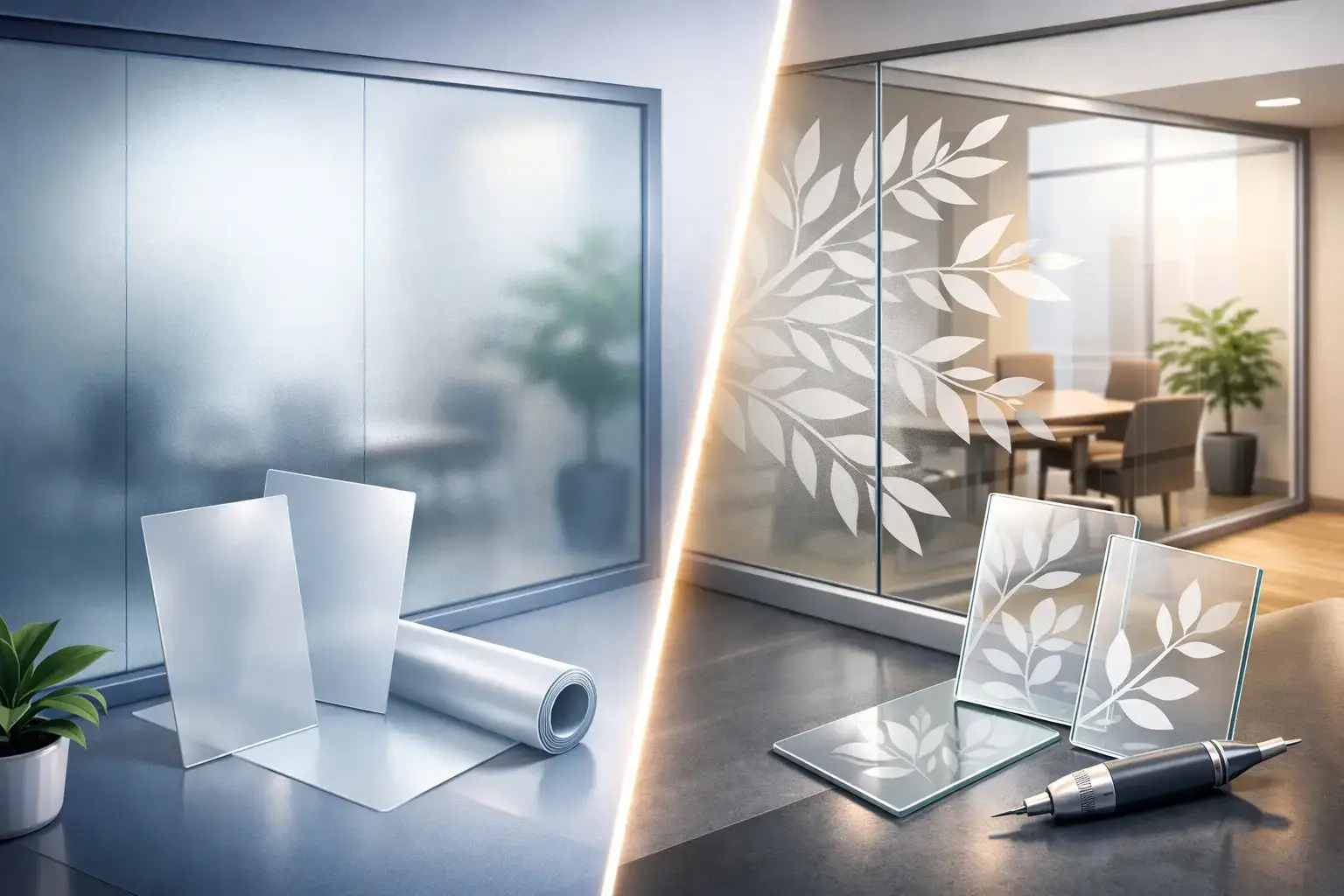
A clear conference-room wall can make a workplace feel open, until every meeting, screen, and passing glance becomes visible from the hallway. The same issue appears in bathroom windows, sidelights, glass entry doors, and retail partitions. When comparing frosted film vs etched glass, both options improve privacy without blocking natural light, but they differ significantly in cost, permanence, flexibility, and installation.
For most existing windows and interior glass, decorative frosted film delivers the look people want with less disruption. Etched glass has a distinct, permanent finish that can be the right fit for a new-build project or a long-term architectural detail. The best choice depends on how the glass is used, how much design flexibility you need, and whether replacing or modifying the glass makes financial sense.
Frosted Film vs Etched Glass: The Core Difference
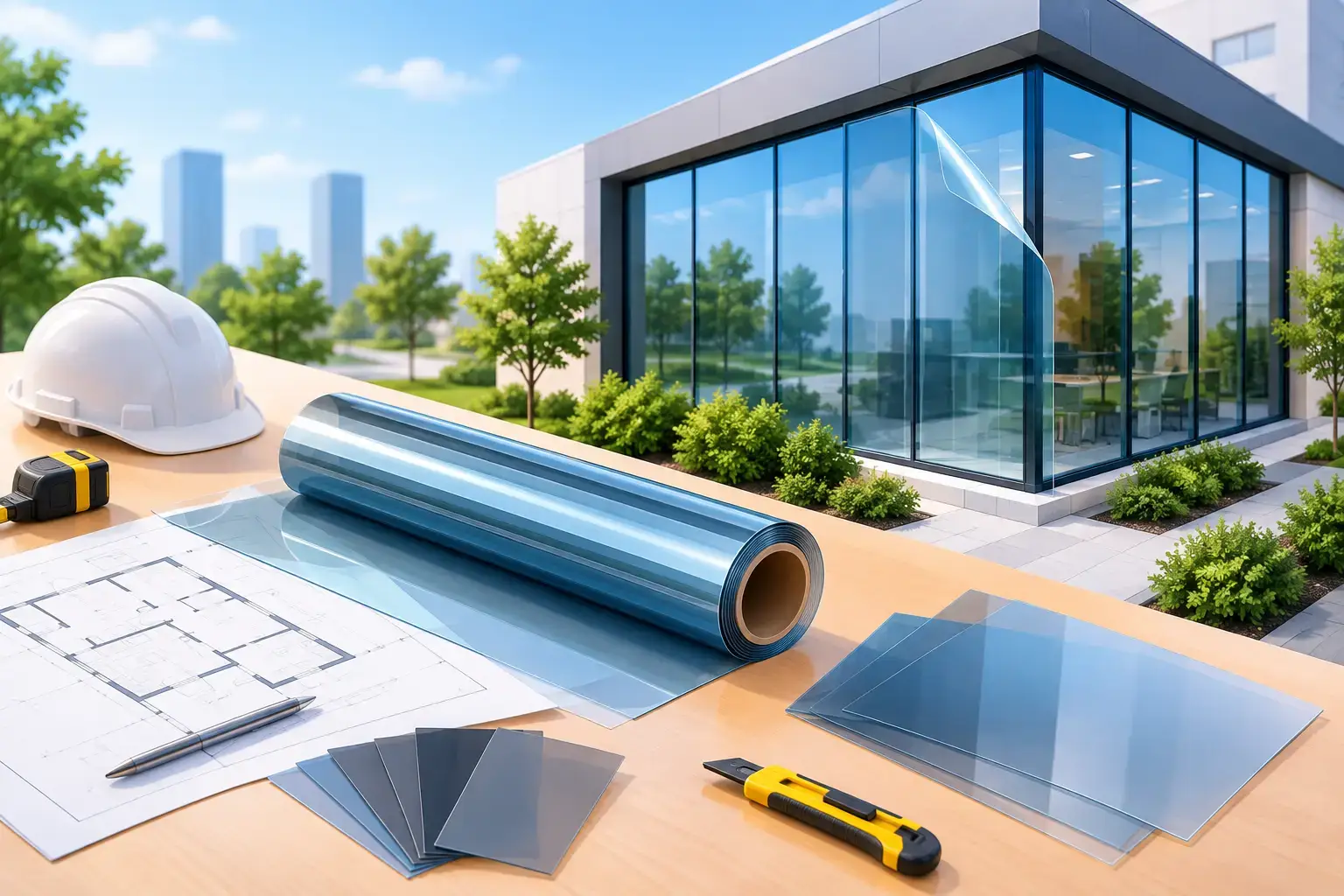
Frosted window film is a thin, professionally applied material installed on the surface of existing glass. It diffuses views and softens light while retaining a bright, open feel. Film is available in a range of opacities, from subtle haze to strong privacy, as well as patterns, gradients, borders, and custom-cut designs.
Etched glass is glass that has been permanently altered, traditionally through acid etching, sandblasting, or a similar fabrication process. The surface takes on a satin or frosted texture that obscures visibility. It is part of the glass itself, not an added layer, so it cannot be removed or changed without replacing the panel.
From a distance, a quality frosted film installation can closely resemble etched glass. Up close, etched glass may have more tactile texture and depth. That distinction matters most in high-end architectural applications where people will routinely touch or inspect the surface. For everyday privacy on existing windows, doors, and partitions, it often matters far less than expected.
Privacy and Light: Similar Goals, Different Control
Both choices are designed to prevent clear views while allowing daylight to enter. This makes either option far more inviting than a solid wall, closed blind, or permanently covered window.
The practical advantage of frosted film is control. A lighter film can preserve vague silhouettes and openness in a reception area. A denser white frost can provide stronger privacy for restroom doors, medical offices, or private meeting spaces. Gradient film can leave the upper part of a window clearer for daylight and exterior views while covering the eye-level area where privacy is needed most.
Etched glass generally provides a consistent effect across the full panel. That can look refined and intentional, especially on entry doors, custom interior partitions, and architecturally specified glass. However, it is less adaptable after fabrication. If a tenant changes, an office layout shifts, or a new privacy need arises, the etched finish stays exactly where it is.
Neither material should be assumed to provide complete visual blackout. Strong backlighting, close proximity, and certain viewing angles can make shapes visible through many frosted finishes. A careful site evaluation should consider where people stand, the direction of daylight, and whether nighttime interior lighting changes the level of privacy.
Cost and Disruption Often Decide the Project
For an existing property, etched glass can be the more involved route because the affected glass may need to be removed, replaced, or modified through a specialized process. That can involve measuring, fabrication lead times, glazing work, and potential disruption to occupied rooms or business operations.
Frosted film is installed directly on the glass already in place. A professional installer can typically complete the work with far less construction impact, making it especially practical for offices, retail environments, schools, and occupied homes. There is no need to remove panes simply to gain privacy or update the appearance of a space.
The difference becomes more pronounced on larger projects. Covering multiple conference rooms, exterior-facing office windows, or a full storefront with etched glass can add up quickly. Film offers a way to create a coordinated, polished finish while directing more of the project budget toward the areas that need it most.
That does not mean etched glass is automatically the wrong investment. If custom glass is already being ordered for a renovation or new construction project, a permanent etched finish may fit the scope and design intent well. The question is not which option is universally better. It is whether permanence is worth the additional commitment for that specific surface.
Appearance: Film Is More Versatile Than Many Expect
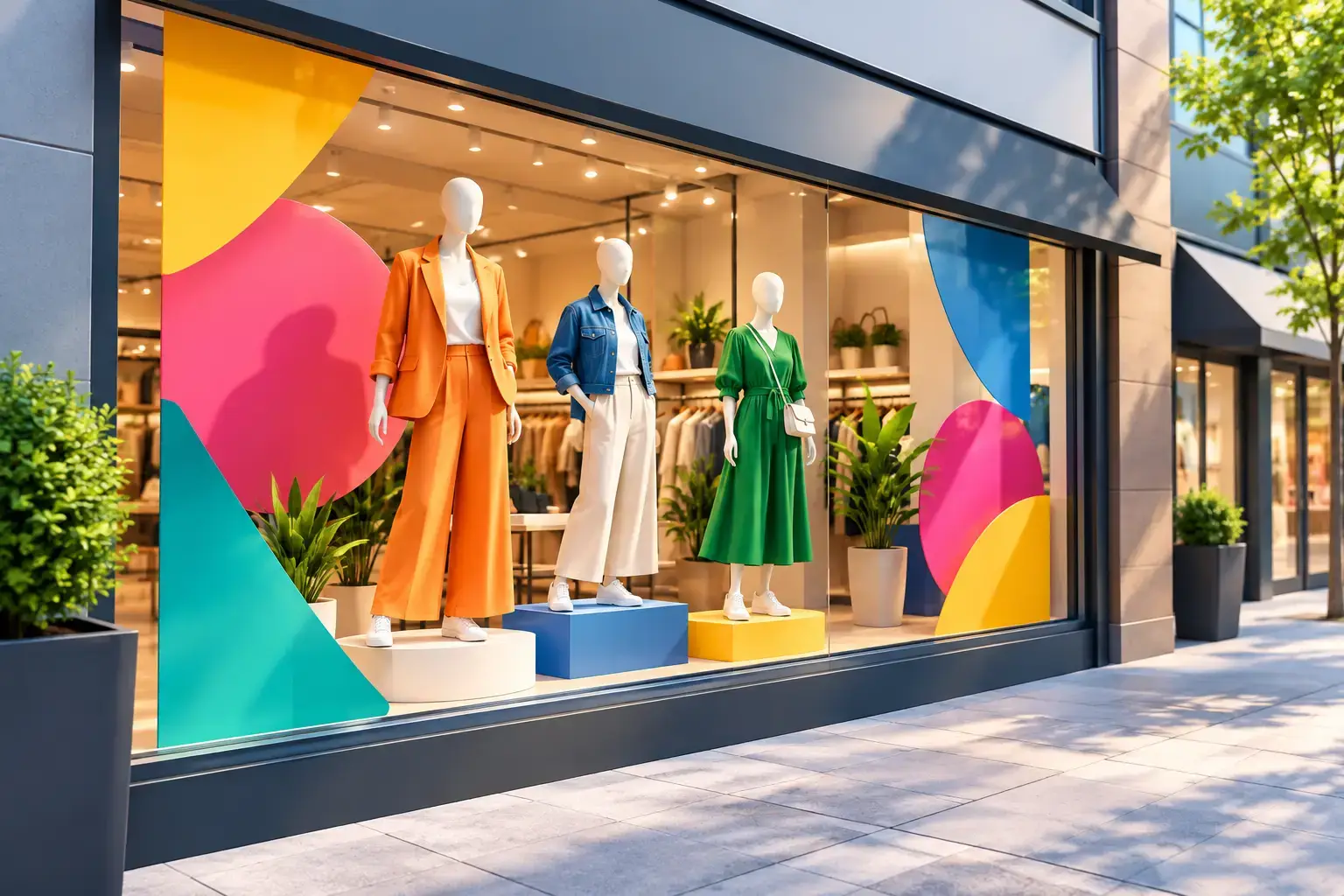
Basic frosted film has a clean, satin appearance that suits contemporary homes and professional commercial interiors. But decorative film can do much more than turn a clear pane white. It can incorporate linear bands, geometric shapes, partial coverage, brand elements, room names, or custom printed artwork.
This flexibility is useful where glass needs to remain visually open but also needs a clearer purpose. A healthcare facility may use subtle bands to define private treatment areas. A retail operator may add an elegant pattern that reduces views into back-of-house spaces. An office can use frosted sections and clear sections to improve privacy while maintaining sightlines for safety and circulation.
Etched glass also supports detailed designs, but each decision is locked into the pane. If a logo changes, a suite is reconfigured, or a new tenant wants a different look, replacing etched glass can be expensive. Film gives property managers and business owners more freedom to adapt their space over time.
For a design that must feel custom rather than applied, execution matters. Clean edge alignment, consistent panel spacing, accurate pattern matching, and careful preparation are what make frosted film look intentional. Poor installation can leave visible contamination, uneven edges, or premature lifting, which is why precision application is as important as the film selection itself.
Durability and Maintenance
Etched glass is permanent, so there is no film edge to lift or adhesive layer to age. Its finish can withstand normal daily use for decades. Still, the textured surface can collect dirt or oils more readily than smooth clear glass, particularly on doors and high-touch partitions. Cleaning methods should be appropriate for the finish to avoid residue or uneven appearance.
Professionally installed decorative film is durable and designed for regular interior use. It is easy to clean with non-abrasive products and a soft cloth. Quality matters here: premium films are more stable, clearer in appearance, and better able to maintain their finish over time than low-cost materials.
Film is not indestructible. Scratches, sharp impacts, aggressive scrubbing, and repeated abuse can damage it. In high-wear locations, such as a heavily used commercial door or a surface within reach of carts and equipment, the installation plan should account for traffic patterns. In some cases, a protective surface film or a different material choice may be appropriate.
One underappreciated benefit of film is replaceability. If a section becomes damaged, outdated, or no longer fits the space, it can be professionally removed and renewed without replacing the underlying glass. That is a meaningful advantage for leased commercial spaces and evolving residential layouts.
When Frosted Film Is Usually the Better Choice
Frosted film is typically the practical choice when you want privacy on existing glass, need a faster installation, want to avoid glass replacement, or may need to update the design later. It works particularly well for bathroom windows, office fronts, conference rooms, interior doors, sidelight windows, reception areas, and retail partitions.
It is also a strong option when only part of the glass needs coverage. Rather than obscuring an entire window, film can be placed at eye level, applied as a gradient, or cut into a pattern that balances privacy with natural light. That kind of customization is difficult to achieve economically with a permanent glass treatment after the fact.
When Etched Glass May Be Worth It
Etched glass can make sense when the glass is being fabricated new, the design is unlikely to change, and the tactile, permanent quality of the finish is a central part of the architecture. It may also be preferred in select luxury residential or commercial settings where the budget and project timeline already accommodate custom glazing.
Before choosing it, consider the full life of the space. Will future occupants want the same level of privacy? Could a room change from a private office to a shared workspace? Is the pattern or branding likely to evolve? A permanent material is most valuable when the use case is equally permanent.
A Better Way to Make the Decision
Start by defining the privacy result you need, not simply the material you have seen elsewhere. Consider whether you need full-time coverage or partial screening, whether the glass receives heavy traffic, and whether the property may change hands or layouts in the coming years. Then evaluate the desired appearance under both daylight and nighttime lighting conditions.
A professional consultation can also identify details that are easy to miss, including glass type, frame condition, panel seams, cleaning needs, and the best opacity for the space. Comfort Pro helps homeowners and commercial property teams select and install decorative privacy film with careful attention to the finished look and long-term performance.
The right solution should make the space feel more comfortable and private without creating an unnecessary construction project. If frosted film gives you the appearance, light diffusion, and privacy you need, it can be a smart upgrade that remains flexible long after installation day.