A glass-walled conference room looks polished until a private client call, performance review, or HR conversation is visible from the hallway. The best office window privacy ideas solve that problem without turning a bright, open workspace into a dim collection of closed-off rooms. The right choice protects confidential activity, reduces distractions, and preserves the natural light that makes an office more comfortable to work in.
For most offices, privacy is not an all-or-nothing requirement. A reception area may need a welcoming view outward while concealing desks from the street. A medical office may need full visual separation at eye level. A conference room may need on-demand privacy for sensitive meetings. That distinction should guide the material, coverage, and installation approach.
1. Frosted Privacy Window Film
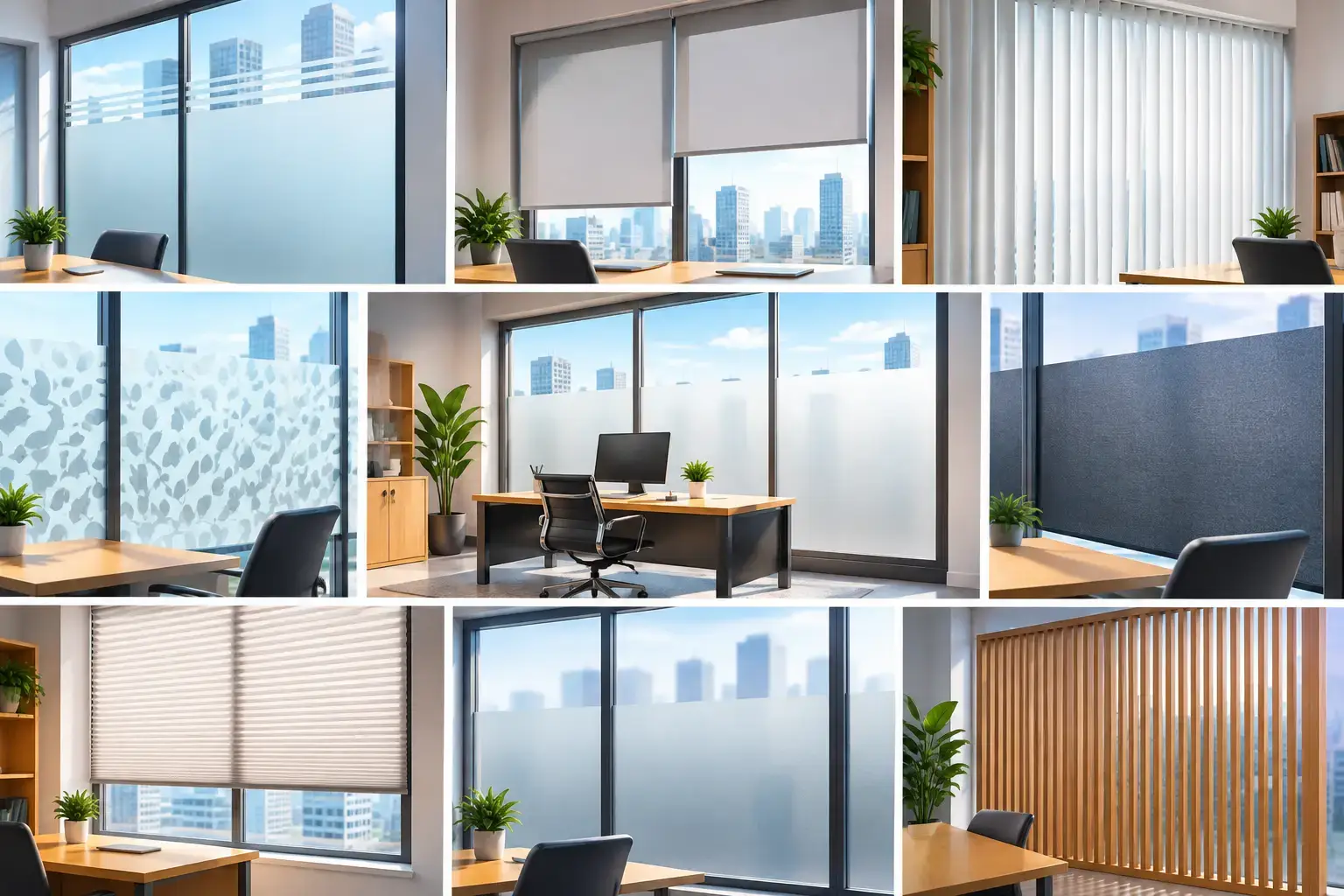
Frosted window film is one of the most effective ways to create consistent privacy while keeping daylight in the room. The film diffuses views through glass, so people can see that a room is occupied without seeing documents, computer screens, or the people inside clearly.
This is a strong fit for offices with interior glass partitions, street-facing windows, treatment rooms, and conference rooms. It creates a clean, finished appearance and can be applied across a full pane or limited to the lower and middle sections where privacy matters most.
The trade-off is simple: frosted film provides fixed privacy. If a room occasionally needs a completely clear view, consider partial coverage or pair the film with another solution. A quality professional installation also matters. Straight lines, clean edges, and careful alignment at mullions are what make the finished glass look intentional rather than temporary.
2. Decorative Film With Bands or Patterns
Decorative privacy film gives an office more personality than standard frost while serving the same practical purpose. Gradient finishes, etched-glass looks, geometric patterns, and horizontal bands can block direct sightlines while keeping the space visually open.
A common approach is to place frosted bands across interior glass at seated and standing eye level. This prevents uncomfortable visual exposure between offices and corridors but still lets light travel through the upper and lower portions of the glass. It is especially useful in modern offices where clear partitions are part of the design.
Decorative film can also support wayfinding and brand consistency. A subtle pattern can differentiate meeting rooms from private offices without requiring permanent etched glass. For property managers, that flexibility is valuable when tenant layouts change.
3. Custom Printed Privacy Film
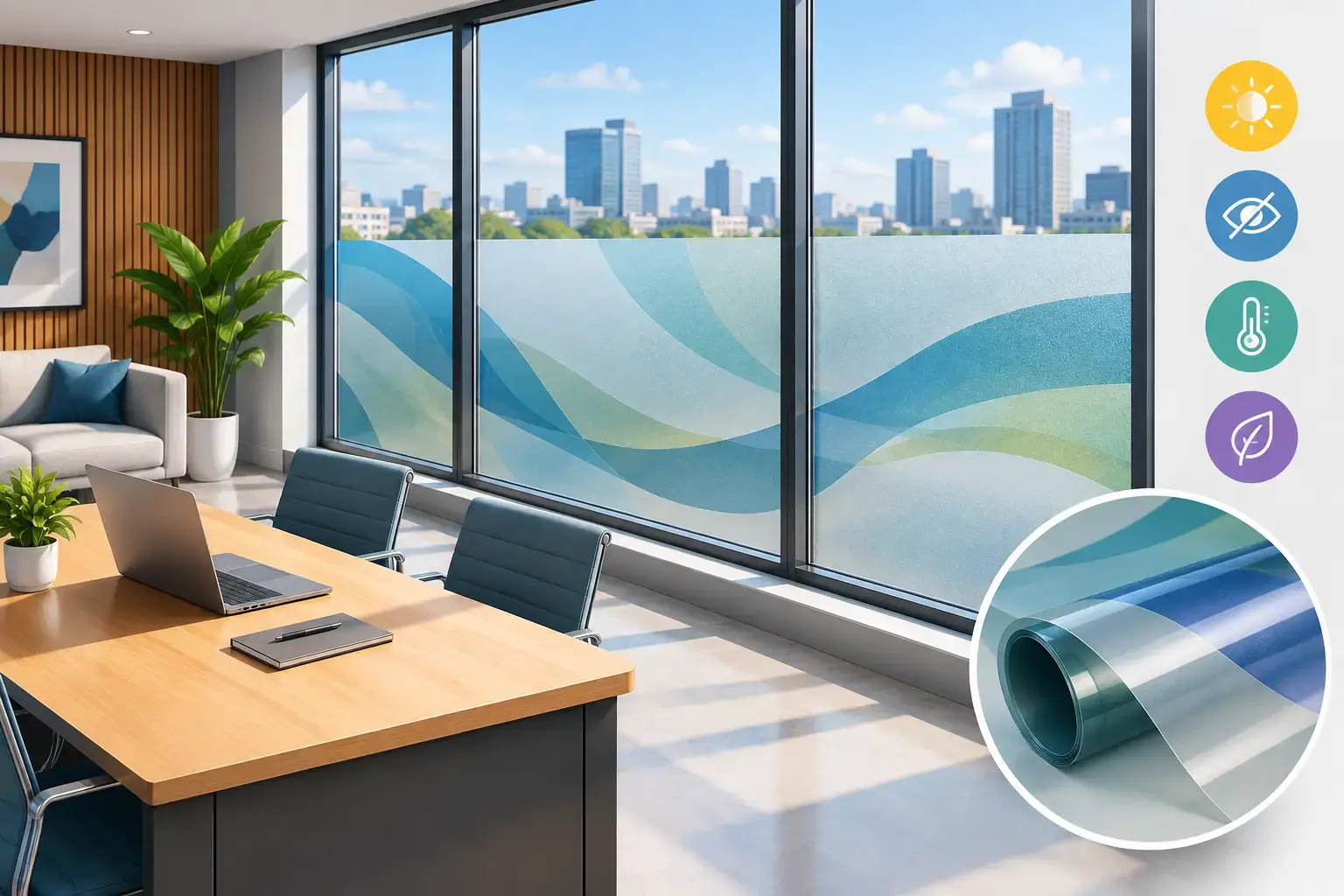
Custom printed film is the answer when an office needs privacy and a more branded visual experience. It can incorporate a company logo, graphic elements, color fields, or a custom design while obscuring views through the glass.
This option works well for reception areas, executive suites, storefront-facing offices, and conference rooms. Rather than treating privacy as something to hide, printed film turns the glass into a purposeful design surface. It can reinforce professionalism from the moment a visitor walks in.
The key is restraint. Large logos and high-contrast graphics can feel dated quickly, while a well-scaled design with clean negative space tends to last longer. Request a layout that considers sightlines from both sides of the glass, existing lighting, and how the design will look from a distance.
4. Dual-Reflective or Tinted Solar Film
Some offices need daytime privacy from outside views but also struggle with heat and glare. Solar control window film can help address all three concerns. Depending on the product selected, it can reduce visible light transmission, cut glare, reject heat, and make it more difficult for people outside to see clearly into a daytime workspace.
Tinted and reflective films are particularly useful for street-level offices, buildings with expansive glass, and west- or south-facing exposures in sunny California markets. The comfort improvement can be significant when employees are dealing with bright screens, hot perimeter offices, or uneven temperatures near windows.
However, exterior daytime privacy is not the same as nighttime privacy. Once interior lights are brighter than conditions outside, the effect can reverse and occupants may become more visible. For offices that operate after dark, solar film is often best paired with shades or another interior privacy layer.
5. Roller Shades for Adjustable Coverage
Roller shades offer straightforward, adjustable privacy. They are available in many openness levels, from solar screens that preserve outward views to blackout materials that fully block light and visibility. Motorized shades can be especially practical in conference rooms with large or hard-to-reach windows.
For offices, the best shade fabric depends on the job. A 3% or 5% solar shade can reduce glare while maintaining some daylight and exterior visibility. A lower openness fabric provides more privacy, while blackout shades are better for presentations, clinical spaces, or rooms where complete visual control is required.
Shades are versatile, but they take up visual space and require regular operation. They may also leave side gaps depending on the system and window configuration. They work best when adjustable privacy is the primary goal, rather than a permanent clean-glass aesthetic.
6. Top-Down or Bottom-Up Privacy Coverage
Not every window needs to be covered from top to bottom. In ground-floor offices, privacy concerns are often concentrated at pedestrian eye level. A lower section of frosted film can block direct views into work areas while leaving the upper glass clear for daylight and exterior views.
This approach is useful for reception desks, open workstations near storefront windows, and offices along busy sidewalks. It helps employees feel less exposed without creating a closed-in atmosphere. A gradient film can soften the transition between private lower glass and clear upper glass.
Before choosing the coverage height, walk the exterior and interior of the space. Consider the height of passersby, nearby parking areas, raised sidewalks, neighboring buildings, and seated desk positions. Privacy problems are often caused by one specific sightline, and targeted coverage can solve it efficiently.
7. Privacy Film for Interior Glass Partitions
Glass partitions can improve light distribution and make a smaller office feel larger. They can also create constant visual distraction. Employees walking past a private office may unintentionally interrupt focused work, while meetings become visible to everyone in the corridor.
Privacy film allows businesses to keep the architectural benefit of glass while giving each room an appropriate level of separation. Full frost is useful for HR offices, wellness rooms, and interview spaces. Patterned coverage or strategically placed bands can be better for general offices and meeting rooms where some visual connection is still welcome.
For shared workplaces, use a consistent film design across the suite. Uniform coverage heights and patterns make the space look professionally planned, even when the glass was installed in phases.
8. Switchable Privacy Glass Film
Switchable privacy film changes from clear to opaque when powered on or off. It can provide on-demand privacy in boardrooms, executive offices, healthcare settings, and high-end client spaces without needing curtains or blinds.
The visual impact is impressive, and the convenience is real. At the touch of a switch, a clear meeting room can become private for a confidential call or presentation. It is best suited to projects where flexibility, design, and immediate privacy justify a higher investment.
This option requires careful planning for power connections, controls, glass conditions, and long-term maintenance. It is not automatically the best choice for every office, but it can be the right one where privacy needs change repeatedly throughout the day.
9. Layered Privacy Solutions for Complex Offices
The best office privacy plan sometimes uses more than one solution. For example, a street-facing conference room may use solar film to control daytime heat and glare, a decorative band for everyday interior privacy, and roller shades for after-hours meetings. This layered approach handles different conditions without asking one product to do everything.
It is also a smart strategy for offices with varying needs across the floor plan. Reception areas, open workspaces, executive offices, conference rooms, and employee wellness rooms should not all be treated the same way. Each space has different sightlines, hours of use, and expectations for confidentiality.
How to Choose the Right Office Privacy Option
Start with the privacy outcome you need. Do you need to obscure views all day, block visibility only at eye level, gain privacy after dark, or reduce glare at the same time? Then consider whether the glass is interior or exterior, how much natural light you want to retain, and whether the office design calls for a subtle or branded finish.
Glass condition and existing window construction also matter. Certain film types perform differently depending on glass type, pane configuration, orientation, and exposure. A professional site assessment helps identify the right product and prevents choices that look good in a sample but underperform on the actual windows.
Comfort Pro helps office owners, facility managers, and property teams match privacy film to the way their spaces are used, with precise installation that protects the finished appearance of the glass. The most successful office privacy upgrade is rarely the darkest option. It is the one that gives people the right amount of separation, light, comfort, and control for the work happening inside.