
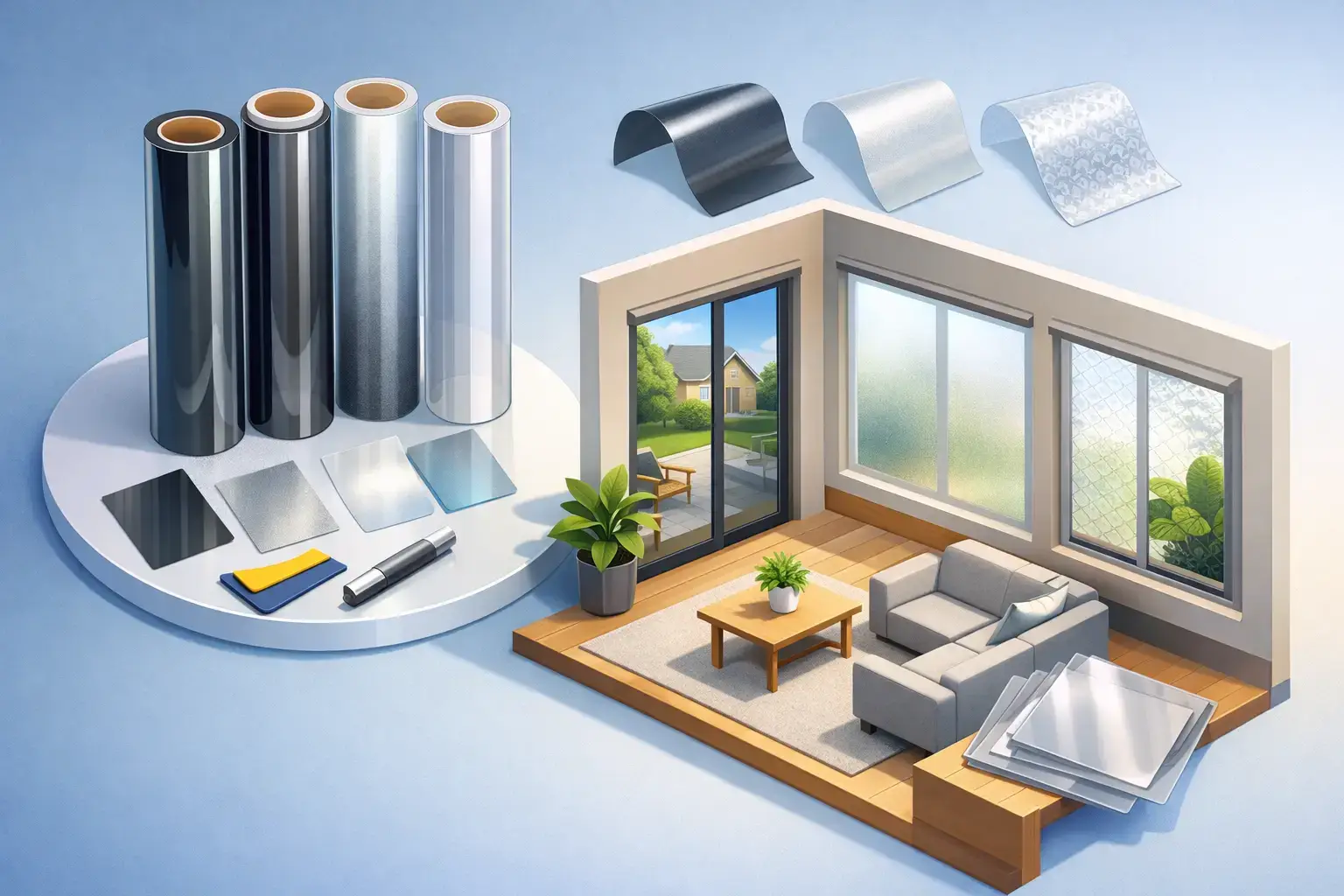
A bathroom window that faces a neighbor, a street-level living room, and a glass front door all have the same problem: exposed glass. But they do not need the same solution. This residential privacy film selection guide helps homeowners choose a film that protects personal space without unnecessarily sacrificing daylight, views, or the character of the home.
Privacy film is not a one-size-fits-all upgrade. The right choice depends on where the glass is located, when privacy is needed, how much natural light the room requires, and whether the window also struggles with heat or glare. A careful selection process prevents the common disappointment of installing a film that looks good in a sample but feels too dark, too reflective, or too permanent once it covers an entire window.
Start With the Privacy Problem You Want to Solve
Before comparing finishes, look at the window from both sides. Is the concern clear views from the sidewalk? A neighboring second-story window? A shower enclosure? A home office visible from an interior hallway? The answer determines whether you need full-time obscurity, filtered visibility, or selective coverage on only part of the glass.
For a front-facing window, privacy may be most important during the day, when people can see into a room from the street. In a bathroom or bedroom, privacy needs to work at all hours. For interior glass, the goal may be less about blocking sightlines entirely and more about creating separation while keeping a room open and bright.
This distinction matters because many homeowners assume a reflective film offers round-the-clock privacy. It does not. Reflective and mirrored films work best when the exterior side is brighter than the interior. After dark, interior lights can reverse the effect and make the room more visible from outside. If nighttime privacy is non-negotiable, a frosted, decorative, or more opaque film is usually the better fit.
Choose the Right Type of Residential Privacy Film
The appearance and performance of a film should match the room’s use. Most residential privacy film choices fall into a few practical categories.
Frosted and Etched-Look Film
Frosted film diffuses light and obscures clear views through glass. It is a reliable choice for bathrooms, sidelights, shower enclosures, office doors, and windows facing close neighbors. It keeps spaces light-filled while creating a soft, polished appearance similar to etched glass.
Opacity varies by product. A light frost may blur details but still show movement and shadows, while a denser frost provides more complete visual separation. For bathrooms or glass close to a property line, ask to see the film at the intended viewing distance rather than relying on a small swatch alone.
Decorative Pattern Film
Decorative privacy film introduces a design element along with coverage. Options can include reeded-glass effects, geometric patterns, gradients, textured looks, and custom designs. This type works particularly well on entry doors, transoms, interior partitions, and areas where complete frosting would feel too plain or block more visibility than necessary.
Pattern scale is worth considering. A subtle design may look refined on a large pane but disappear on a small sidelight. Conversely, a bold pattern can dominate a compact space. The most successful installations support the home’s finishes rather than competing with them.
One-Way and Reflective Film
Reflective or one-way film can increase daytime privacy while also reducing glare and solar heat. It can be a strong option for rooms with expansive windows, west-facing exposures, or views from a busy street. However, its privacy performance is dependent on lighting conditions, and the exterior appearance may be more noticeable than a neutral or frosted film.
It is often the best choice when daytime comfort, glare reduction, and privacy are equally important. It is not the right choice when a homeowner expects a mirrored exterior to hide the interior at night.
Blackout and Opaque Film
Opaque film blocks visibility and significantly reduces or eliminates transmitted light. It is useful for select applications, such as media rooms, storage areas, or windows that need complete screening. For most living spaces, however, it is more coverage than necessary. A bright room can quickly feel closed in when opaque film is applied without considering daylight.
Gradient and Partial-Coverage Film
Sometimes privacy is needed only at eye level or along the lower portion of a window. Gradient film and strategically placed frosted bands can screen direct sightlines while preserving open views above. This is a thoughtful solution for dining rooms, street-facing living spaces, and entry windows where natural light is valuable.
Partial coverage also gives homeowners more control over the final look. Rather than treating every pane identically, the installation can be tailored to the direction of views and the architecture of the window.
Balance Privacy With Light, Views, and Heat Control
A privacy upgrade should make a room more comfortable, not make it feel smaller. That is why the best film selection considers three competing factors: privacy level, visible light, and view preservation.
A dense frost provides dependable screening but eliminates a clear view. A lighter decorative film preserves brightness but may reveal silhouettes. Reflective film can retain outward visibility during daylight, yet changes the exterior look and needs a separate nighttime privacy plan. There is no universal winner because each home has different priorities.
Solar performance can also influence the decision. In California homes with strong sun exposure, a film that reduces glare and heat can improve comfort in rooms that are difficult to cool. Films with UV rejection can also help protect flooring, furnishings, artwork, and fabrics from fading. Privacy film may be primarily aesthetic, but it can also be an opportunity to address a window’s everyday performance.
If energy efficiency is the main objective, do not choose based on darkness alone. A very dark film is not automatically the most effective option for heat control. Modern film options can offer meaningful solar rejection while maintaining a lighter, more natural appearance.
Check Glass Compatibility Before Selecting Film
Not every film belongs on every type of glass. This is one of the most important parts of a residential privacy film selection guide because the wrong film-glass combination can create unnecessary thermal stress or affect manufacturer warranties.
Double-pane insulated units, tempered glass, laminated glass, low-emissivity coatings, and specialty glass each have different considerations. Window orientation, existing shading, pane size, and frame condition can also affect product recommendations. A large, sun-exposed window may require a different solution than the same glass in a shaded hallway.
Professional evaluation is especially valuable for older windows, oversized panes, and homes with mixed window types. The goal is not simply to find a film that adheres. It is to select one that performs well over time without creating avoidable risk for the glass.
Consider the View From Outside, Too
Privacy film changes more than the interior experience. It also affects curb appeal. A soft frost may be nearly invisible from the street while still obscuring interior views. A reflective finish can create a modern look, but it may stand out against traditional architecture or in a neighborhood with a more understated visual style.
For front doors and sidelights, consider how the film works with the door color, hardware, exterior lighting, and nearby windows. For upper-story windows, exterior appearance may matter less than daytime comfort. The right choice is usually the one that solves the privacy issue without making the glass look like an afterthought.
Why Installation Quality Makes a Difference
Privacy film is highly visible when it is poorly installed. Misaligned patterns, uneven borders, trapped debris, lifted edges, and inconsistent coverage can distract from an otherwise beautiful finish. Precision matters most on entry doors, bathroom glass, and windows positioned at eye level.
A professional installation begins with accurate glass measurement, thorough cleaning, careful film handling, and a clear plan for seams, edges, and pattern alignment. It also includes guidance on film care and realistic expectations during the curing period, when minor moisture haze can be normal.
For homeowners comparing options, a consultation should feel practical rather than complicated. Comfort Pro helps evaluate the room, glass type, privacy goals, and desired finish so the recommendation fits the home instead of forcing the home to fit a standard product.
The best privacy film is the one you stop noticing after installation because the room simply feels more comfortable, more protected, and more yours.