A scratch can turn an otherwise clean window into the first thing people notice. In a storefront, it can distract from merchandise and make the space feel neglected. At home, it catches sunlight every afternoon and becomes impossible to ignore. Scratch removal from glass windows can often improve that damage, but the right approach depends on how deep the scratch is, where it is located, and whether the glass has a coating or film.
The biggest mistake is treating every mark as a simple surface problem. Glass is hard, but it is not forgiving. Aggressive polishing can create visible distortion, alter the clarity of the pane, or leave a hazy spot that looks worse than the original scratch. A careful inspection should always come before a repair attempt.
Start by Identifying What Is Actually Damaged
Not every line on a window is a scratch in the glass. Construction debris, mineral deposits, adhesive residue, paint overspray, and scuffs from rubber gaskets can all resemble scratches. These issues may be removable with the correct cleaning method, without polishing the glass at all.
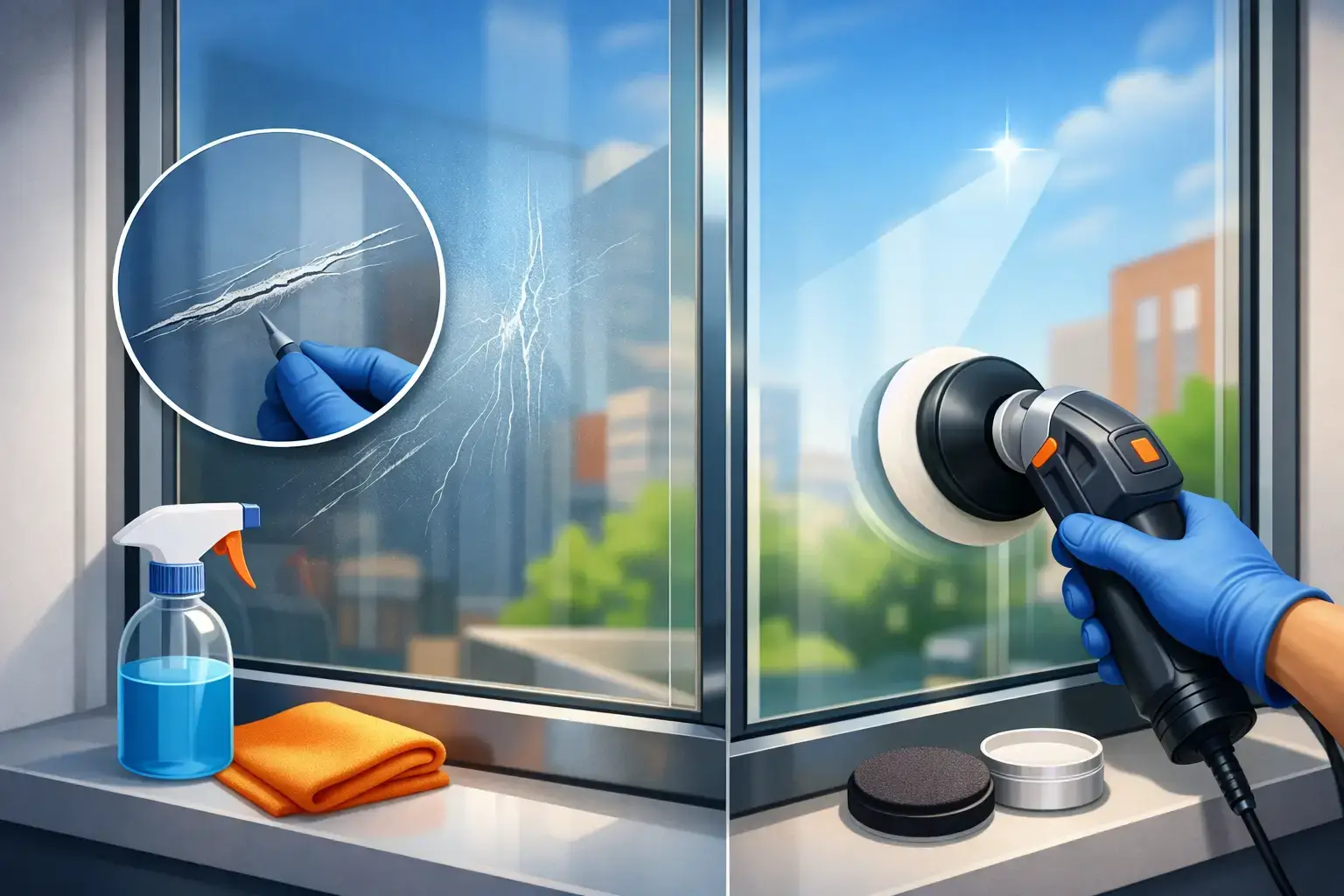
A practical first check is to clean the area with a non-abrasive glass cleaner and a clean microfiber cloth, then view it from several angles in natural light. If the line disappears or changes significantly when wet, it may be residue or a surface deposit. If you can feel it distinctly with a fingernail after cleaning, the glass itself is more likely damaged.
Window film changes the diagnosis. A scratch in film can look nearly identical to one in the pane beneath it, yet the solution is completely different. Polishing a filmed surface can damage the coating, change its appearance, or compromise the film’s performance. Before any restoration work begins, confirm whether the scratch is on bare glass, on an existing protective film, or beneath a coating.
When Scratch Removal From Glass Windows Is Realistic
Light scratches are the best candidates for restoration. These are usually fine surface marks caused by improper cleaning, minor contact with hardware, or debris dragged across the glass. With professional-grade polishing equipment, an experienced technician may be able to reduce their visibility substantially or remove them altogether.
The goal is not simply to erase a line. It is to restore the affected area without creating optical distortion. That requires the right polishing compound, pad, speed, pressure, and cooling technique. Removing glass means working at a microscopic level, so too much heat or uneven polishing can leave a lens-like effect in the pane.
Moderate scratches require more caution. They may improve, but complete removal is not always the best outcome if doing so would noticeably alter the glass surface. In these cases, a specialist should explain the expected result before proceeding. A reduced scratch that preserves clear, even glass is usually preferable to an aggressive repair that leaves a visible waviness.
Deep scratches, chips, cracks, and damage that catches a fingernail firmly are often not appropriate for polishing. The amount of material required to remove them may weaken the glass or create distortion that is especially noticeable in large windows, insulated units, and high-visibility commercial entries. Replacement may be the more reliable long-term option.
The Location of the Scratch Matters
A light scratch near the edge of a window may be less noticeable and lower risk to address than one in the center of a large pane. Damage in a direct line of sight requires a higher standard because even slight distortion can be apparent when looking through the glass.
Tempered glass deserves particular care. It is designed for strength and safety, but its surface can have unique optical characteristics. Large glass walls, shower enclosures, display windows, and doors also make repair results more visible because of reflections and changing light. The right recommendation depends on the specific pane, not just the length of the scratch.
Why DIY Scratch Repair Can Create Bigger Problems
Online repair suggestions often recommend toothpaste, baking soda, steel wool, or household polishing products. These methods are unreliable and can make permanent damage more likely. Steel wool can leave fine marks or contaminate the surface with metal particles. Abrasive pastes can create a dull patch. Even products marketed for glass may not be suitable for architectural windows.
The challenge is that a window can look improved immediately after a DIY attempt, then reveal haze, swirl marks, or distortion once the sun hits it. That is particularly frustrating on premium residential glass, office partitions, retail storefronts, and any surface where appearance matters.
Avoid using razor blades unless the glass manufacturer specifically permits them and the task is limited to removing residue. Some modern glass products have coatings that can be damaged by scraping. Dry wiping is also a common cause of new scratches because dust and grit become abrasives when dragged across the surface.
For routine maintenance, use a clean microfiber cloth, appropriate glass cleaner, and light pressure. Replace cloths when they become contaminated. This simple habit prevents a surprising number of scratches, especially on windows exposed to windblown dust, landscaping debris, and frequent cleaning.
Professional Glass Restoration Is a Controlled Process
Professional scratch removal begins with an honest assessment. A qualified technician evaluates scratch depth, pane type, coatings, reflections, viewing angles, and the customer’s expectations. This is also the time to identify related concerns, such as failing seals, hard-water staining, surface contamination, or damage to existing film.
When restoration is appropriate, the work is performed in a controlled area. Surrounding surfaces are protected, the glass is cleaned, and the damaged section is treated with specialized tools and compounds. The technician monitors heat and clarity throughout the process rather than polishing blindly until the mark is gone.
Afterward, the glass should be inspected from inside and outside, in both direct and indirect light. Good restoration work is measured by the overall appearance of the pane, not by the scratch alone. A repair that looks good at arm’s length but causes distortion across the window has not delivered the right result.
For property managers and business owners, professional restoration can be especially useful when a damaged pane affects curb appeal but does not require full replacement. It may reduce downtime, avoid the logistics of replacing oversized glass, and help maintain a consistent appearance across a property. Still, restoration is not automatically the most cost-effective answer. If damage is extensive or the glass has other failures, replacement can be the wiser investment.
Protect the Glass After It Is Restored
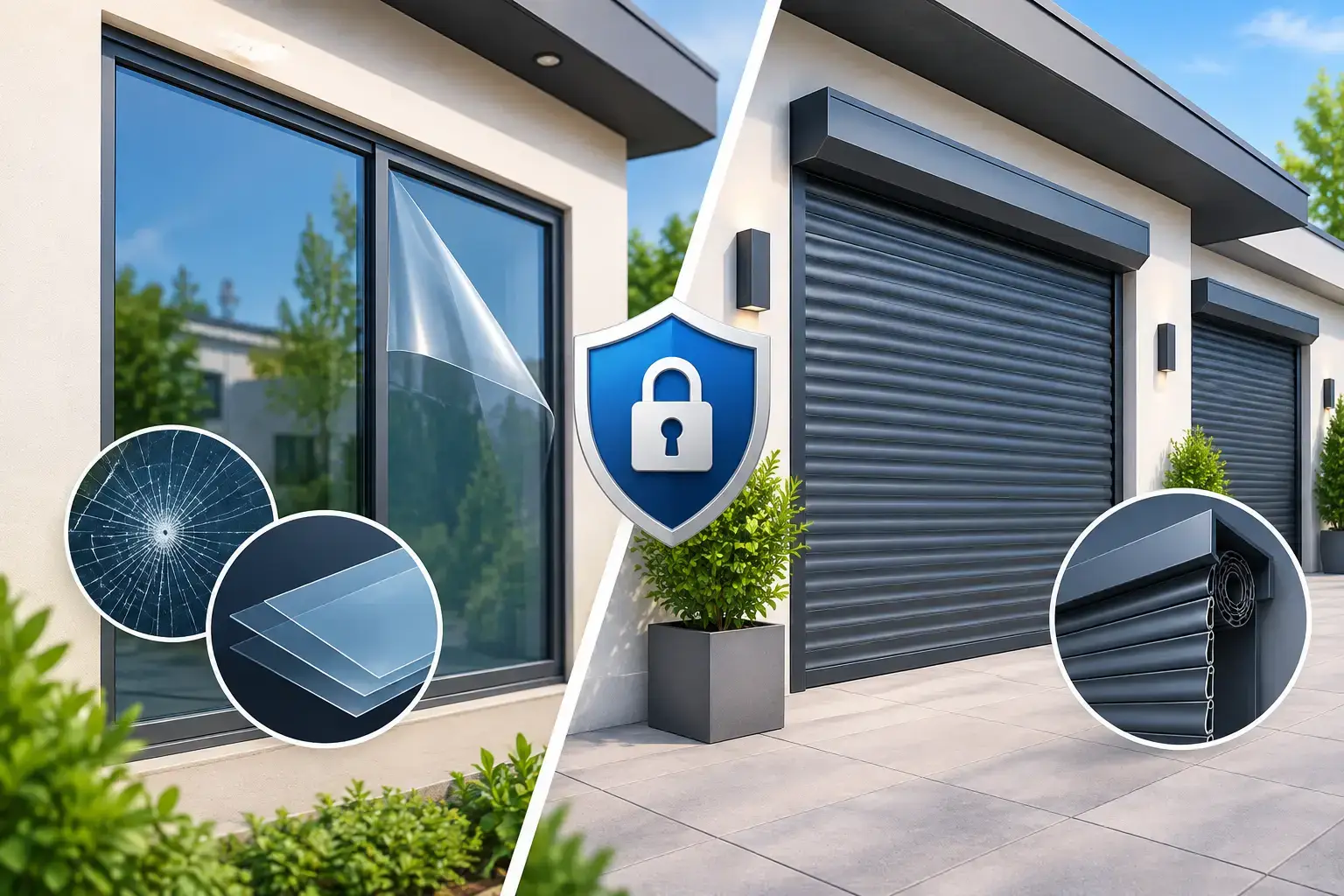
Once a window has been restored, protection helps preserve the result. Surface protection films and anti-graffiti films can be valuable in high-contact areas such as retail entrances, public-facing offices, schools, healthcare facilities, and shared commercial spaces. These films create a sacrificial layer designed to take the wear that would otherwise reach the glass.
The benefit is practical: if the protective layer is scratched or vandalized, it can often be replaced without replacing the underlying pane. This is not the right solution for every window, and product selection matters. A professional should match the film to the surface, exposure, cleaning requirements, and desired appearance.
For homes, the conversation may also include solar control, privacy, glare reduction, and UV protection. If a window is already being evaluated for restoration, it can be a sensible time to consider whether the glass could work harder for comfort and protection. The right film should enhance the space without sacrificing the natural light that made the window valuable in the first place.
Know When to Request an Assessment
Request a professional evaluation when a scratch is visible from normal viewing distance, affects a customer-facing area, appears on coated or filmed glass, or is accompanied by chips or cracks. It is also worth calling a specialist before trying a DIY polish on expensive, oversized, insulated, or tempered panes.
Comfort Pro approaches glass restoration with the same attention to detail used for protective and performance film installations. The objective is straightforward: give you a clear recommendation, protect the surrounding surface, and pursue the option that delivers the best visual and practical result for the property.
A scratched window does not always need to become a replacement project, but it does deserve more than a guess. A careful assessment can tell you whether restoration will bring back clarity, whether protective film can prevent the next problem, or whether replacement will save time and money over the long run.