
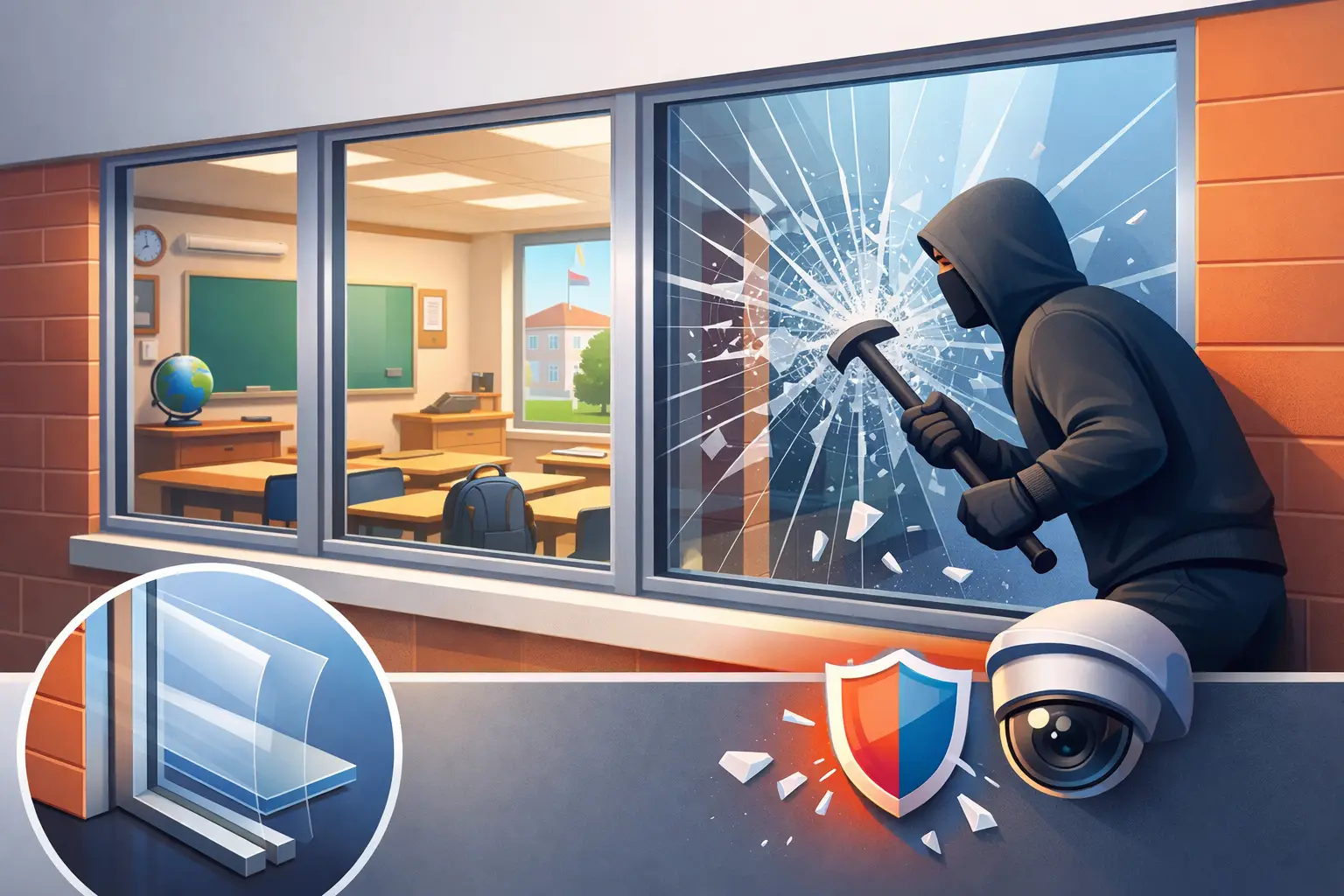
A school’s front office window can be welcoming, bright, and still represent a point of concern. Large glass entrances, sidelights, classroom doors, and exterior windows support visibility and daylight, but ordinary glass can fail quickly under impact. School window security film is designed to help hold broken glass together and add valuable delay when someone attempts to force entry through a glazed opening.
That distinction matters. Security film is not a replacement for controlled access, trained staff, emergency procedures, or properly designed doors and frames. It is one practical layer in a broader school safety plan – one that can improve the performance of existing glass without turning a campus into a construction site.
How school window security film works
Security film is a clear, heavy-duty polyester film professionally bonded to the interior side of glass. When glass breaks, the film helps retain fragments in place rather than allowing the pane to immediately collapse into the room. In an impact event, that can reduce hazardous flying glass and require continued effort to create an opening large enough to pass through.
The protection comes from more than film thickness alone. Adhesive quality, the type and condition of the existing glass, and the way the film is secured around the frame all affect real-world performance. A professionally specified system considers the full glazing assembly, not just the pane.
For many school applications, the goal is delay. An intruder who cannot quickly breach a glass opening may be deterred, may move on, or may give staff and law enforcement additional time to respond. In accidental breakage events, the same film can help keep shattered glass contained, which can make cleanup and post-incident recovery safer.
Film does not make glass indestructible
This is the most important expectation to set. Security film can make glass much harder to break through, but it does not make a standard window bulletproof or impossible to penetrate. Repeated impact can eventually defeat many glazing systems, particularly when the frame is weak or the film is not properly anchored.
Claims should always match the product, the glass, the frame, and the tested installation method. A careful installer will explain where film offers meaningful value and where upgraded glazing, reinforced frames, access-control improvements, or other measures may be a better fit.
Where security film makes the most sense on campus
Schools rarely need the same level of protection on every piece of glass. A targeted assessment is usually more effective than applying one product everywhere. The highest-priority areas are commonly ground-level entry doors, adjacent sidelights, reception windows, administrative offices, exterior-facing corridors, and classroom doors with glazing that could provide access from a hallway.
Windows near playgrounds, drop-off zones, and athletic areas may also benefit from safety film because accidental impacts are more likely. In these locations, glass retention can be as relevant as forced-entry resistance.
Visibility should remain part of the decision. Clear security film preserves natural light and sightlines, which can be especially helpful for front offices and supervised entry points. Where privacy is also needed, decorative or frosted film may be appropriate for selected office areas, counseling rooms, or interior glass. The right solution depends on whether the priority is access delay, glass safety, privacy, solar comfort, or a combination of needs.
Entry glazing deserves special attention
A secured door is only as effective as the nearby glass. If someone can break a sidelight or lower door lite and reach the hardware inside, the opening may undermine the access-control plan. Security film can strengthen this weak point by making the glass more difficult to displace after it breaks.
However, the door and frame still matter. Hardware placement, the size of the glass opening, the door’s construction, and whether the frame can retain the filmed glass are all part of a meaningful evaluation. A film-only recommendation without looking at those details is incomplete.
The difference between safety film and a security system
The terms “safety film” and “security film” are often used together because both can retain broken glass. The difference is usually found in the material specification and the intended threat level. Lighter safety films are commonly used to reduce hazards from accidental breakage, while thicker security films are selected when forced-entry delay is a primary objective.
There is no universal thickness that works for every school. A small interior office partition does not have the same exposure as a large exterior sidelight near a main entrance. The correct product depends on the glazing type, opening size, frame condition, desired appearance, and the school’s broader security strategy.
In higher-risk applications, an attachment system may be recommended. This system bonds the filmed glass to the frame, helping the pane remain in place longer after impact. Without frame attachment, film can still hold broken glass together, but the entire sheet may release from the frame under sufficient force. That trade-off should be discussed clearly before installation.
What a proper school window film assessment should include
Before specifying school window security film, a qualified professional should inspect the actual openings. Photos and measurements are useful, but an on-site review can reveal conditions that are easy to miss, such as deteriorated seals, nonstandard frames, tempered versus annealed glass, existing window damage, or access points hidden by landscaping and furniture.
A thorough recommendation should address four practical questions:
- Which glass openings present the most immediate access or breakage concerns?
- What type of glass and frame is currently installed?
- Is the goal fragment retention, forced-entry delay, privacy, or multiple benefits?
- Does the selected system need a frame attachment method to meet the intended performance level?
Schools should also ask for clear information about product documentation, installation methods, warranties, and maintenance. A professional installation should look clean at edges and corners, preserve intended visibility, and avoid interfering with existing door hardware, safety markings, or building operations.
Installation quality is part of the protection
Film performance is closely tied to installation quality. Glass must be properly cleaned and prepared so the adhesive can bond evenly. The film must be accurately cut, aligned, and finished around corners, mullions, and door hardware. If an attachment system is part of the design, that detail must be installed with the same care as the film itself.
Timing also matters for active campuses. Many schools schedule work during breaks, weekends, or off-hours to reduce disruption. Experienced installers can coordinate access with facilities teams, work in phases, and protect surrounding surfaces while maintaining a clean jobsite.
For multi-building campuses, it is often wise to start with a prioritized phase rather than wait for a full-property budget. Addressing front-entry glazing, vulnerable sidelights, and high-traffic exterior doors first can provide meaningful improvement while a longer-term plan is developed.
Security film should support, not complicate, school operations
The best safety upgrades do their job quietly. Clear film does not change the daily experience of entering a school, teaching in a classroom, or welcoming visitors at the front desk. It can maintain daylight and preserve the open appearance many campuses value while adding a measure of protection to vulnerable glass.
That said, every application has trade-offs. Film can alter the appearance of damaged or heavily scratched glass, but it will not correct failed seals, compromised frames, or severely deteriorated glazing. It can add delay, but it cannot replace a monitored entry process. And while privacy films can improve discretion in selected rooms, they should not obstruct sightlines that staff rely on for supervision.
The strongest approach is coordinated: assess the building, prioritize the most exposed glazing, select products based on the specific risk, and install them with precision. For schools in Southern California and beyond, that measured process can turn ordinary glass into a more dependable part of the campus safety plan.
A well-planned film project starts with looking closely at the openings people use every day. The right recommendation should leave school leaders with a clear answer to a simple question: where will this upgrade make the greatest practical difference for students, staff, and visitors?