A shattered storefront panel, a broken sidelight beside a front door, or vulnerable glass near a school entry creates the same immediate question: how can the opening be made safer without creating a much larger project? The safety film versus laminated glass decision comes down to more than whether glass breaks. It involves how the glass is held together, the level of threat involved, the existing window system, appearance, budget, and the practical limits of each solution.
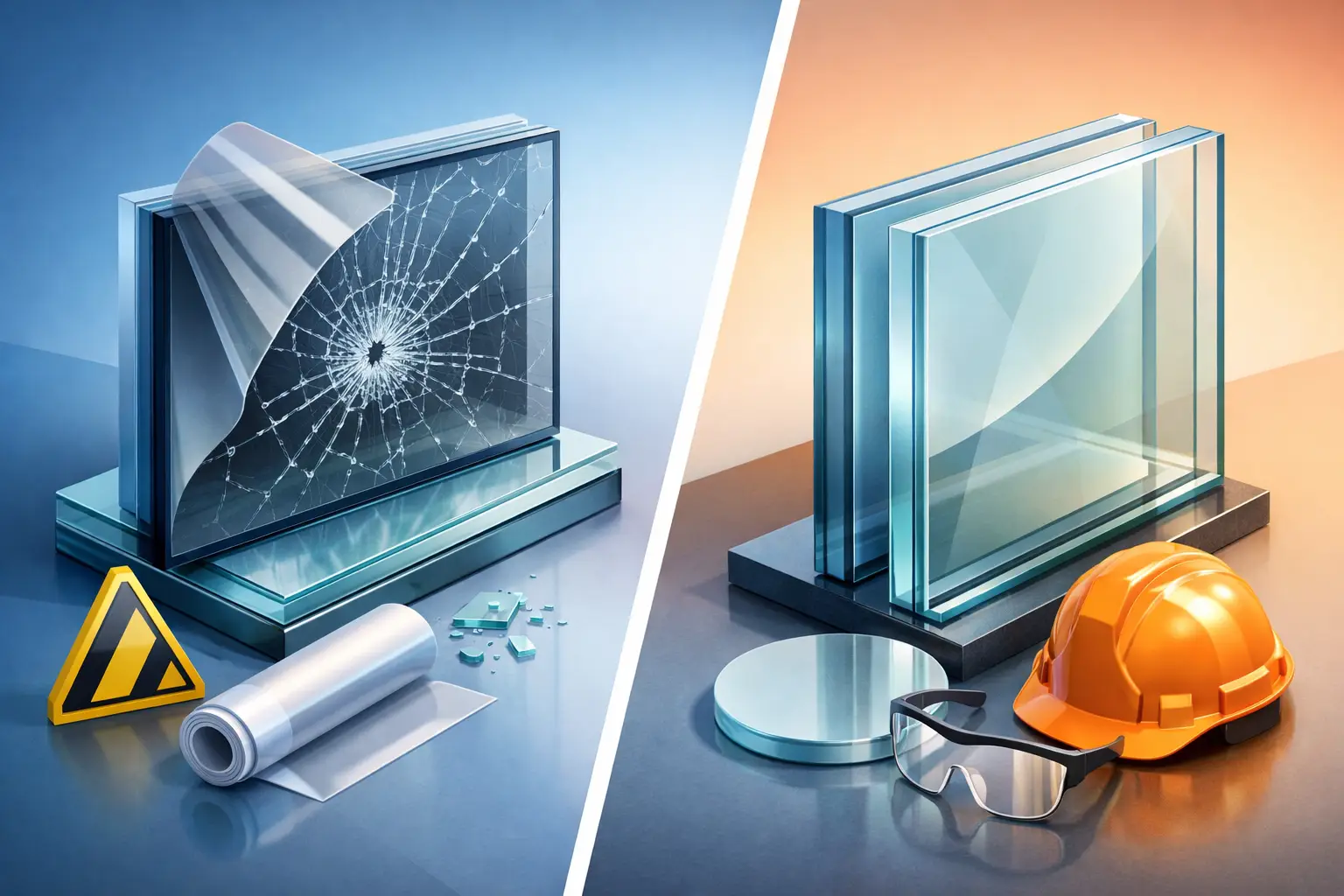
Both options can reduce hazards from broken glass. They are not interchangeable, however. Safety film is a professionally applied retrofit that can improve glass retention on existing windows. Laminated glass is a purpose-built glazing product made with a protective interlayer between glass panes. The right choice depends on what you need the glass to do after impact.
How Safety Film and Laminated Glass Work
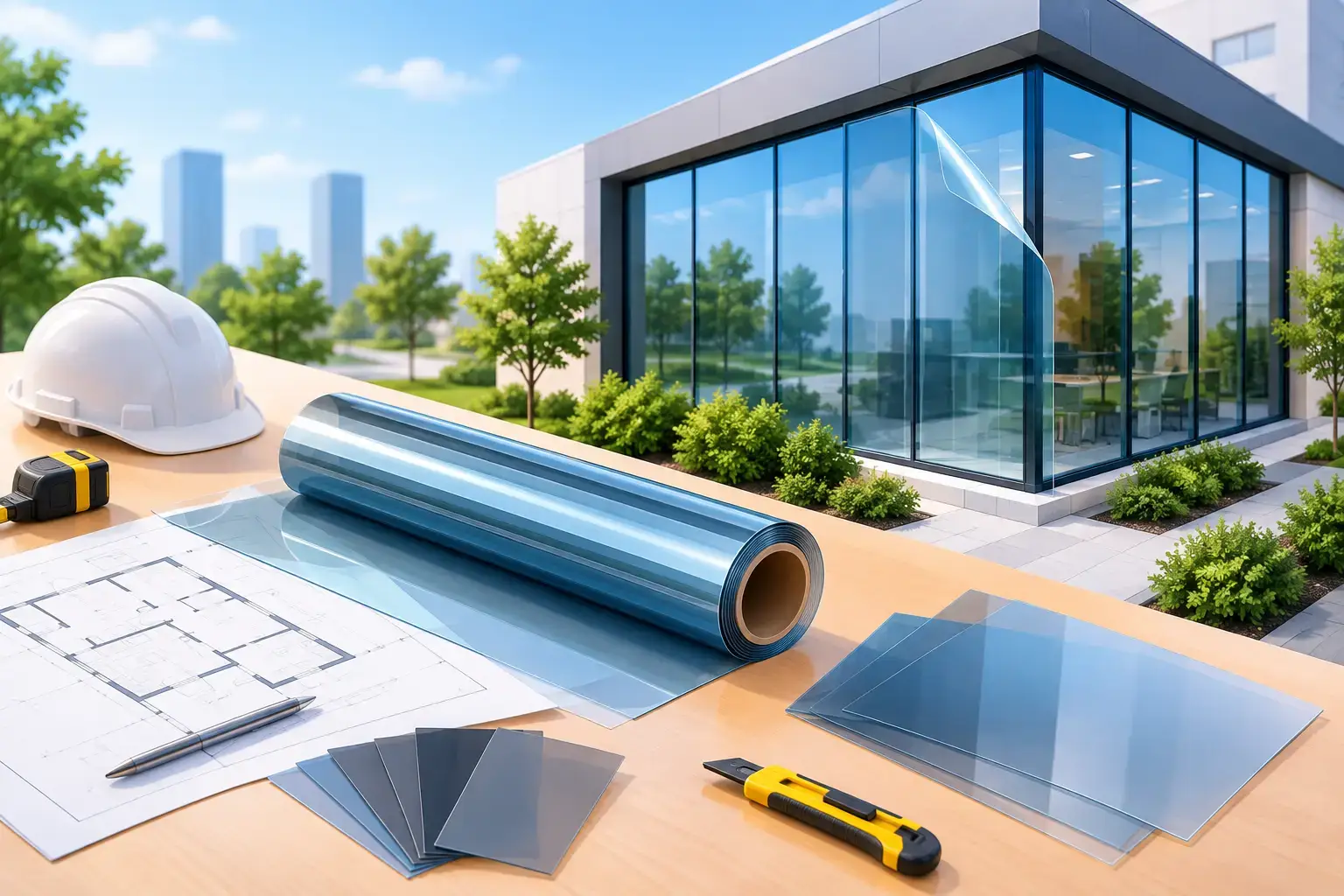
Safety and security film is a clear, heavy-gauge polyester film applied to the interior surface of existing glass. When the glass breaks, the film helps hold fragments together rather than allowing them to scatter across a room, walkway, or sales floor. It can be an effective way to improve safety while preserving the look of a window, and it is available in configurations that also address solar heat, glare, UV exposure, or privacy.
Its performance depends on the complete assembly, not the film alone. Glass thickness, pane size, frame condition, adhesive quality, and installation all matter. For higher-impact applications, a structural attachment system may be used to anchor the filmed glass to the frame. That detail helps the broken pane remain in the opening longer after an impact.
Laminated glass is manufactured by bonding two or more sheets of glass around an interlayer, commonly polyvinyl butyral or a specialized ionoplast material. If it breaks, the interlayer is designed to retain much of the fractured glass. Because the protective layer is built into the glazing, laminated glass is often selected when a project requires specific tested performance, new construction glazing, or a complete window and door replacement.
Safety Film Versus Laminated Glass: The Key Differences
The most meaningful distinction is timing. Safety film is installed after the glass has been manufactured and installed. Laminated glass is engineered before the pane ever reaches the building. That makes film especially attractive for existing homes, offices, retail spaces, and facilities where replacing functioning glass would be disruptive or unnecessarily expensive.
Laminated glass typically provides a more integrated solution because the interlayer is protected inside the glass assembly. It can be specified in different constructions for sound reduction, UV filtering, storm-related needs, and other performance goals. It also avoids the visual concerns that may arise when an older pane has surface scratches, chips, failing seals, or other conditions beneath a new film application.
Safety film, on the other hand, can often be installed with far less downtime. There is no need to remove window frames, disturb surrounding finishes, or manage the disposal and replacement of every glass unit. For a commercial property with occupied offices or a retail location that cannot close for a lengthy renovation, that difference is significant.
Neither material makes glass unbreakable. A determined impact can still fracture the pane. The goal is usually to reduce dangerous flying fragments, delay access through the opening, or help keep broken glass contained until occupants can move away and responders can secure the area. Those are valuable outcomes, but they should be discussed honestly during a site assessment.
When Safety Film Is the Practical Choice
Safety film is often the sensible choice when the existing windows are in good condition and the primary concern is glass retention. A homeowner may want to reduce the risk of shattered glass near a patio door or a child’s play area. A property manager may need a cleaner, less disruptive way to improve safety on ground-floor glazing, interior sidelights, or large lobby windows. A retail operator may want an added layer of protection without changing the storefront’s appearance.
It is also a strong option when several benefits need to work together. Depending on the product selected, window film can support safety goals while also reducing glare, blocking a significant portion of UV exposure, improving daytime comfort, or adding privacy. This combination can make a retrofit more worthwhile than replacing clear glass solely for one purpose.
Professional installation is essential. Film must be matched to the glass type and installed with careful edge work, clean preparation, and proper curing. Tempered glass, insulated glass units, coated glass, and older glazing each require evaluation before a recommendation is made. Applying the wrong film to the wrong glass can create appearance issues or increase thermal stress risk, particularly on certain dark or absorbing films.
When Laminated Glass Is Worth the Investment
Laminated glass is generally the better fit when the project already includes new windows, door systems, storefront glazing, or a major renovation. It can be specified at the design stage, coordinated with the frame system, and selected to meet the performance requirements of the project.
It may also be the preferred route when the existing glass is damaged, undersized, outdated, or paired with frames that cannot support the desired retention strategy. Installing safety film over compromised glass does not correct problems such as failed insulated seals, poor frame anchoring, substantial scratches, or water intrusion. In those situations, replacement addresses the underlying condition rather than adding a layer to it.
For projects driven by building codes, insurance requirements, or a defined security standard, confirm the exact performance requirement before choosing either option. A product name or thickness alone is not proof that an installed opening meets a particular test. The glass, film or interlayer, frame, attachment method, and installation must work as a tested system where compliance is required.
Cost, Disruption, and Long-Term Planning
Upfront cost is usually where safety film has a clear advantage. It uses the glass you already own and can frequently be installed in a shorter timeframe than full glazing replacement. That can lower labor costs and reduce interruptions for tenants, customers, and staff.
Laminated glass costs more because it involves new glazing materials and, often, removal and replacement work. Yet the higher initial expense can be justified when windows are due for replacement anyway, when a building needs a tailored glass specification, or when the project calls for a full system upgrade rather than a retrofit.
Long-term maintenance is another consideration. Quality film is durable, but it is still a surface-applied product and should be cleaned with appropriate nonabrasive methods. Laminated glass protects its interlayer inside the assembly, although the glass surfaces and surrounding seals still require normal care. Neither choice eliminates the need to inspect frames, hardware, seals, and glazing conditions over time.
Start With the Risk, Not the Product
The best recommendation begins with a clear description of the problem. Are you trying to reduce injuries from accidental breakage? Add delay against forced entry? Address a vulnerable ground-floor storefront? Improve a school or healthcare facility’s glass safety plan? Or combine glass retention with heat and glare control in a sun-exposed California building?
These goals can overlap, but they should not be treated as identical. A film selected for everyday fragment retention may not be the right specification for a higher-risk entry point. Likewise, laminated glass may be more capability than necessary for a sound existing window that simply needs an added measure of protection.
A careful assessment should review the glass type, dimensions, frame material, nearby foot traffic, access points, building use, and desired appearance. It should also account for whether the glass is single-pane or insulated, whether it is tempered, and whether a structural attachment system is appropriate. Those details turn a broad safety goal into a recommendation that can perform as intended.
For many occupied properties, professionally installed safety film delivers a practical improvement with minimal disruption. For replacement projects and applications requiring an engineered glazing assembly, laminated glass can be the stronger long-term path. The useful next step is not choosing the product with the bigger promise – it is identifying the specific risk at your glass and selecting the system built to address it.