
A west-facing living room can feel several degrees warmer than the rest of the house by midafternoon. A storefront can lose its polished look after repeated vandalism. An office conference room can become unusable when glare washes out every screen. The best glass protection solutions address these problems at the source, without requiring a window replacement project.
Glass is a hardworking part of any property, but it is also exposed to heat, ultraviolet rays, impact, scratches, moisture, and unwanted attention. The right film or surface treatment can improve comfort, protect interiors, add privacy, and extend the usable life of glass and surrounding finishes. The right choice depends on the specific problem, the type of glass, and how the space is used.
What Glass Protection Should Solve
Glass protection is not one product category with one outcome. A homeowner may want less heat and fading in a bright room. A property manager may need to reduce the risk associated with broken glass at an entryway. A retail operator may need a removable barrier against graffiti, scratches, and cleaning damage.
Before selecting a solution, define the primary goal. If a window gets intense sun, solar control matters more than decorative appearance. If visibility into a room is the concern, privacy may take priority. Where public-facing glass is vulnerable to impact or vandalism, a thicker protective film may be the better investment.
A professional assessment is valuable because products can look similar while performing very differently. Film shade, reflectivity, thickness, adhesive system, and compatibility with the existing glass all affect the final result.
Best Glass Protection Solutions by Need
Solar control window film for heat, glare, and UV exposure
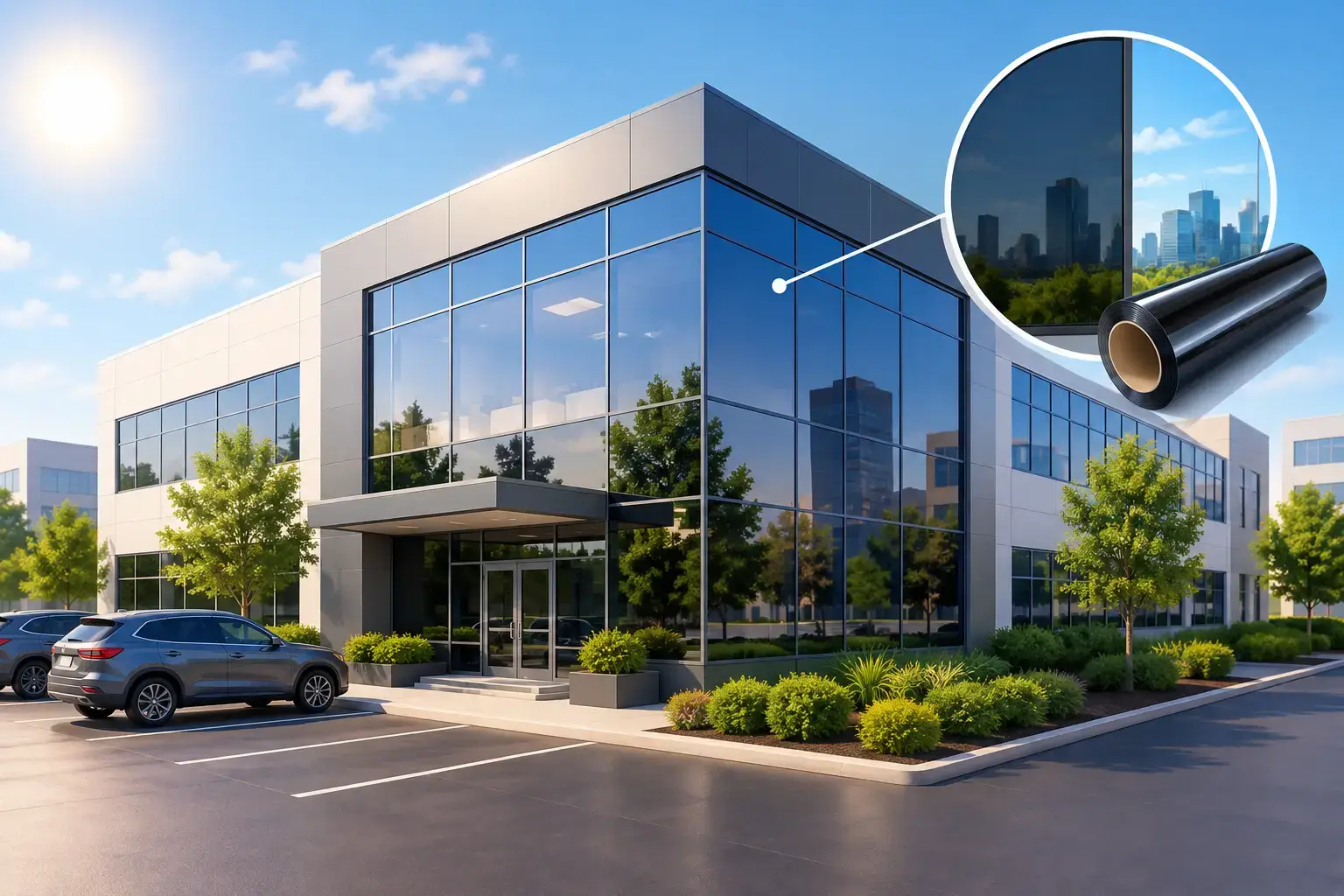
Solar control film is often the most practical upgrade for rooms with harsh sunlight. It reduces solar heat gain, softens glare, and blocks a significant amount of ultraviolet exposure that can fade flooring, furniture, artwork, and merchandise. For California homes and commercial buildings, this can make sun-facing spaces far more comfortable during long, bright afternoons.
Modern solar films come in a wide range of appearances. Some are nearly clear and designed to preserve a natural view. Others provide a more reflective exterior appearance or a darker tint for stronger glare control. The trade-off is straightforward: higher heat and glare reduction can change visible light levels or exterior aesthetics. A well-chosen film balances performance with the look you want to maintain.
For commercial properties, solar film can also support more consistent indoor temperatures near windows. That may ease strain on cooling systems, especially in offices, retail spaces, and large glass-fronted common areas. Energy savings vary by building orientation, glass type, HVAC use, and local climate, so the strongest case is usually improved comfort paired with lower solar load.
Safety and security film for vulnerable glass
Safety and security film is designed to help hold broken glass together after impact. It does not make glass unbreakable, and it should not be presented as a substitute for all physical security measures. Its value is in reducing dangerous flying shards, delaying entry through glass, and helping keep a broken pane contained until it can be repaired.
This makes it a strong option for ground-level windows, glass doors, sidelights, schools, healthcare settings, offices, and retail storefronts. In areas where safety requirements apply, the correct film thickness and attachment method matter. Some installations use specialized anchoring systems to increase retention performance beyond film applied to glass alone.
The decision between safety film and security film depends on the risk. Safety-focused applications may be intended to reduce injury from accidental breakage. Security-focused applications are typically selected where forced entry, repeated impact, or delayed access is a concern. A site review can determine whether the goal is code-related safety, personal protection, property protection, or a combination of all three.
Decorative privacy film for visibility control
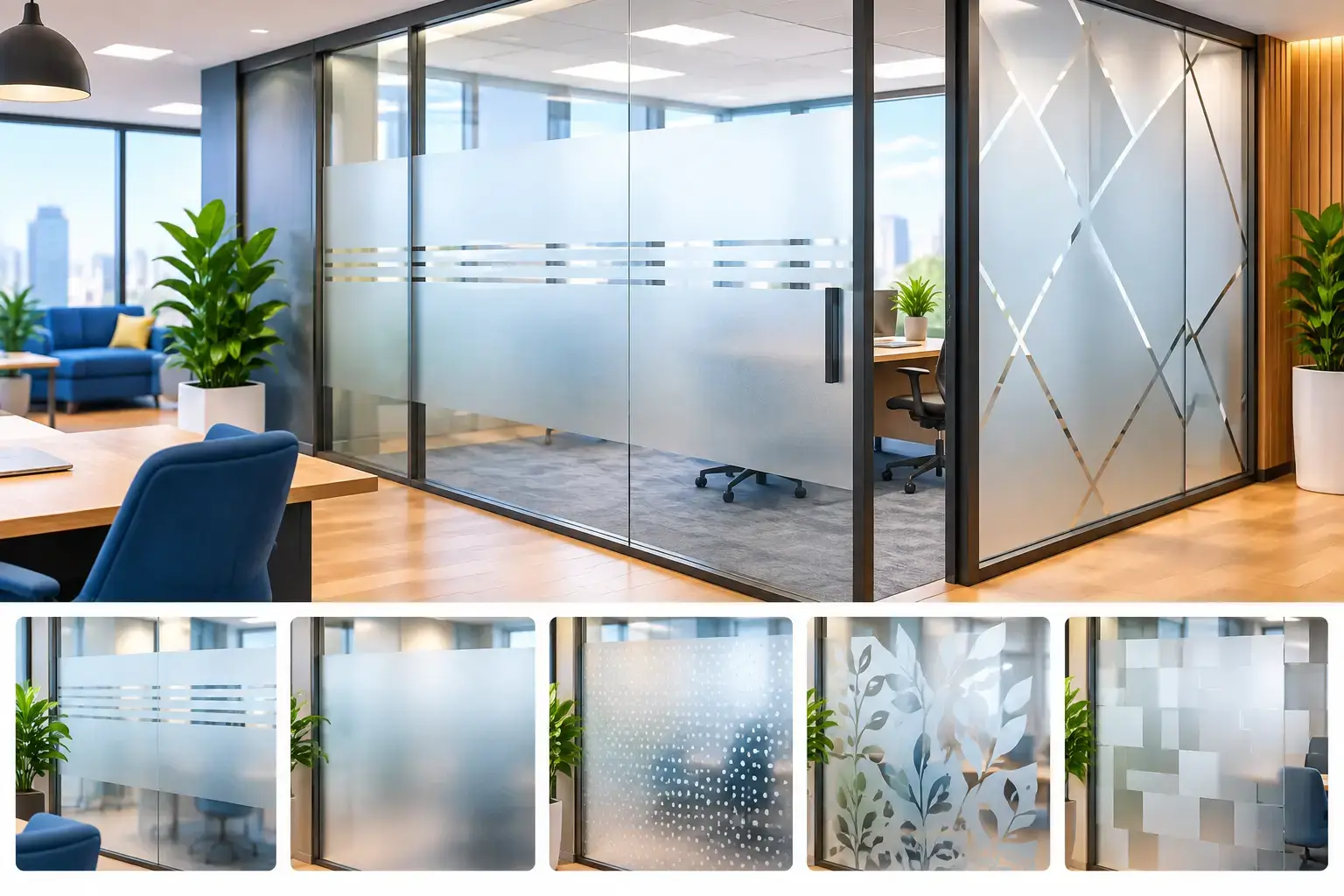
Privacy does not always require curtains, blinds, or permanently obscured glass. Decorative privacy film can create separation in bathrooms, street-facing rooms, conference spaces, medical offices, interior doors, and glass partitions while still allowing daylight into the room.
Frosted and etched-look films are popular because they provide a clean, architectural appearance. Patterned films can add visual interest, while gradient designs can cover only the portion of glass where privacy is needed. Custom printed film can incorporate branding, graphics, or wayfinding for commercial interiors.
The key consideration is when privacy is needed. Most frosted films provide privacy at all times, but they do not offer a clear view out. If nighttime privacy is the concern, remember that reflective films alone may not prevent visibility indoors when lights are on inside. The best choice is based on viewing direction, lighting conditions, and the desired level of openness.
Anti-graffiti film for storefronts and high-contact areas
Anti-graffiti film is a sacrificial protective layer applied over vulnerable glass and other smooth surfaces. When graffiti, etching, scratches, or staining occur, the damaged film can be removed and replaced without replacing the underlying glass.
For retail locations, transit-facing properties, public buildings, elevators, and busy commercial corridors, this can prevent a minor incident from turning into a costly glass replacement. It also helps maintain a cleaner, more professional appearance between larger maintenance cycles.
Anti-graffiti film is not limited to obvious vandalism concerns. High-contact areas can collect scratches from carts, equipment, bags, cleaning tools, and daily use. In the right setting, surface protection film is a practical maintenance decision as much as a security decision.
Surface protection film for more than glass
Many high-wear surfaces around a property need the same kind of thoughtful protection as glass. Clear surface protection films can be applied to walls, partitions, panels, and other finishes exposed to scuffs, abrasion, marker damage, and repeated contact.
This is especially useful in healthcare facilities, schools, apartment common areas, hospitality spaces, and commercial interiors. Rather than repairing or refinishing an entire surface after damage, owners can replace the protective layer. The approach protects the original finish while making routine upkeep more predictable.
Glass restoration before protection
Film performs best on glass that is clean, stable, and properly prepared. If glass already has scratches, mineral deposits, construction debris, or surface damage, restoration may be the appropriate first step. In some cases, professional scratch removal can improve clarity enough to avoid a replacement.
Not every scratch can be removed safely, particularly when damage is deep or affects the integrity of the pane. An experienced specialist should evaluate the glass before making promises. When restoration is feasible, applying the right film afterward helps protect the improved surface and preserve the investment.
How to Choose the Right Protection Film
The best result starts with a clear understanding of the glass itself. Double-pane insulated units, tempered glass, laminated glass, low-E coatings, and older single-pane windows can all have different compatibility requirements. Applying an unsuitable film can increase thermal stress or affect manufacturer warranties, which is why product selection should never be based on appearance alone.
Next, consider the view from both sides of the glass. A film that looks subtle from inside may appear reflective from the exterior. A privacy design that works well in daylight may need additional planning for nighttime conditions. For commercial spaces, building rules, signage requirements, and brand standards may also shape the decision.
Finally, evaluate installation quality. Precision installation affects edge appearance, clarity, adhesion, and long-term durability. Proper cleaning, careful trimming, and attention to curing conditions are not minor details. They determine whether the finished film looks integrated with the glass or looks like an afterthought.
Why Professional Installation Makes a Difference
Quality film products are only part of the equation. Large windows, doors, divided panes, curved surfaces, and occupied commercial environments require careful planning and clean execution. Professional installers can measure accurately, identify glass risks, recommend appropriate products, and complete work with minimal disruption to the property.
For larger projects, consistency matters just as much as product performance. Matching appearance across multiple rooms, suites, or locations helps a property feel intentional. Comfort Pro approaches each project with that level of care, from the initial recommendation through final inspection.
The most useful glass protection is the one that solves a real problem without creating a new one. Whether the priority is a cooler room, safer entry glass, better privacy, or a cleaner storefront, start with the conditions you live or work with every day. A tailored recommendation will give your glass a longer life and make the space behind it more comfortable to use.