
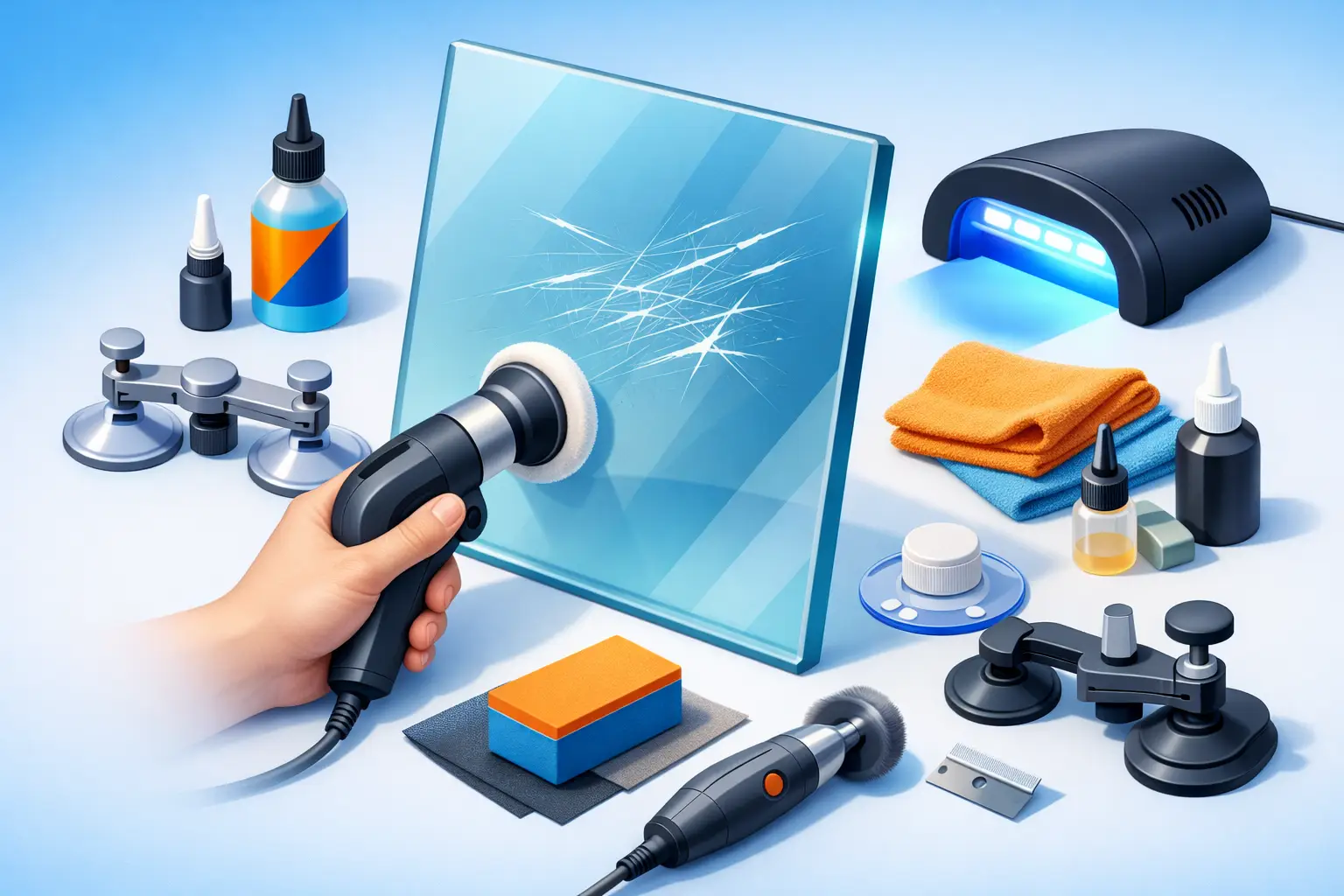
A small scratch can change how an entire window, glass door, storefront, or interior partition looks. Before assuming replacement is the only answer, it helps to understand the available glass scratch repair options – and which ones protect the appearance and performance of the glass rather than creating a larger problem.
The right choice depends on the depth of the damage, the type of glass, its location, and how visible it is in natural light. A faint surface mark on an interior pane calls for a different approach than a deep scrape across a commercial entry door or a high-visibility retail display.
Start by Identifying What Is Actually Damaged
Not every line on glass is a scratch. Mineral deposits, dried construction debris, adhesive residue, paint overspray, and transfer from another material can all resemble permanent damage. Cleaning with the wrong product or an abrasive pad may also leave marks that look like scratches but are actually surface haze.
A careful inspection is the first step. Clean the area with a non-abrasive glass-safe cleaner and a clean microfiber cloth, then view it from several angles. If the mark disappears when the glass is wet, it may be residue or a light surface imperfection rather than a true scratch.
A practical test is to lightly run a fingernail across the mark. If your nail catches, the scratch is more likely to be deep enough to require professional evaluation. If it does not catch, polishing or restoration may be possible. This is only a starting point, though. Coated glass, tinted glass, tempered glass, and insulated glass units all deserve extra care.
Glass Scratch Repair Options by Damage Level
1. Professional Cleaning for Surface Contamination
When the problem is residue rather than scratched glass, careful cleaning is the least invasive and most cost-effective solution. Professionals use appropriate solvents, tools, and techniques for the glass and surrounding frame materials. This matters because aggressive scraping or harsh chemicals can damage seals, coatings, finishes, and nearby surfaces.
This option is ideal when marks come from paint, tape, hard-water buildup, or jobsite debris. It will not remove a genuine scratch, but it prevents customers from paying for restoration or replacement when a detailed cleaning is all that is needed.
2. DIY Polishing for Very Light Marks
For extremely shallow scratches on standard, uncoated glass, a polishing compound designed for glass may reduce the appearance of the damage. Cerium oxide is commonly used for this purpose. Applied incorrectly, however, it can leave optical distortion, uneven sheen, or a visible polished spot that is more distracting than the original scratch.
DIY polishing makes the most sense for a small, low-risk area where perfect clarity is not critical. It is not a strong choice for large windows, glass near eye level, specialty glass, or a surface that receives direct sunlight. The light in a living room, office lobby, or storefront tends to reveal uneven polishing quickly.
Avoid household shortcuts such as toothpaste, baking soda, steel wool, or random abrasive pads. They are frequently recommended online, but they can create haze and fine scratches that spread beyond the original damage.
3. Professional Glass Polishing and Restoration
Professional restoration is often the best balance of cost and results for light to moderate scratches. A trained technician evaluates the glass, tests a small area, and uses controlled polishing equipment to level the damaged surface as carefully as possible.
The goal is not simply to make the scratch less visible. It is to improve clarity without changing the glass enough to create waves, lensing, or visual distortion. That requires the right pads, compounds, speed, pressure, and cooling method.
This approach is especially valuable for residential windows, office partitions, entry doors, retail glass, and other surfaces where replacement would be expensive or disruptive. It can also be a practical choice when matching existing glass would be difficult, such as in a building with older units or custom dimensions.
Restoration has limits. A scratch that is too deep may not polish out completely, and attempting to remove it can compromise the optics of the pane. In those cases, improving the appearance may be realistic; making the glass look brand-new may not be.
4. Scratch Removal Before Window Film Installation
Window film can deliver meaningful benefits, including reduced glare, improved privacy, UV protection, added safety, and better interior comfort. It is not, however, a reliable way to hide significant scratches. Film conforms closely to the glass, so deep marks can remain visible and may even stand out under certain lighting conditions.
When glass is a candidate for restoration and film, the repair should come first. The surface must be properly cleaned, polished if appropriate, and inspected before film installation. This creates the best visual result and helps ensure the film adheres correctly.
For homeowners and property managers planning an upgrade, this can be an efficient time to address multiple needs at once. Restored glass paired with solar control, decorative privacy, safety, or surface protection film can improve both appearance and day-to-day performance.
5. Protective Film to Prevent Future Scratches
If a glass surface is exposed to frequent contact, protective film may be one of the most practical long-term investments. Anti-graffiti and surface protection films act as a sacrificial layer. When the film becomes scratched, etched, or marked, it can be removed and replaced without replacing the underlying glass.
This option is particularly useful for storefronts, schools, elevators, public-facing offices, healthcare facilities, and busy residential common areas. It is also helpful on glass doors and partitions where bags, carts, cleaning equipment, or daily traffic can cause repeat damage.
Protective film does not repair existing deep scratches. Its value is prevention. Installed after the glass has been restored or replaced, it helps preserve a clean, professional appearance and can reduce future maintenance costs.
6. Glass Replacement for Deep or Safety-Critical Damage
Replacement is the right answer when scratches are deep, widespread, located in a critical viewing area, or accompanied by chips, cracks, seal failure, or compromised glass edges. A deep scratch can weaken certain types of glass, and damage near an edge deserves prompt attention because stress often concentrates there.
Replacement may also be more sensible when the labor required to improve the surface approaches the cost of a new pane. This is common with heavily damaged small panels or glass with severe distortion after prior repair attempts.
For insulated glass units, the decision can be more complex. Damage to the interior-facing surface may be repairable, while damage between panes or failed seals usually calls for replacement of the unit. A professional assessment can clarify the difference before work begins.
7. Accepting Minor Imperfections in Low-Visibility Areas
Sometimes the most practical option is to leave a minor scratch alone. A small mark near the edge of a window, behind furniture, or outside the normal line of sight may not justify restoration. This is not settling for less – it is making a cost-conscious decision based on visibility and use.
The key is to confirm that the damage is cosmetic and stable. If it is near a glass edge, continues to grow, or affects a security or safety application, have it inspected rather than assuming it is harmless.
Choosing the Right Path Without Guesswork
The best repair decision begins with three questions: Can the scratch be felt? Is the glass a specialty, coated, tempered, or insulated unit? Will the repaired area be highly visible under daylight or interior lighting?
For light cosmetic damage, professional cleaning or controlled polishing may be enough. For moderate scratches in prominent areas, restoration is usually worth exploring before replacement. For deep damage, edge damage, or surfaces with safety concerns, replacement is often the more dependable choice.
Comfort Pro helps property owners assess damaged glass with the same attention to detail used for precision film installation. The objective is straightforward: recommend the option that makes sense for the surface, the budget, and the result you expect.
A scratch does not automatically mean a window has reached the end of its useful life. With an accurate assessment and the right repair method, many glass surfaces can regain clarity, then be protected against the wear that caused the problem in the first place.