
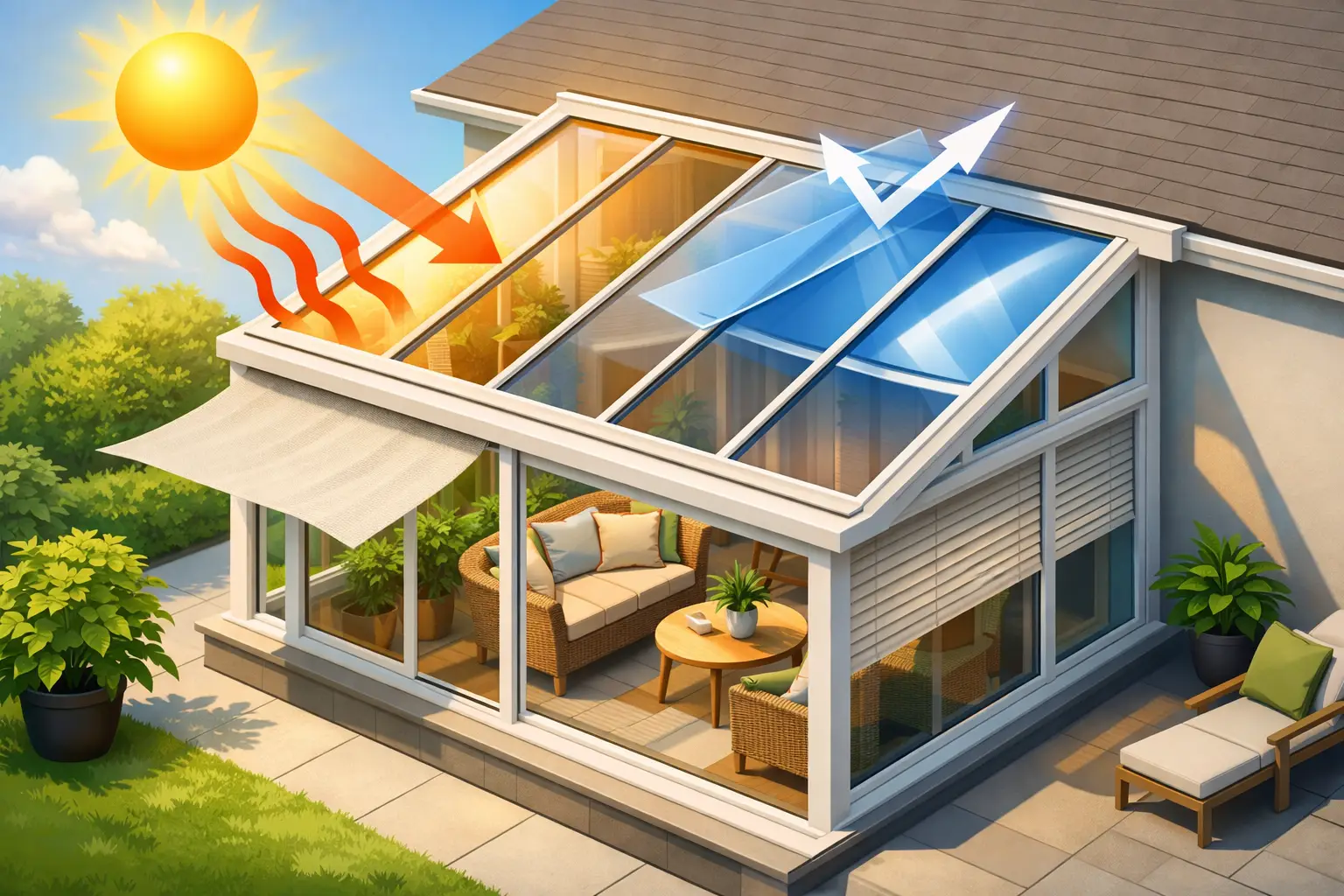
A sunroom should be the space where you linger over coffee, host a weekend lunch, or enjoy the view without squinting. When the afternoon sun turns it into the hottest room in the house, that square footage becomes difficult to use. The right sunroom heat blocking solutions can lower the solar load entering through the glass while preserving the daylight and views that made the room appealing in the first place.
The best approach depends on how the sunroom is built, which direction it faces, the type of glass already installed, and whether your priority is heat, glare, fading, privacy, or all four. A practical solution treats the glass as the source of the problem rather than trying to cool an overheated room after the fact.
Why Sunrooms Get So Hot
Sunrooms typically have far more glass than an ordinary living area. Sunlight passes through that glass as short-wave solar energy, then warms floors, furniture, walls, and people inside. Those surfaces release heat that is harder to escape, especially in rooms with limited airflow or older single-pane windows.
South- and west-facing sunrooms often experience the strongest heat buildup. In Southern California, a west-facing room can be comfortable in the morning and noticeably overheated by late afternoon. Northern California properties can face the same issue during warm, clear months, particularly where a glass enclosure receives direct exposure for several hours.
Air conditioning can help, but it is rarely the most efficient first move. If the sunroom has inadequate insulation or expansive glass, the system must continually fight incoming solar heat. Reducing that heat at the window improves comfort before the HVAC system has to compensate.
Window Film: The Most Direct Heat-Control Upgrade
Professionally installed solar control window film is often the most effective improvement for an existing sunroom. It is applied directly to the interior surface of suitable glass and is designed to reject a significant portion of solar heat, glare, and ultraviolet radiation before it enters the room.
Unlike heavy shades or covered windows, quality window film works while allowing natural light into the space. Modern films are available in light, neutral, reflective, and spectrally selective options. That range matters because a film that performs well on a bright west exposure may not be the right choice for a shaded room where maintaining visible light is the greater priority.
What solar control film can address
A properly selected film can reduce perceived heat, soften harsh glare on screens and tabletops, and block up to 99% of UV rays. UV rejection helps protect flooring, upholstery, artwork, wood finishes, and other sun-exposed surfaces from premature fading. It does not stop all fading, since visible light and heat also contribute, but it is a meaningful layer of protection.
For homeowners who want the clearest possible appearance, spectrally selective film is often worth considering. It can reject a substantial amount of infrared heat while maintaining a lighter, more natural-looking glass appearance. For rooms where privacy and heat reduction are both concerns, a more reflective or tinted film may make better sense during daylight hours.
The trade-off is straightforward: higher heat rejection can sometimes mean a slightly darker view, more exterior reflectivity, or a noticeable tint. A professional consultation should include film samples held against the actual sunroom glass, not just a product chart. The room’s orientation, landscaping, roof overhangs, and existing glass all affect the final result.
Exterior Shades and Interior Window Treatments
Shading the glass before sunlight reaches it is highly effective. Exterior solar shades, awnings, pergola covers, and shade sails can reduce direct solar exposure, particularly on a west-facing wall or glass roof. These options can be excellent when the sunroom has a predictable period of intense afternoon sun.
Their limitations are visual impact, wind exposure, maintenance, and operation. A fixed awning may block welcome winter light, while retractable systems add moving parts and ongoing upkeep. Exterior shading is also not always practical for second-story rooms, complex rooflines, or properties with architectural restrictions.
Interior cellular shades, roller shades, and blinds offer flexible control and can improve comfort. Cellular shades create an insulating air pocket, and solar roller shades cut glare while keeping some outward visibility. Yet interior treatments allow solar energy to enter through the glass before stopping it. They are useful as a companion to film, especially when you need occasional room-darkening or privacy, but they usually do less to prevent heat buildup than an exterior treatment or solar control film.
Improve Ventilation Before Adding More Cooling
A sunroom that traps hot air will feel warmer than its glass alone would suggest. Operable windows, screened vents, ceiling fans, and properly positioned doors can make a major difference by moving heat out of the room. Ceiling fans do not lower air temperature, but they improve air movement across the skin, making the room feel more comfortable at a higher thermostat setting.
For enclosed sunrooms connected to central HVAC, have a qualified professional evaluate whether the system can support the space. Adding a vent without considering return airflow, duct capacity, and insulation can create uneven temperatures elsewhere in the home. Ductless mini-split systems may be appropriate for some rooms, but they work best after solar heat gain has been addressed.
Do Not Overlook the Roof and Glass Condition
A glass roof or skylight-heavy sunroom needs a more careful strategy than a room with glass walls alone. Overhead glass receives intense direct exposure, and not every film is appropriate for every skylight or insulated glass unit. Glass type, seals, slope, and manufacturer guidance must be reviewed before installation.
The same caution applies to older windows. If seals have failed, condensation forms between panes, or frames are deteriorating, film will not correct those underlying issues. Replacement may be the better investment when the glazing itself is no longer performing. In many otherwise sound sunrooms, however, window film is a cost-conscious alternative to replacing large sections of glass.
How to Choose the Right Solution for Your Sunroom
Start by identifying when the room becomes uncomfortable. If the problem peaks from 2 p.m. to sunset, focus on the west-facing glass. If glare makes the room unusable all day, prioritize visible light control. If furnishings are fading, UV protection should be central to the plan.
Then consider what you want the sunroom to feel like after the upgrade. Some customers want maximum heat rejection and do not mind a slightly tinted appearance. Others want a nearly invisible film that retains bright daylight while cutting infrared heat. There is no universal “best” film because the right balance is specific to the room and the people using it.
A professional assessment should also verify glass compatibility. Certain films can increase thermal stress on particular glass types, especially older or specialty units. Experienced installers evaluate the existing glazing, recommend an appropriate product, and apply it with the precision needed for a clean, long-lasting finish.
A Better Way to Enjoy the Room You Already Have
The most successful sunroom upgrades rarely rely on one oversized fix. Solar control film may handle the daily heat and UV load, while a ceiling fan improves circulation and a shade provides extra control during the brightest hours. This layered approach keeps the room useful without closing off the daylight and views that define it.
If your sunroom is consistently too hot, begin with the glass that receives the strongest sun. A tailored film recommendation from a detail-focused installer like Comfort Pro can turn that overlooked room into a place you can comfortably use far more often.