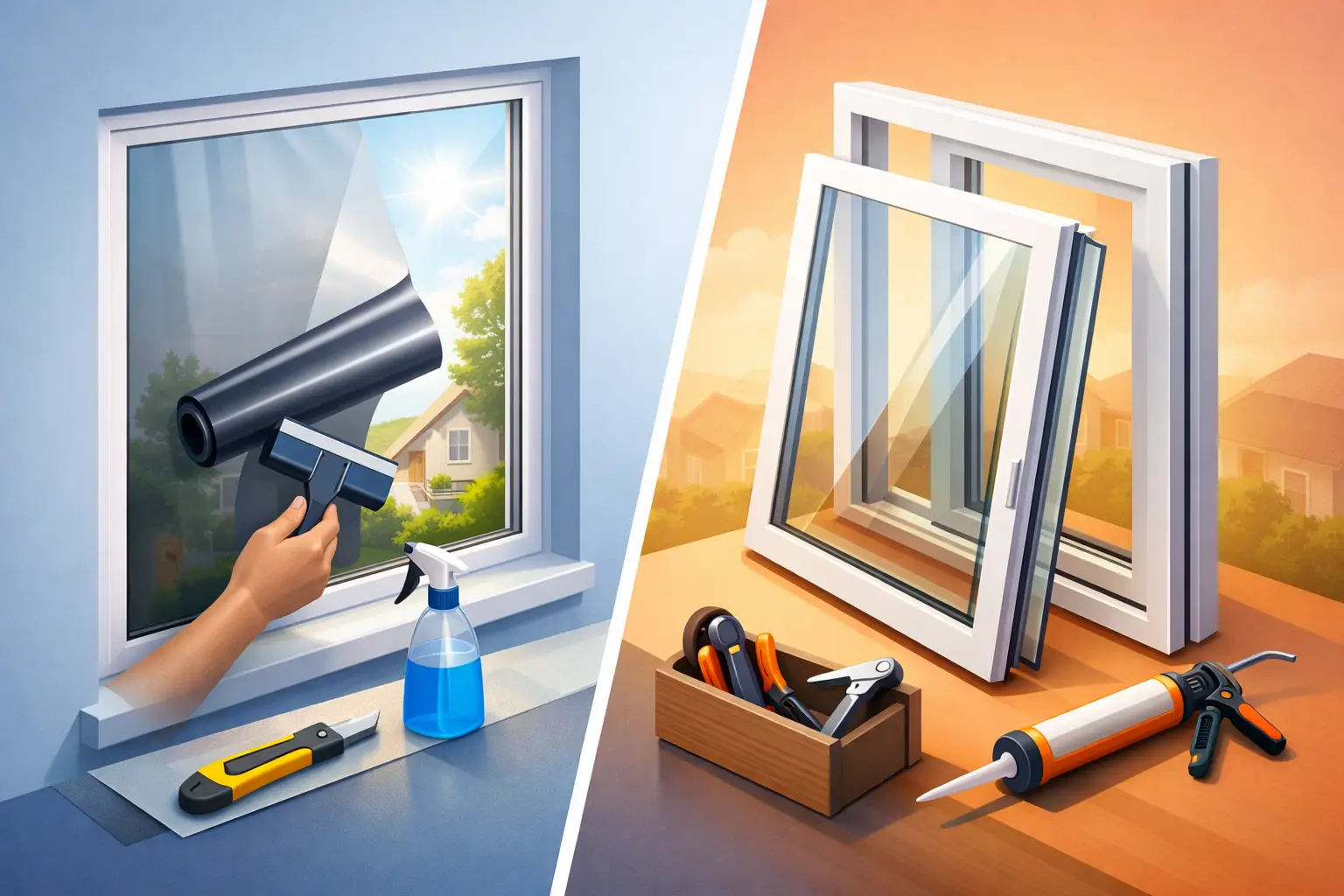
A west-facing room that feels unbearable at 3 p.m. does not always need new windows. In the decision between window film versus replacement windows, the right answer depends on what is causing the problem: solar heat, glare, fading, privacy, damaged glass, air leaks, or an aging window frame. The two upgrades can both improve a property, but they solve different problems and come with very different costs, timelines, and levels of disruption.
For homeowners, facility managers, and business owners, the goal should be simple: invest in the solution that addresses the actual source of discomfort without paying for more construction than the property needs.
Window Film Versus Replacement Windows: The Core Difference
Replacement windows are a full window-system upgrade. Depending on the project, they may include new frames, insulated glass units, seals, hardware, and trim work. They are often the right move when existing windows are structurally worn, leaking air or water, difficult to operate, or showing failed seals between glass panes.
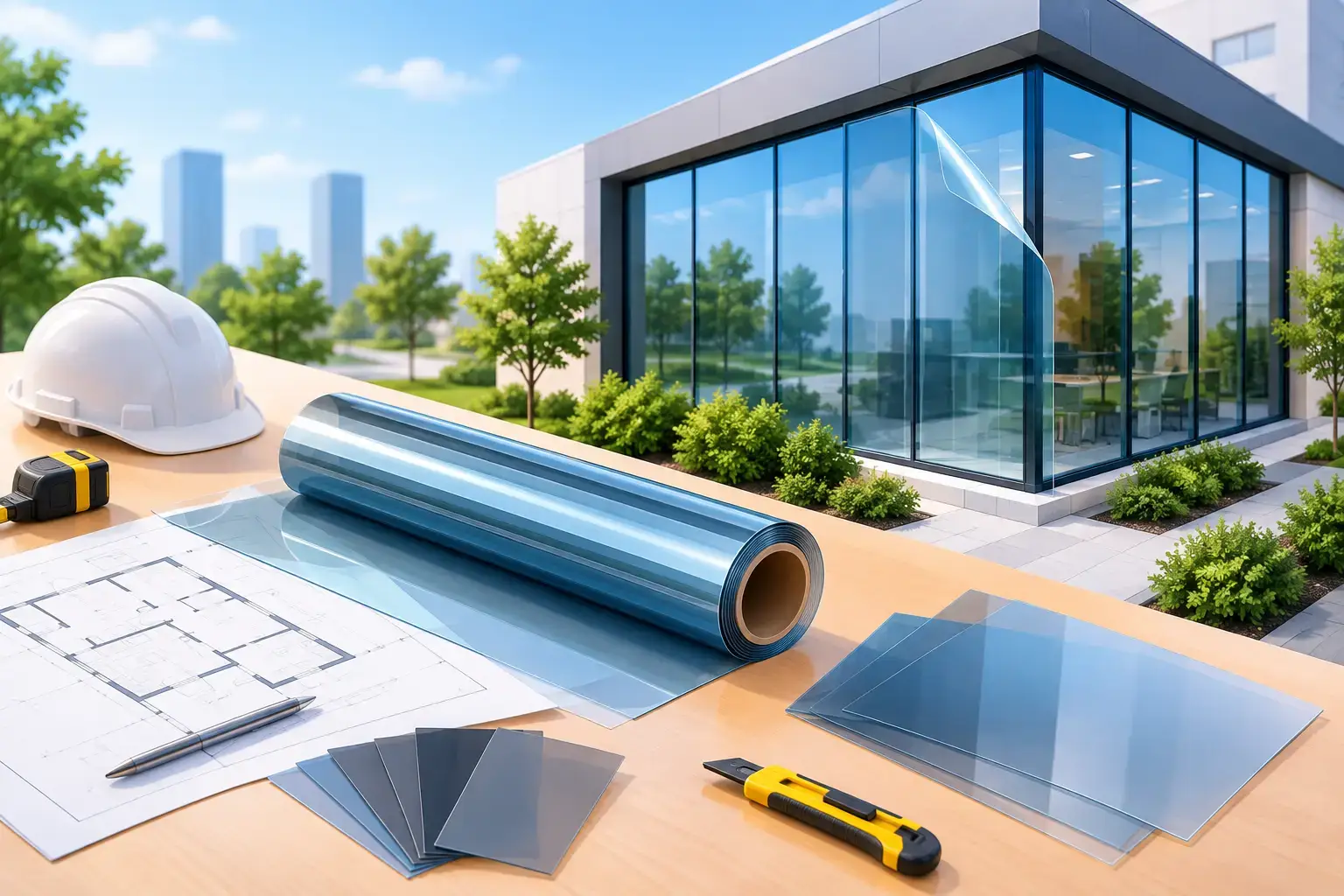
Professionally installed window film is an upgrade applied to existing glass. Premium solar-control films can reject a significant portion of solar energy, reduce glare, block more than 99% of UV rays, and help make bright spaces more comfortable. Other film types add privacy, improve glass safety, protect surfaces, or change the appearance of a space without replacing the glass.
That distinction matters. If the window itself is sound but the room is hot, glaring, exposed, or fading furnishings, film can target the problem directly. If the window frame is failing, the glass is fogged between panes, or water is entering the building, film cannot repair those underlying conditions.
When Window Film Is the Better Investment
Window film is often the practical choice when a property needs a performance upgrade rather than a construction project. It is particularly effective for large glass areas that bring in intense sunlight, such as living-room windows, office storefronts, conference rooms, lobbies, and retail displays.
Heat and glare control without changing the window
Solar-control film is designed to manage the sun that passes through glass. It can reduce the heat load that makes certain rooms difficult to use, while also cutting the glare that washes out computer screens, televisions, and retail displays. In California, where strong sun exposure can affect comfort for much of the year, this can make a noticeable difference in rooms with broad south- or west-facing glass.
The best film is not always the darkest one. Modern spectrally selective films can reject heat while keeping a relatively clear view and allowing useful natural light into the space. A professional assessment considers glass type, orientation, shading, interior use, and the desired appearance before recommending a film.
UV protection for interiors and merchandise
Sunlight can fade hardwood floors, furniture, artwork, fabrics, flooring, and displayed products. While no product can stop all fading, because visible light and heat also play a role, quality window film adds a valuable layer of protection by blocking the UV radiation that contributes to damage.
For a retail operator protecting merchandise or a homeowner preserving an interior investment, this is a focused benefit that replacement windows may not improve enough to justify their higher project cost.
Privacy and appearance upgrades
Not every window concern is about heat. Decorative and privacy films can obscure unwanted views while preserving daylight, making them useful for bathrooms, street-level offices, healthcare settings, conference rooms, and glass partitions. Frosted, patterned, gradient, and custom printed options can also bring a more polished look to a space without the expense and downtime of replacing glass or building permanent partitions.
Security and safety film addresses another separate need. It is designed to help hold broken glass together after impact, reducing the spread of loose shards. It does not make glass unbreakable, and its performance depends on the glass, film specification, attachment method, and installation quality. Still, it can be a meaningful protective layer for vulnerable locations.
A faster, less disruptive project
Replacing windows can involve ordering lead times, demolition, trim work, debris, noise, and access to both sides of the opening. Window film installation is generally far less invasive. A skilled installer prepares the glass, applies the selected film precisely, and leaves the existing window system in place.
That makes film especially appealing for occupied offices, schools, medical facilities, retail spaces, and homes where minimizing interruption matters. The installation process is still detail-sensitive: clean glass, accurate cutting, proper edge finishing, and appropriate curing time all affect the final appearance and longevity.
When Replacement Windows Make More Sense
Window film is a high-value upgrade, not a cure for every window problem. Replacement windows deserve serious consideration when the existing system is nearing the end of its service life.
If you feel drafts around the frame, see water intrusion, struggle to open or lock the window, notice rot or corrosion, or see persistent fogging between insulated glass panes, the issue may be mechanical or structural. Film will not restore a failed seal, correct warped frames, or fix improper flashing.
Replacement can also be the better long-term choice during a major renovation, when walls and trim are already being opened, or when a property needs a different window style, improved operation, or code-related upgrades. New high-performance windows can improve insulation and air sealing in ways film cannot.
There is also an appearance consideration. Film changes the look of the glass, sometimes subtly and sometimes dramatically. If a homeowner wants entirely new frame colors, sightlines, grids, or architectural style, replacement is the appropriate path.
Cost, Return, and the Real Scope of the Project
The cost difference between window film and replacement windows is usually substantial. Film typically costs a fraction of a full replacement project because it uses the existing glass and frame. That lower entry point can allow a property owner to address the highest-impact windows first, such as the sunniest elevation or the rooms where occupants complain most.
Replacement windows may deliver broader benefits when old units are inefficient throughout the building. However, they require a larger upfront investment and a longer payback period. Savings from either option depend on climate, sun exposure, HVAC use, utility rates, building envelope conditions, and occupant behavior. No responsible provider should promise a universal energy-savings number without evaluating the property.
For commercial buildings, the return is often larger than utility bills alone. Reducing glare can improve workstation usability. Better privacy can make a client-facing space feel more professional. Limiting UV exposure can protect inventory and interior finishes. Those operational benefits can be just as valuable as reduced cooling demand.
Can You Install Film on New or Existing Insulated Glass?
Often, yes, but the glass must be evaluated first. Not every film is suitable for every window. Factors such as single-pane versus insulated glass, tempered glass, low-emissivity coatings, pane size, exterior shading, and existing glass condition can affect thermal stress and manufacturer warranty requirements.
This is where product selection and installation expertise matter. Applying the wrong film to the wrong glass can increase the risk of thermal stress damage. A professional recommendation should be based on the actual glass system, not just a sample viewed indoors.
It is also worth reviewing existing window warranties before moving forward. Some window manufacturers have specific policies on aftermarket film, while others allow certain products under stated conditions. Quality film manufacturers may offer warranties of their own, but coverage varies by product and application. Clear documentation before installation avoids surprises later.
A Practical Way to Decide
Start with the symptom, not the product. If heat, glare, fading, privacy, or exposed glass is the central concern and the windows are otherwise in good condition, film is usually the more efficient first option. If the windows leak, fail to operate properly, show seal failure, or have deteriorating frames, investigate replacement.
In some properties, the best answer is both. A building may replace failed windows in the most damaged areas while using solar-control film on large, sound glass walls that receive heavy sun. This approach can control costs while improving comfort where people feel it most.
A careful on-site evaluation should look beyond the glass itself. Window direction, surrounding trees or overhangs, interior finishes, room function, building occupancy, and privacy requirements all influence the right recommendation. A dark film that works well in a sunny lobby may be wrong for a shaded home office. A privacy film that suits a street-facing bathroom may not provide the visibility a retail storefront needs.
Comfort Pro approaches these decisions with the goal of matching the film and installation method to the real use of the space. The right improvement should feel straightforward after it is installed: less glare, more comfort, better privacy, and a view or appearance that still works for the property.
Before committing to a replacement project, have the existing windows assessed honestly. If the frames and seals are doing their job, a precision-installed film can be one of the fastest ways to make the space more comfortable and protected.